It’s the question no buyer wants to ask until they have to: something goes wrong on your property — an injury, a theft, an incident that ends up in a claim — and the guard was there, or should have been. Now who pays? Understanding security guard liability and who is responsible before it happens is the difference between a manageable event and a scramble that lands on your desk.
A firm caveat first: liability is intensely fact-specific and governed by state law, your contract, and the details of the incident. This is a high-level map, not legal advice. When it matters, talk to your attorney and your insurer. What follows is meant to help you ask the right questions and read your contract with clear eyes.
The three things that decide who pays
When people ask about security guard liability and who is responsible, the answer almost always comes down to three overlapping factors: the contract, the insurance, and the documentation of what actually happened.
- The contract allocates risk between you and the provider — who’s responsible for what, and who indemnifies whom.
- The insurance determines whether there’s money behind that allocation when a claim lands.
- The documentation determines whether anyone can even establish what happened and whether the guard performed as required.
Get all three right and a bad incident is contained. Miss one and you can end up exposed even when the failure wasn’t yours.
 Being able to see that duties were actually performed is the first step in sorting out responsibility when something goes wrong.
Read the contract for how risk is allocated
Your service agreement is where liability is decided long before any incident. In plain terms, look for how the contract handles:
- Indemnification — who agrees to cover whom, and for what. This clause is often mutual, sometimes one-sided; understand which way it points.
- Limitation of liability — many contracts cap the provider’s exposure. Know the cap and whether it’s acceptable for your risk.
- Scope of duties — a provider is generally responsible for performing the duties they agreed to. If the post orders are vague, “failure” is hard to establish and easy to argue away.
- Insurance requirements — the coverage the provider must carry and name you on.
Vague contracts favor whoever wants to avoid responsibility. Precise ones protect the party that did its job. Before signing, get your attorney to read these clauses — they decide the outcome of a dispute more than anything the guard does on the night.
Insurance is the money behind the promise
An indemnity clause is only as good as the insurance standing behind it. Require proof of the provider’s general liability and, where relevant, other coverage — and consider being named as an additional insured. A provider who can’t produce current certificates, or who carries thin coverage, is a risk regardless of what the contract says, because there may be nothing to collect against if a large claim hits.
Ask for certificates up front, and re-check them at renewal. This is basic, and it’s routinely skipped until it’s too late.
Documentation is your shield
Here’s where you have the most control, and where it ties back to the tools your provider uses. Whatever the contract and insurance say, the fight over liability is a fight over facts: Was the guard on site? Did they patrol the area where the incident happened? Did they follow the procedure? Did they report it promptly?
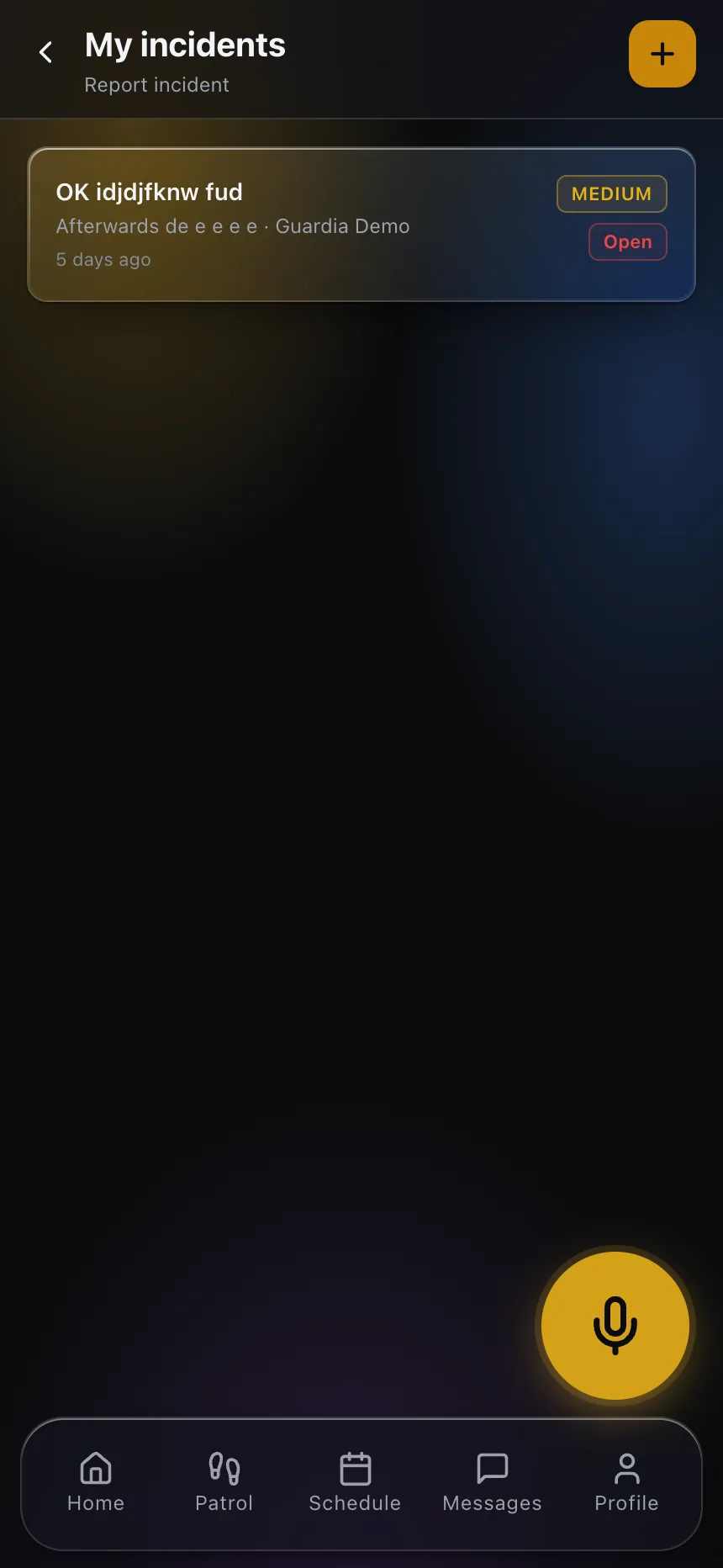 A time-stamped, photo-backed incident record is often the single most valuable piece of evidence when responsibility is contested.
If your provider runs on paper and memory, those questions have no clean answers — and ambiguity tends to hurt whoever needs to prove they did the right thing. If your provider logs GPS-verified rounds and files a daily activity report with time-stamped, photo-backed incident records, you have contemporaneous evidence of exactly what happened and whether duties were performed. That record protects you whether the failure was the guard’s or wasn’t.
So make documentation a contractual requirement, not a hope. Require that rounds are verified, incidents are logged digitally with time and location, and that you can access the records. It’s cheap insurance of a different kind.
What to require before you sign
- A contract you’ve had reviewed for indemnity, liability caps, and scope.
- Precise post orders, so “performing the duties” is actually measurable.
- Proof of current, adequate insurance — and consider additional-insured status.
- A hard requirement for GPS-verified rounds and digital incident records.
- Client access to the documentation, so you’re never reconstructing after the fact.
You can’t eliminate the risk that something goes wrong. You can decide in advance who’s responsible, make sure there’s money behind that decision, and build the paper trail that settles the argument. That’s what separates a buyer who’s protected from one who’s exposed.
To see the kind of client-visible documentation that holds up when responsibility is contested, take a look at the client portal built for security companies.