A virtual fence
around every post
A geofence is the boundary of a post drawn on the map. CGuardPro uses it to check where the officer is when they clock in and while they are on duty, and to tell the office when someone leaves the post and when they come back.
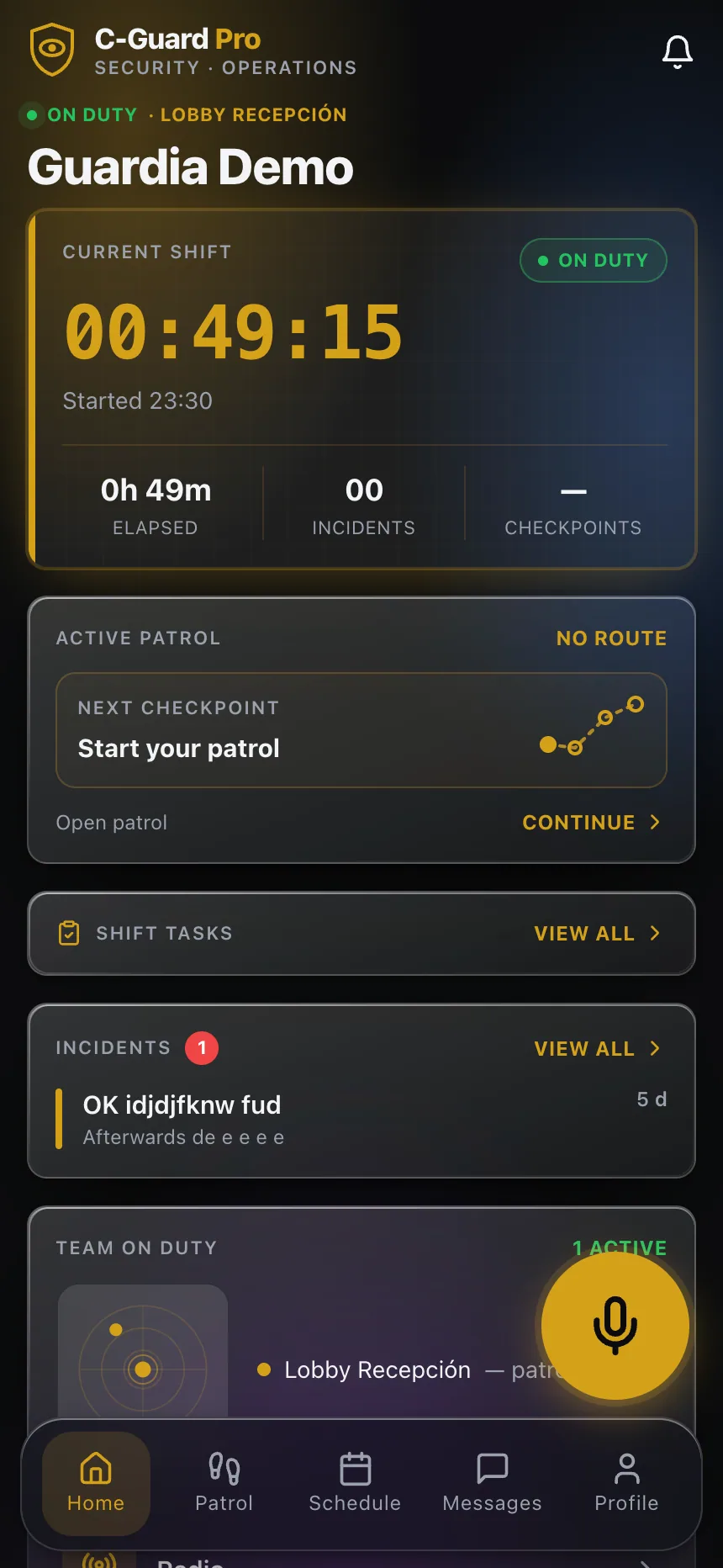
Real product screenshots
Short answer
Geofencing for security guards defines the area of each post on a map and compares the officer’s phone location against it. In CGuardPro each post gets a radius or a drawn polygon. Clock-ins record the position and whether it was inside the fence, and while on duty the platform can alert the office when an officer leaves the area and when they return. Mobile patrol posts can be exempt.
At a glance
- Fence shape
- Radius or polygon, per post
- Clock-in
- Position and inside/outside recorded
- On duty
- Exit and return alerts (configurable)
- False alarms
- Two consecutive outside readings required
- Mobile posts
- Can be exempt from exit alerts
Presence you cannot prove
Clocked in from home
Without a location check, a clock-in proves that the app was opened, not that the officer was at the post.
The officer who wanders off
Leaving the post for an hour mid-shift is invisible until something happens there.
GPS noise as an accusation
A single bad GPS reading inside a building should not trigger a disciplinary call.
How geofencing works
Draw the post
Set a radius around the address or draw the exact polygon of the property.
Location on clock-in
Each clock-in records where the officer was and whether that was inside the fence.
Exit and return alerts
While on duty, leaving the area alerts the office; returning closes the alert.
Built against noise
An exit is confirmed only after two consecutive readings outside the fence, and mobile posts can be excluded.
What geofencing proves
- Location evidence on every clock-in
- Real-time notice when a post is left unattended
- Fences that match the real property shape
- Fewer false alarms from a single bad reading
- Patrol posts handled differently from fixed posts
Guides on this topic
Geofenced Time Clocks for Security Guards: How They Work
A geofenced time clock proves less than you think and more than nothing. GPS drift, radius settings and how to catch cheating without false flags.
GPS vs Geofence vs Checkpoint: Three Different Proofs
GPS, geofences and checkpoints get treated as one feature. What each measures, how far GPS drifts indoors and downtown, and which one survives a client dispute.
Frequently asked questions
What is a geofence? +
A virtual boundary on a map. The app compares the phone’s location with that boundary to know whether the officer is inside the post.
Does it track officers off duty? +
No. Location is used while the officer is on shift.
Is clock-out blocked outside the fence? +
No. Blocking clock-out would leave shifts open; a clock-out outside the fence is recorded and visible instead.
Can a post be large, like a campus? +
Yes. Draw a polygon that follows the property instead of using a circle.
Draw your first post
Book a demo and we fence one of your sites and show you what an exit alert looks like.