Your client sees the service
they are paying for, live
Every client of yours gets their own access: the verified tours at their sites, activity reports with photos, incident reports, and automatic notices when their officer clocks in and out. The kind of transparency that turns a difficult renewal into an obvious decision.
Real product screenshots
Short answer
A client portal for security companies gives each customer of a guard firm their own access to the service delivered at their sites. In CGuardPro, each client sees verified tours, activity reports with photos, incidents and visitors for their own properties only, and receives notices when their officer clocks in and out. Clients can file requests that reach the officer as tasks once dispatch approves them, and can trigger an SOS wired into dispatch.
At a glance
- Visibility
- Only the client's own sites and information
- Shift notices
- Officer clock-in, clock-out and relief at their site
- Requests
- Become officer tasks after dispatch approval
- Users
- Multiple users per client, each with own account
- Client SOS
- Alarm in dispatch, alert to on-site guards, priority case
The problem with an invisible service
The client only calls to complain
If the only thing they see of the service is a monthly invoice, every renewal is a blind negotiation against whoever bids lowest.
Manual reports that arrive late
Assembling a monthly report in Word with pasted photos burns hours of supervisor time — and the client still questions the dates.
Requests by text that go nowhere
The client texts 'check the back gate' to your salesperson; three people later, the officer never heard about it.
What each client gets with CGuardPro
Their portal and their app
Their own access (for one or several of their people) with the activity at their sites: tours, reports, incidents and visitors.
Automatic shift notices
A notification when the officer at their site clocks in, clocks out and at every relief — their security feels present every single day.
Requests that reach the shift
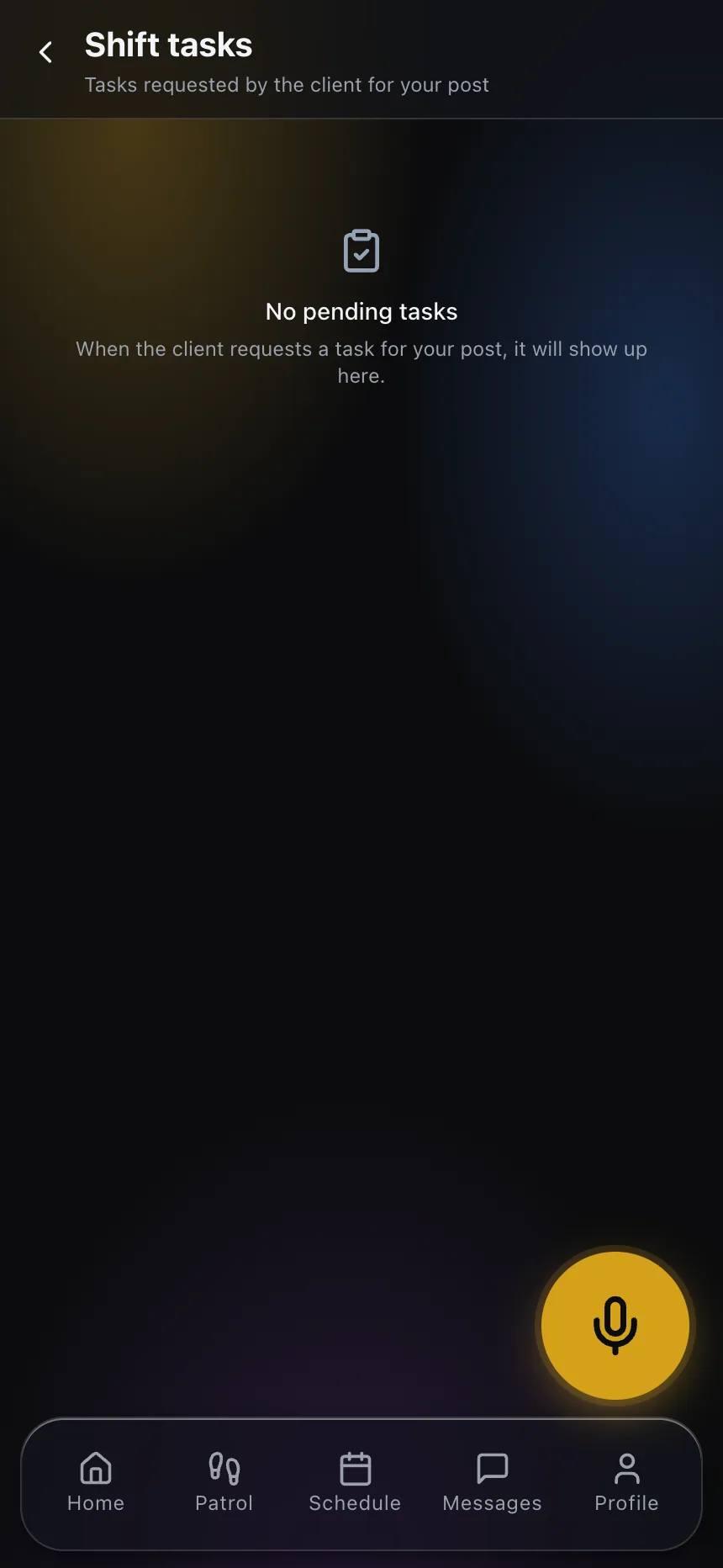
The client files requests ('check the extinguishers', 'watch the back door'); once you approve them they land as tasks in the officer's app, with follow-up.
Client SOS
Their panic button fires your full protocol: alarm in your dispatch center, alert to the guards on site, and a priority case.
Transparency that keeps contracts
- Real-time proof of service: tours, reports and incidents with photos
- Automatic clock-in and clock-out notices for the officer at their site
- Client tasks that you approve, with completion tracking
- Multiple users per client (property manager, security director, and so on)
- Client SOS wired into your dispatch center
- Fewer 'what happened last night?' calls — the answer is already in their portal
Guides on this topic
Client Portals for Security Companies: Win More Contracts
How a client portal changes security bids and renewals, which screens clients actually use, and how to size the return for your own book.
What Your Client Should Be Able to See in Real Time
Showing a client live guard tours, reports and incidents exposes your failures — and still beats the alternative. Where to draw the line, and how to agree it before you switch it on.
The Monthly Report Your Provider Owes You
The monthly report your security provider owes you: what belongs in it, how to spot padded numbers, and why live data beats a PDF that arrives late.
Frequently asked questions
Does each client only see their own sites? +
Yes. Each client's access is isolated to their own properties and their own information. Your internal operation and every other client are invisible to them.
Can the client ask the guard for things directly? +
The client files requests in their app; your dispatch approves them and only then do they reach the officer on shift as tasks, with status and priority. You keep control of the channel.
Can several people from the client have access? +
Yes: the main contact can have additional users (property manager, security director and so on), each with their own account.
What automatic notices does the client receive? +
Clock-in and clock-out for the officer at their site, shift changes with the pass-down, and events on their own requests — all configurable according to what you want to expose.
Does this really help renew contracts? +
A client who sees verified tours and photo-backed reports every week does not need you to prove the service at renewal time: they have watched it all year. That is the difference between defending a price and competing only on price.
Show your client what they are buying
In the demo we walk the portal exactly as your most demanding client would see it — and how that changes the renewal conversation.