Three security companies send you quotes for the same post, and the hourly rates come back different enough that the cheapest looks like an obvious win. It rarely is. The reason it is so hard to compare security guard quotes is that no two providers price the same way, bundle the same things, or make the same costs visible. Until you strip each quote down to a common shape, you are comparing a number, not a value.
This is a normalization problem, not a haggling problem. Do the work to put every quote on the same footing and the real differences, the ones that determine whether you get reliable coverage or a revolving door of undertrained fill-ins, come into focus.
Why the sticker rate misleads
The headline hourly rate is the number providers compete on, so it is the number they optimize to look low. What sits underneath it varies enormously. Two quotes at the same rate can represent completely different services, and two quotes at different rates can represent the same real cost once you account for what each one includes or quietly leaves out.
Before you can compare, you have to know what each rate actually contains.
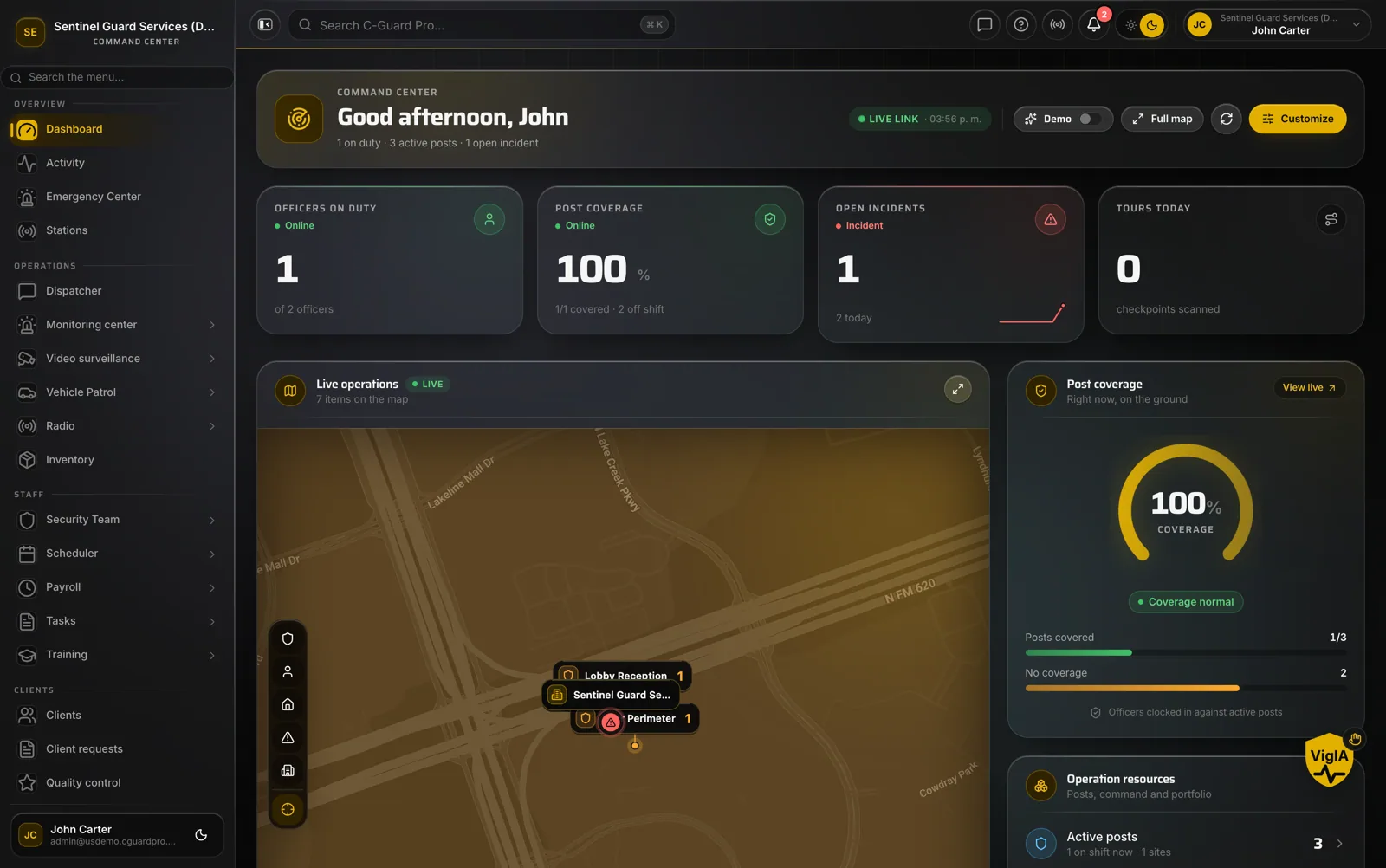 The best defense against a misleading quote is visibility: knowing exactly what you’re paying for and being able to see it delivered.
Build a normalization worksheet
Put every quote into the same columns. The goal is one apples-to-apples table where each provider’s real, all-in value stands next to the others. Work through these lines for each bid:
- Bill rate vs pay rate. The bill rate is what you pay. The pay rate is what the guard receives. A quote can look competitive while paying the guard so little that you will get inexperienced staff and constant turnover. Ask what portion of the rate reaches the guard, because that number predicts who actually shows up at your site.
- What the rate covers. Does it include supervision, training, uniforms, equipment, insurance, and management overhead, or are those line items added later? A low base rate with a stack of add-ons can end up costing more than a higher all-in rate.
- Overtime and holiday rates. How are nights, weekends, and holidays billed? If your coverage falls on premium hours, a low weekday rate is nearly irrelevant.
- Minimums and call-out fees. Minimum billable hours, short-shift surcharges, and call-out fees for extra coverage can reshape the total. Get them on the worksheet.
- Technology, included or extra. Does the quote include a live client portal, GPS-tracked patrols, and digital reporting, or are those upsells? This is where two “similar” quotes diverge most, and it is easy to miss.
Once every quote is in these columns, the cheapest sticker rate often stops being the cheapest real cost, and sometimes stops being the best value by a wide margin.
Normalize the technology, not just the labor
Buyers routinely compare labor line by line and then wave through “technology” as a vague bundle. Do not. The difference between a provider who gives you a live client portal with real-time attendance and patrol proof, and one who emails a monthly summary you cannot verify, is the difference between service you can hold accountable and service you have to trust blindly.
Put specific capabilities on the worksheet as their own lines: real-time visibility, GPS-tracked patrols, digital daily reports, panic alerting. Then ask each provider, plainly, which of these are included at the quoted rate and which cost extra. A provider that includes verifiable delivery in the base price is usually the one confident it can deliver.
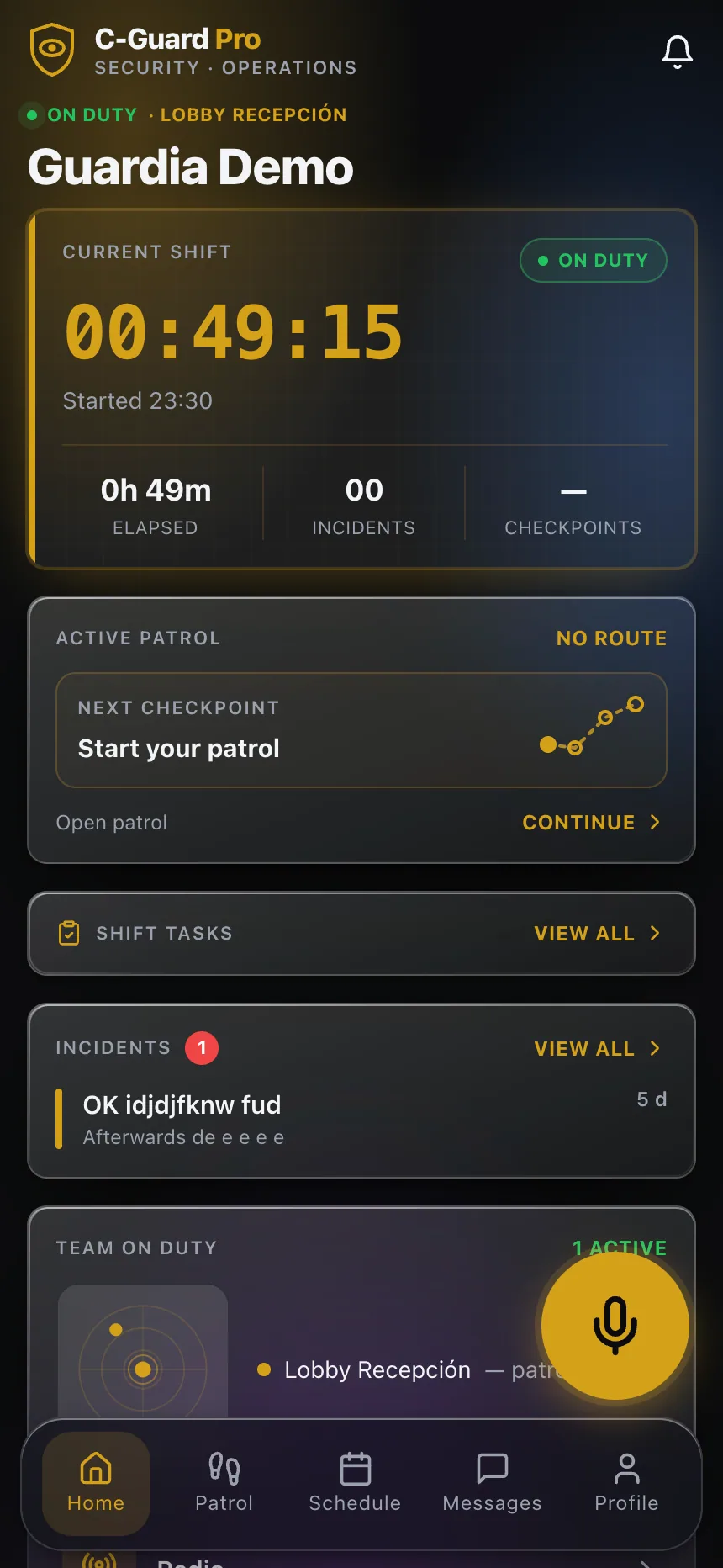 Verifiable delivery, shifts, patrols, and activity you can actually see, is part of the value a quote either includes or quietly leaves out.
The costs a quote never shows
Some of the biggest differences between providers never appear on any quote, so you have to ask about them directly.
- Turnover. A provider that pays and treats guards poorly will churn staff at your site. Every new guard is a stranger to your building and a fresh training burden. Low turnover is worth paying for, even if it does not show up as a line item.
- Supervision. How often does a supervisor visit your site, and how is oversight actually done? A quote that assumes minimal supervision is cheaper for a reason.
- Response and escalation. When something goes wrong at 3 a.m., what actually happens? A cheap rate with no real escalation path is a false economy.
- Fill-in quality. When your regular guard is sick, who covers the shift, and are they briefed on your site or dropped in cold?
None of these fit neatly in a spreadsheet cell, but they determine whether the service you buy holds up. Ask, and note the answers next to the numbers.
Turn the worksheet into a decision
Once every quote sits in the same columns, with technology broken out and the hidden factors captured as notes, the comparison gets honest. You are no longer choosing the lowest number; you are choosing the best true hourly value: reliable coverage, low turnover, real supervision, and delivery you can verify.
Sometimes the normalized winner is the mid-priced bid that includes everything and pays guards fairly. Sometimes it is the higher bid whose all-in rate turns out to undercut a cheap base rate buried under add-ons. Either way, you will know why, and you can defend the choice to whoever signs off on the spend.
When you compare security guard quotes this way, price becomes one column among many, and the real question, what am I actually getting for the money, finally has an answer you can see.
To understand what verifiable delivery should look like on your worksheet, take a look at the CGuardPro client portal and the live proof it puts in a buyer’s hands.