Every plate through the gate,
logged without a clipboard
Gatehouse officers spend the shift writing plates on a sheet nobody can search. CGuardPro turns the vehicle log into a record: the officer photographs the plate, the phone reads it, and the entry, exit, capacity and overstay rules for that post are applied on the spot.
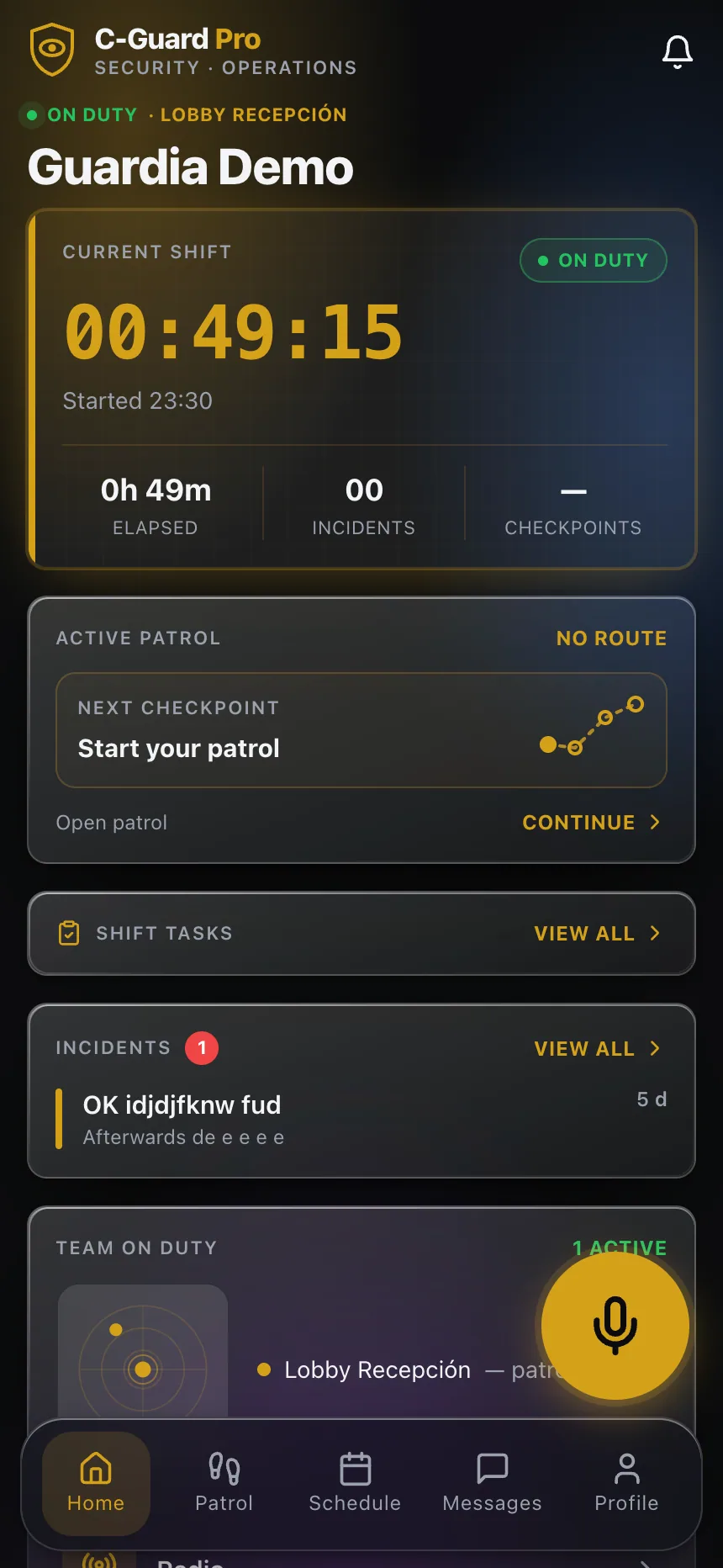
Real product screenshots
Short answer
Vehicle access control software records which vehicles enter and leave a site and enforces the post’s rules. In CGuardPro the gate officer logs entries and exits from the guard app, can photograph the license plate so the phone reads it, and sees live occupancy against the lot’s capacity and bays. Overstays past the allowed time and plates on the post’s banned list raise alerts.
At a glance
- Plate capture
- Photo with on-device text recognition, or typed
- Rules per post
- Capacity, bays, maximum stay, banned plates
- Alerts
- Overstay and banned-plate warnings
- Where
- Guard app at the gate; rules and log in the web app
- Linked to
- The visitor log of the same post
The problem with the paper gate log
Plates nobody can find
When a client asks whether a truck entered last Tuesday, someone pages through handwriting for an hour.
The lot is full before anyone notices
Without a live count, capacity is a guess and the gate officer learns it is full from an angry driver.
Banned vehicles get waved through
A list taped inside the booth does not help a relief officer who has never worked that gate.
How it works at the gate
Photograph the plate
The officer points the phone at the plate; text recognition runs on the device and fills the field. Typing still works.
Entry and exit in two taps
Each vehicle is a record with time in, time out and the officer who logged it.
Rules set per post
In the web app, each post gets its own capacity, bays, maximum stay and whether the banned-plate list applies.
Alerts when a rule is broken
A plate on the banned list warns the officer at entry; a vehicle past its maximum stay is flagged.
What the gate gains
- Searchable vehicle history by plate, post and date
- Live occupancy against the lot’s real capacity
- Overstay detection without a second clipboard
- Banned plates checked on every entry, for every officer
- Fewer typos: the phone reads the plate
- Vehicle and visitor records in the same place
Guides on this topic
License Plate Recognition at a Guarded Gate
License plate recognition at a guarded gate: where cameras earn their keep, the plate conditions that quietly defeat them, and why an officer still matters.
Parking Garage Patrol: A Practical Checklist
A parking garage patrol checklist that holds up: level sweeps, stairwells, elevator lobbies, lighting failures, and the incidents that become claims.
Frequently asked questions
Do we need license plate recognition cameras? +
No. The plate is read from a photo taken with the officer’s phone. Fixed LPR cameras are not required.
Can each gate have different rules? +
Yes. Capacity, bays, maximum stay and the banned-plate check are configured per post.
What happens with a banned plate? +
The officer is warned at the moment of entry, so the decision is made at the gate with the post’s rules in front of them.
Is the vehicle log separate from visitors? +
No. A vehicle entry is part of the same visitor log, so a driver and their vehicle are one record.
Put your gate log on a phone
Book a demo and see a plate photographed, read and logged, with your post’s rules applied.