Fire watch tours
with a log that writes itself
When a sprinkler system or alarm panel is out of service, the fire watch is the protection — and the log is the only proof it happened. CGuardPro runs fire watch as timed tours over checkpoints on the officer's phone, so every round is time-stamped, located and kept as the record you hand over when the fire marshal or the client asks for it.
Real product screenshots
Short answer
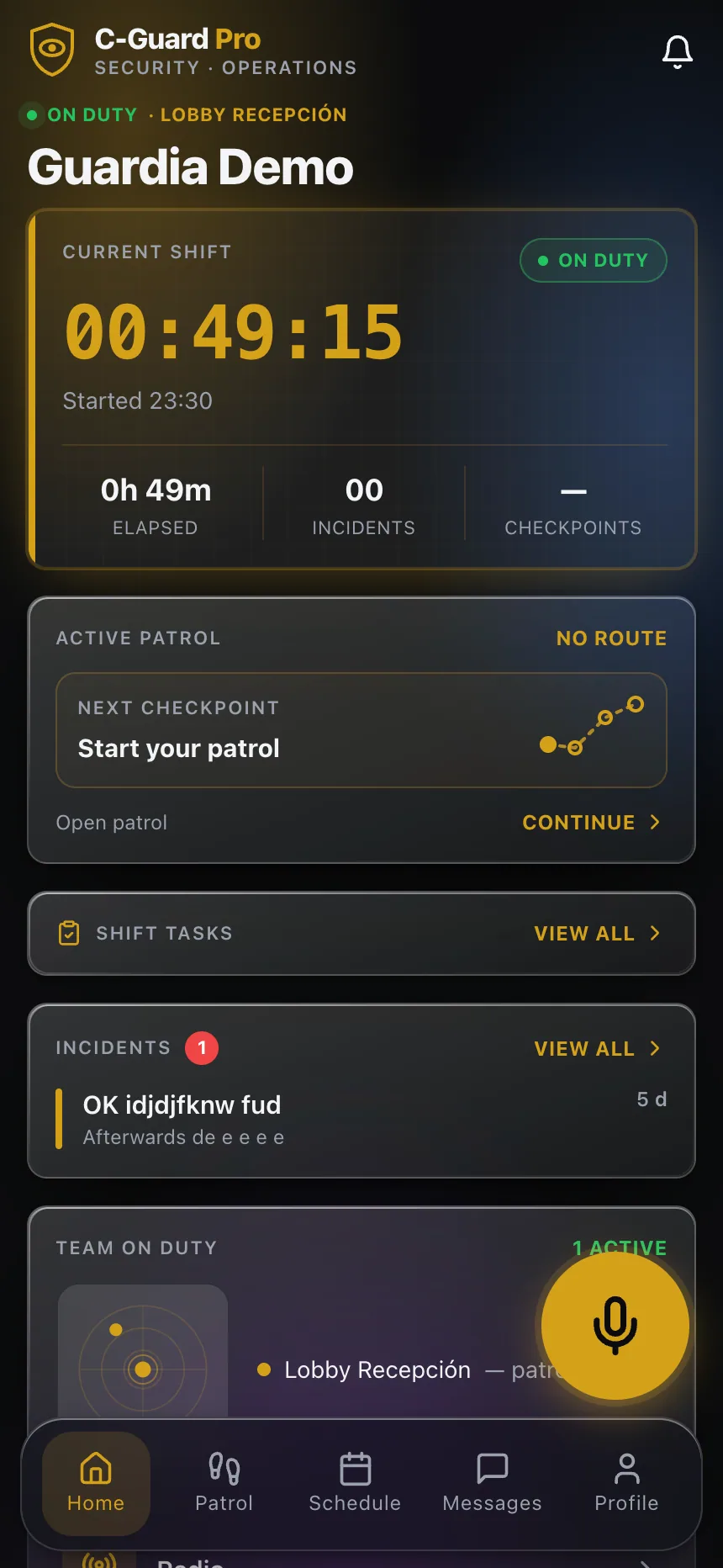
Fire watch software schedules the patrols a fire watch requires and records each one as it happens. In CGuardPro, a fire watch is a timed tour over QR or NFC checkpoints placed along the impaired area. The officer scans each checkpoint with their phone; every scan is time-stamped by the server and located, with an optional photo or note. A missed or late round raises an alert, and the tour history becomes the fire watch log.
At a glance
- Rounds
- Timed tours with your interval, hours and late tolerance
- Checkpoints
- QR or NFC, scanned with the officer's phone
- Each scan
- Server time and position, optional photo or note
- Alerts
- Missed or late rounds, while the watch is running
- The log
- Tour history per site, exportable and visible to the client
Why paper fire watch logs fail when someone reads them
A signature every hour proves very little
A paper sheet with a neat column of initials looks finished. It does not show where the officer was, and a sheet filled in at 5 a.m. looks the same as one filled in round by round.
The missed round is found weeks later
On paper, nobody knows a round was skipped until someone reads the log. By then the impairment is repaired and the gap is a question you cannot answer.
The route drifts from the impairment
An officer handed a generic sheet walks a generic route. The stairwell or the hot work area the watch exists for can drop out of the round without anyone noticing.
How a fire watch runs in CGuardPro
Place checkpoints on the impaired area
Print QR checkpoints from the dashboard or use NFC tags, and mount them along the route the fire watch has to cover: the affected floors, stairwells, risers or the hot work zone.
Set the round as a timed tour
Create the tour with the interval, active hours and late tolerance you were given for this watch. Attach the post orders so the officer knows what is impaired and why the route covers what it covers.
The officer scans every checkpoint
Each scan is recorded with server time and the phone's position. The officer can add a photo or a note at any checkpoint — a blocked exit, a missing extinguisher, a hazard.
Dispatch sees gaps as they happen
A round that is late or missed raises an alert while the watch is still running, so a supervisor can call the officer or send relief instead of discovering it in the morning.
What a fire watch company gains
- Every round time-stamped by the server and located by the phone
- Missed and late rounds flagged during the shift, not after
- Photos and notes attached to the exact checkpoint where something was found
- Incident reports for hazards, with photos, from the same app
- A per-site tour history you can export and share when asked for the log
- The client follows its own fire watch rounds from the client portal
Guides on this topic
What Is Fire Watch, and How Is It Different?
Fire watch guard duties what is fire watch security actually requires, and why that post can never double as anything else, even on a quiet shift.
The Situations That Actually Require a Fire Watch
Knowing when is fire watch required means catching an impaired alarm, hot work, or a disabled sprinkler system before the fire marshal has to say it.
Fire Watch Logs: What an Inspector Actually Checks
Fire watch log requirements aren't about a signature every hour — inspectors check whether your interval and route matched the actual impairment.
Frequently asked questions
Is CGuardPro a fire watch app? +
Yes. Security companies use CGuardPro for fire watch: the watch is set up as a timed tour over QR or NFC checkpoints, the officer scans each one with the guard app, and the tour history is the fire watch log. It runs on iOS and Android phones the officers already carry.
Does the log satisfy the fire marshal? +
We do not claim approval by any fire marshal or authority having jurisdiction (AHJ). Requirements for interval, route and documentation are set locally for each impairment. What CGuardPro gives you is a time-stamped, located record of every round that you can export and hand over when the fire marshal, the insurer or the client asks for it.
How often does the officer have to do a round? +
That is set by whoever ordered the watch, not by the software. You enter the interval, the active hours and the late tolerance on the tour, and CGuardPro alerts when a round is missed or runs late against that setting.
What if the building has no cell signal in the stairwells? +
The guard app can queue tour activity when the connection drops, and it is sent when the signal returns. A checkpoint scanned without connection is stamped when it reaches the server, so plan the route so the officer passes through coverage regularly, and use notes to explain any delay.
Can the officer report a hazard found during a round? +
Yes. Any checkpoint can carry a photo or a note, and a hazard that needs follow-up can be filed as an incident report with photos from the same app, so the round and the report are tied together.
How much does it cost? +
USD 5 per user per month, where a user is anyone with a login, with every feature in one plan. Implementation is a one-time USD 299.99 and there is a 7-day free trial.
Run your next fire watch on checkpoints
Book a demo and see a timed tour set up for an impaired floor, scanned from a phone and turned into a log you can hand over.