A bank’s vetting process rarely feels like a negotiation. It feels like a document request that keeps growing — a certificate of insurance, then a request for the actual policy language, then a question about an officer’s licensing status that nobody on your side has looked at in months. Bank security guard contract requirements are more procedural than most commercial accounts, and the companies that lose these bids usually don’t lose on price or reputation — they lose because the file wasn’t ready when the request came in, and a bank’s procurement or security team reads a scramble to produce basic documentation as a preview of how the bank branch account will actually be run.
Bank security guard contract requirements start with insurance checked line by line
Most commercial clients ask whether you carry liability insurance and move on once you send a certificate. A bank’s risk or procurement team is more likely to actually read the policy — checking whether the coverage limits meet whatever threshold their institution requires, whether the policy excludes anything relevant to guard services specifically, and whether the certificate names the bank as an additional insured in the way their contract template requires. A company that only keeps a certificate of insurance on hand, without knowing the actual limits and exclusions in the underlying policy, will get caught flat when a bank’s reviewer asks a specific question about coverage that the certificate alone doesn’t answer.
The fix here isn’t buying more insurance speculatively — coverage needs and costs vary by carrier and by the specific risk profile of the accounts you run, and that’s a conversation for your insurance broker, not something to guess at. The fix is knowing your own policy well enough to answer a specific question on the call instead of promising to “check and get back to them,” which reads as unpreparedness at exactly the moment you’re trying to look institutional.
Licensing status has to be current for the individual officer, not just the company
A bank will typically want confirmation that the specific officers assigned to their account hold current, valid licensing under whatever state or local requirements apply — not just that the company itself holds a business license to operate. Licensing categories, renewal timelines, and what counts as current vary by state and sometimes by municipality, and a company operating across multiple jurisdictions needs a real system for tracking expiration dates per officer, not a mental note. Confirm current requirements with your state’s licensing authority before making any assignment or compliance decision — this varies enough by jurisdiction that guessing is not a safe substitute for checking. This is not legal advice.
Appearance and uniform standards get checked, sometimes literally
Banks tend to care more than most clients about how officers present at the branch — uniform consistency, grooming standards, whether an officer looks like part of the institution or like an outside contractor standing near the door. Some banks will ask for photos of the actual uniform before signing, or specify details down to the visibility of a company logo relative to a sidearm on an armed post. This isn’t vanity on the bank’s part; a branch’s physical presentation is part of how the institution manages customer perception of security and safety, and an officer who looks inconsistent with that standard undermines the point of having one there at all.
Armed-guard protocols draw the most scrutiny
If the contract involves an armed post, expect the deepest scrutiny to land here — training records, weapons qualification documentation, and the company’s protocols for use-of-force decisions and incident escalation. A bank’s legal and risk teams are underwriting their own exposure through your officer’s conduct, and they will ask harder questions about armed protocols than about almost anything else in the file. Requirements for armed licensing, qualification, and use-of-force training vary significantly by state and are set by each state’s regulator — confirm current requirements with that regulator and with your own counsel rather than relying on general industry knowledge, since this is exactly the kind of detail that changes and that carries real liability if gotten wrong.

Background screening standards often exceed what other clients ask for
Most commercial accounts are satisfied with a standard background check run at hiring. A bank frequently wants more — confirmation of the screening depth used, sometimes a more recent re-screen for officers who’ve been with the company a while, and clear documentation of what the screening process actually covers rather than a vague assurance that “everyone is background checked.” Exactly what a background screening process must include, how far back it looks, and how often it needs to be refreshed varies by state and by the specific regulatory framework a bank’s own compliance obligations sit under — confirm current requirements with your state’s licensing authority and, where the client’s own regulatory obligations are relevant, with the bank’s compliance team directly, rather than assuming your standard hiring process automatically satisfies an institutional client’s bar. This is not legal advice.
Vetting doesn’t end at signature — expect periodic re-verification
A mistake companies make after winning a bank contract is treating the vetting file as a one-time hurdle rather than something that needs to stay current for the life of the contract. Insurance renews, licenses expire, and officer rosters change as people leave and get replaced — and a bank that vetted your documentation carefully at signing has every reason to ask for updated proof partway through the relationship, particularly after any incident at the branch or any change in the officers assigned there. A company that let its file go stale the moment the contract was signed is the same company that scrambles the second the bank’s compliance team asks for a refresh, which is exactly the impression a well-prepared vendor is supposed to avoid creating in the first place.
Getting the documentation in order before the call, not during it
The companies that move fastest through bank vetting keep a standing file rather than assembling one under deadline: current certificates of insurance with the actual policy on hand, a per-officer licensing tracker with renewal dates visible at a glance, current uniform photos, and — for armed posts — qualification and training records that can be produced the same day they’re requested. None of that requires guessing at requirements; it requires having the paperwork you already hold organized well enough to hand over immediately.
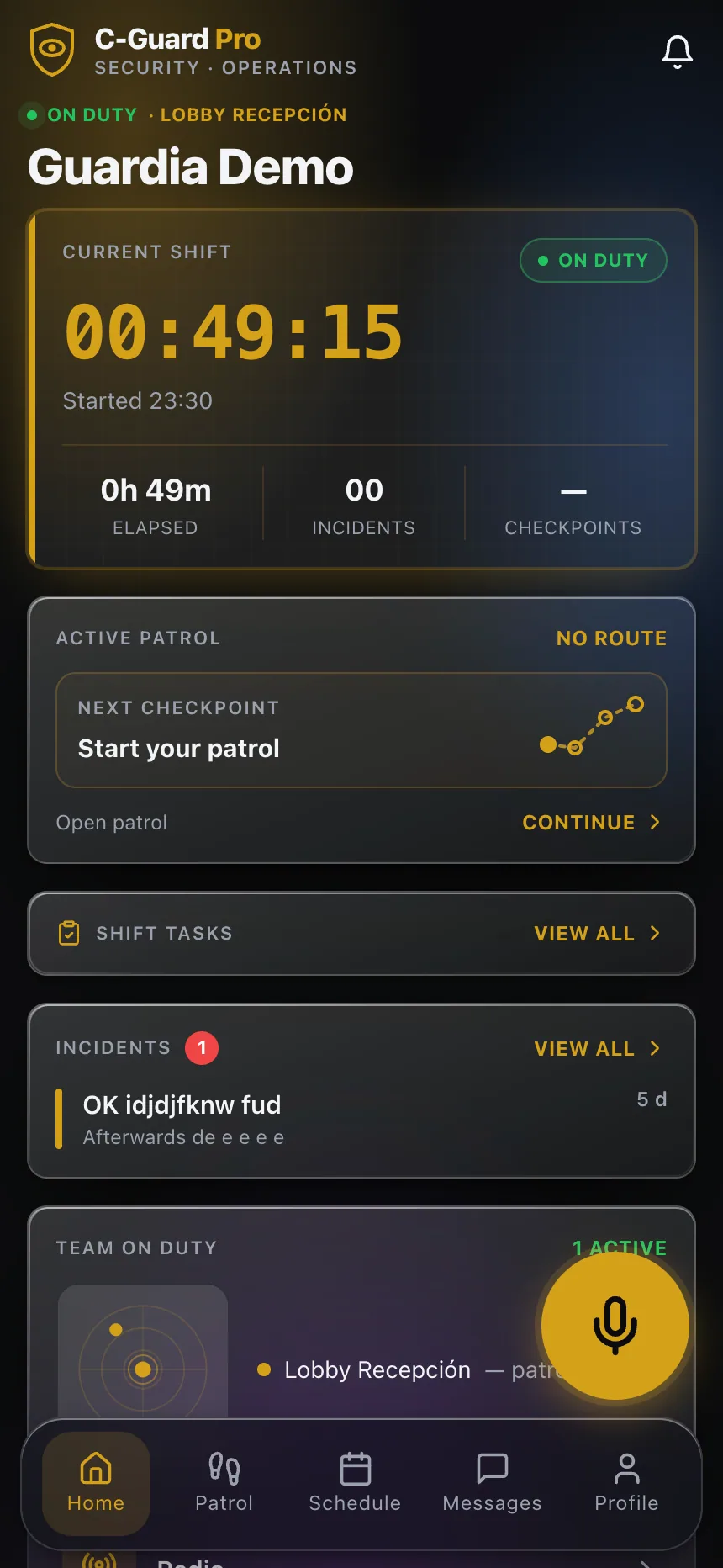
The same discipline that gets a bank contract signed is what keeps it running afterward. A client portal that gives the bank’s own account manager visibility into shift coverage and incident history removes a category of trust-building conversation entirely, because the bank isn’t relying on your word about what happened at the branch — they can see it. And a documented incident reporting process gives you a real record to point to the next time a bank’s compliance team asks how a specific event was handled, instead of a recollection reconstructed weeks later. Keeping post orders current for the branch’s specific armed or unarmed protocols is worth doing before the vetting call too — it’s usually one of the first documents requested.
If you want to see how documented records and client visibility support institutional accounts like banks, explore CGuardPro or get in touch.