The pre-contract walkthrough is where most property managers get the least value out of the entire vendor selection process, and it’s usually not the vendor’s fault — it’s a structural problem with how the visit gets run. A sales representative shows up, walks the lobby and the main entrances with a clipboard, nods at the right moments, and leaves with enough information to write a proposal. Nobody asked how a specific loading-dock gap actually gets covered on the overnight shift, and nobody walked away with anything more concrete than a general sense of the vendor’s professionalism. Knowing how to run a site walkthrough with a security company changes that entirely — treat it as the first working session of the contract, not a sales visit, and it produces something the sales-visit version never does.
How to run a site walkthrough with a security company: start with who shows up
The single most useful change a property manager can make to this process is insisting that the person walking the site is the field supervisor who will actually oversee the account, not exclusively the account executive who closes the deal. A salesperson can speak convincingly about the company’s capabilities in general terms. A supervisor who will actually run this account looks at a blind corner in the parking structure and immediately has an opinion about how it should be covered, because they’ve solved that exact problem at other sites. That’s a different conversation, and it’s the one that tells you something real about how this specific account will be run day to day, not how the company presents itself in a sales deck.
If a vendor resists bringing the actual supervisor to a walkthrough, or treats the request as unusual, that’s worth noting on its own. A company confident in its field leadership generally has no problem putting that person in front of a prospective client early.
Walk the pinch points, not just the front door
A walkthrough that only covers the main entrance and the lobby tells you almost nothing about how the site will actually be secured. The useful version walks every point where the property’s security posture genuinely gets tested: loading docks, stairwells, parking structure levels, secondary entrances, anywhere foot traffic and vehicle traffic cross without a clear line of sight, and anywhere the property has had actual incidents in the past. At each of these points, ask directly: how would this specific spot be staffed and covered on the overnight shift, on a weekend, during a delivery window. A vague answer at a genuine pinch point is more informative than a confident answer at the lobby, because the lobby is the easy part of every site.
This is also where a proposed coverage plan starts to reveal whether it was built around the actual property or lightly adapted from a template proposal the vendor uses everywhere. A supervisor who’s actually thought about your specific pinch points will have specific answers. One reciting general capabilities will default to broad reassurance instead.
Require that the walkthrough notes become post orders
The part of this process that’s genuinely underused is turning the walkthrough itself into a work product rather than a conversation that evaporates once everyone leaves. Ask the vendor to document what was discussed at each point during the walkthrough — the specific coverage decision, the reasoning behind it, any open questions — and require that this documentation becomes the first draft of the site’s post orders, not a separate sales summary that gets filed away while the actual post orders get written later by someone who wasn’t on the walkthrough.
This matters because a lot of value gets lost in the handoff from the person who sold the contract to the person who eventually writes the operational documents the officers actually follow. If the walkthrough notes and the post orders are the same document, built incrementally starting on day one, nothing gets lost in that handoff, and you have a written record of exactly what was agreed to at each specific point on the property — which is also useful leverage of a different kind: something concrete to point back to if coverage at a specific point doesn’t match what was discussed during the walkthrough.
What to expect the vendor to bring back afterward
A walkthrough that’s gone well should produce, within a reasonably short turnaround, a written coverage plan tied to the specific points discussed, not a generic proposal template with your property’s name filled in. If what comes back reads like it could apply to any property of similar size, the walkthrough didn’t actually inform the proposal, and it’s worth asking why. A checklist-based approach to reviewing that follow-up document — comparing what it says against what was actually discussed at each pinch point — is a reasonable step before moving to contract.
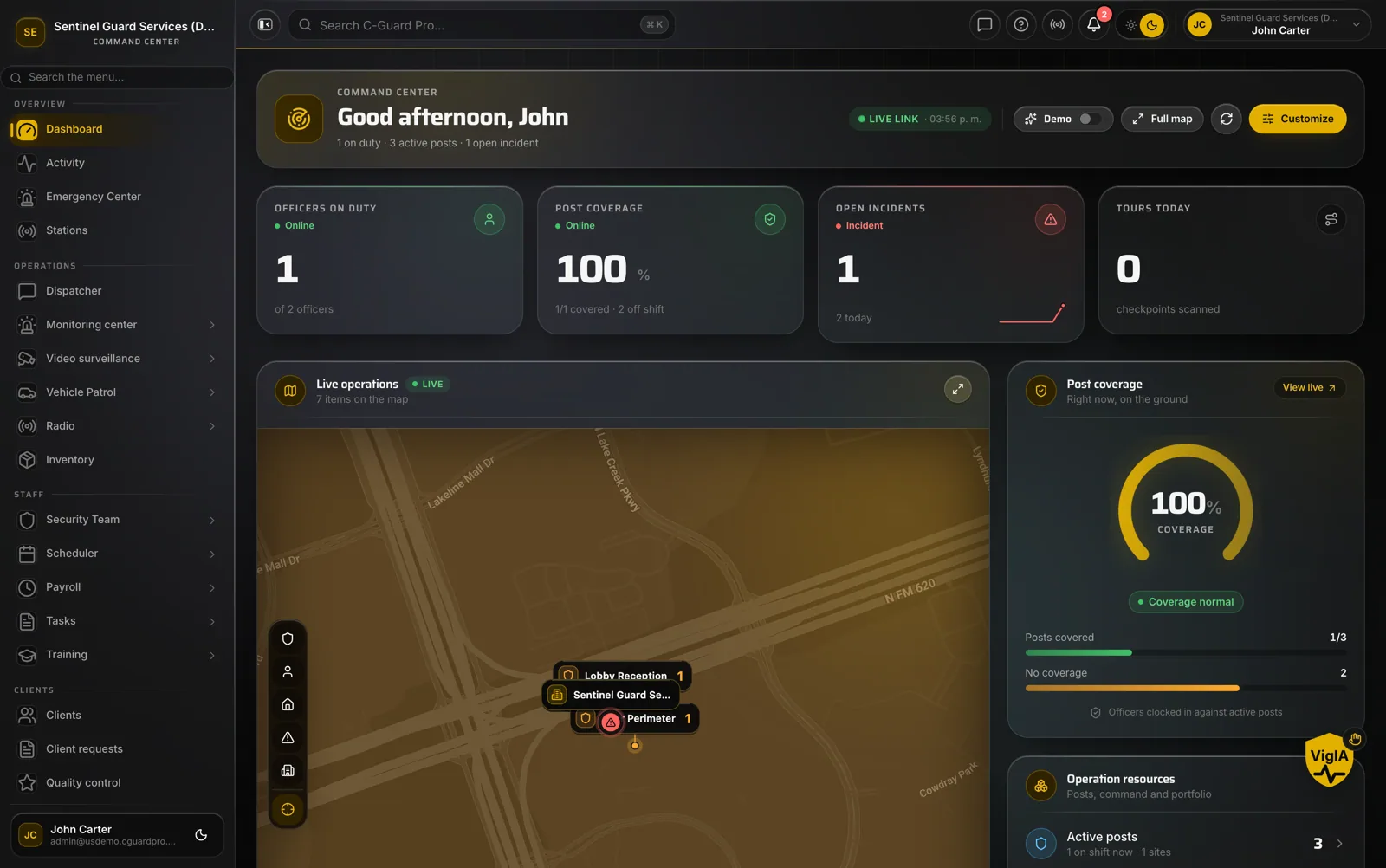
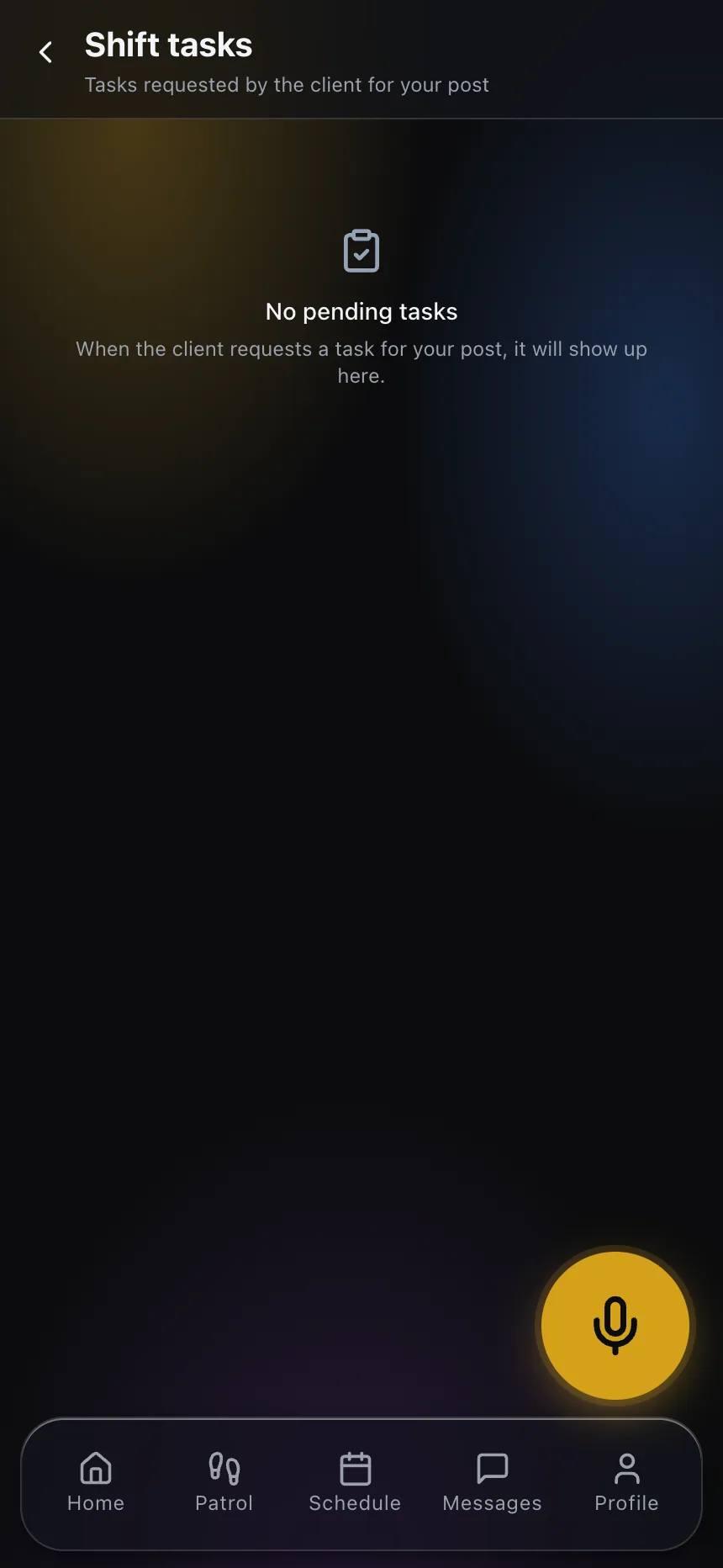
It’s also reasonable to ask how the vendor’s officers will actually follow whatever plan comes out of this process day to day — whether post orders and site-specific tasks are something officers reference through a real system in the field, or something that lives in a binder in a guard shack that nobody updates after the first month.
Bring the right people from your own side, too
A walkthrough works better when it isn’t just the vendor’s supervisor and a single point of contact from the property. Whoever actually deals with the pinch points day to day — a facilities lead, a night-shift building engineer, the person who fields tenant complaints about the parking structure — often knows more about where the property’s real risk sits than the property manager coordinating the vendor search. Bringing that person along, even briefly, tends to surface pinch points a property manager wouldn’t have thought to raise on their own, and it gives the vendor’s supervisor direct access to the people who will actually flag problems once the contract is running.
Making the walkthrough count
The difference between a walkthrough that produces real information and one that produces a sales impression comes down to who shows up, where you walk, and what happens to the notes afterward. Insist on the actual supervisor, walk the pinch points instead of the lobby, and require that the discussion becomes the first draft of the site’s post orders rather than a conversation that disappears once the visit ends. Done this way, the walkthrough isn’t a formality before signing — it’s the start of the operational plan the vendor will actually run.
If you want a sense of what a well-run vendor’s post orders and site documentation should look like once the contract starts, explore a post orders template or get in touch with questions about evaluating a proposed coverage plan.