Ask any security company that’s won a government contract what actually moved the decision, and certifications rarely come up first. What comes up is a handful of solid government contract past performance references security buyers can actually verify — someone the contracting officer could call who would say, plainly, that this vendor showed up, staffed the post, and handled the contract without drama. A certification tells a buyer you’re eligible to bid. A reference tells them you won’t be a problem once you’ve won. Early in a company’s government pipeline, the second thing matters more than the first, and it’s the one most companies do nothing deliberate to build.
Government Contract Past Performance References Security Firms Actually Need
A certification or a small-business designation gets you onto a list. It doesn’t get you selected off that list. Government buyers evaluating a security services bid are looking for evidence that a company can execute a contract of a specific type and scale without the buyer having to manage around problems — missed shifts, high turnover, incident reports that never surface until something’s already gone wrong. Past performance is the only part of a proposal that answers that question with someone else’s word instead of the bidder’s own.
The problem is structural for a company with zero government contracts: past performance references are, almost by definition, something you can’t have until you’ve already had a government contract. That’s the trap companies get stuck in — waiting for a large opportunity to “prove” themselves, when the actual fix is building smaller references deliberately, on a timeline you control, rather than waiting for one big contract to hand you credibility.
Where a first government reference actually comes from
The reference doesn’t have to come from a large federal contract. A local government building, a school district, a municipal facility, a housing authority — these are government entities that procure security services and are far more reachable for a company with no track record than a large federal award. A well-run contract at a modest municipal site, documented properly, becomes a legitimate past-performance reference for the next, larger government bid.
The subcontracting route is the other real path. Teaming as a subcontractor under a prime that already holds government contracts gets a company government-adjacent performance history without having to win a prime contract cold. It’s slower and the credit is shared, but it’s a genuine way to build a documented record when the alternative is no record at all.
What makes a reference actually usable in a proposal
A completed contract only becomes a usable past-performance reference if it was run in a way that left something to point to. That means the day-to-day operational record has to actually exist and be retrievable — staffing consistency, response to incidents, communication with the site contact — not just a memory of “it went fine.”
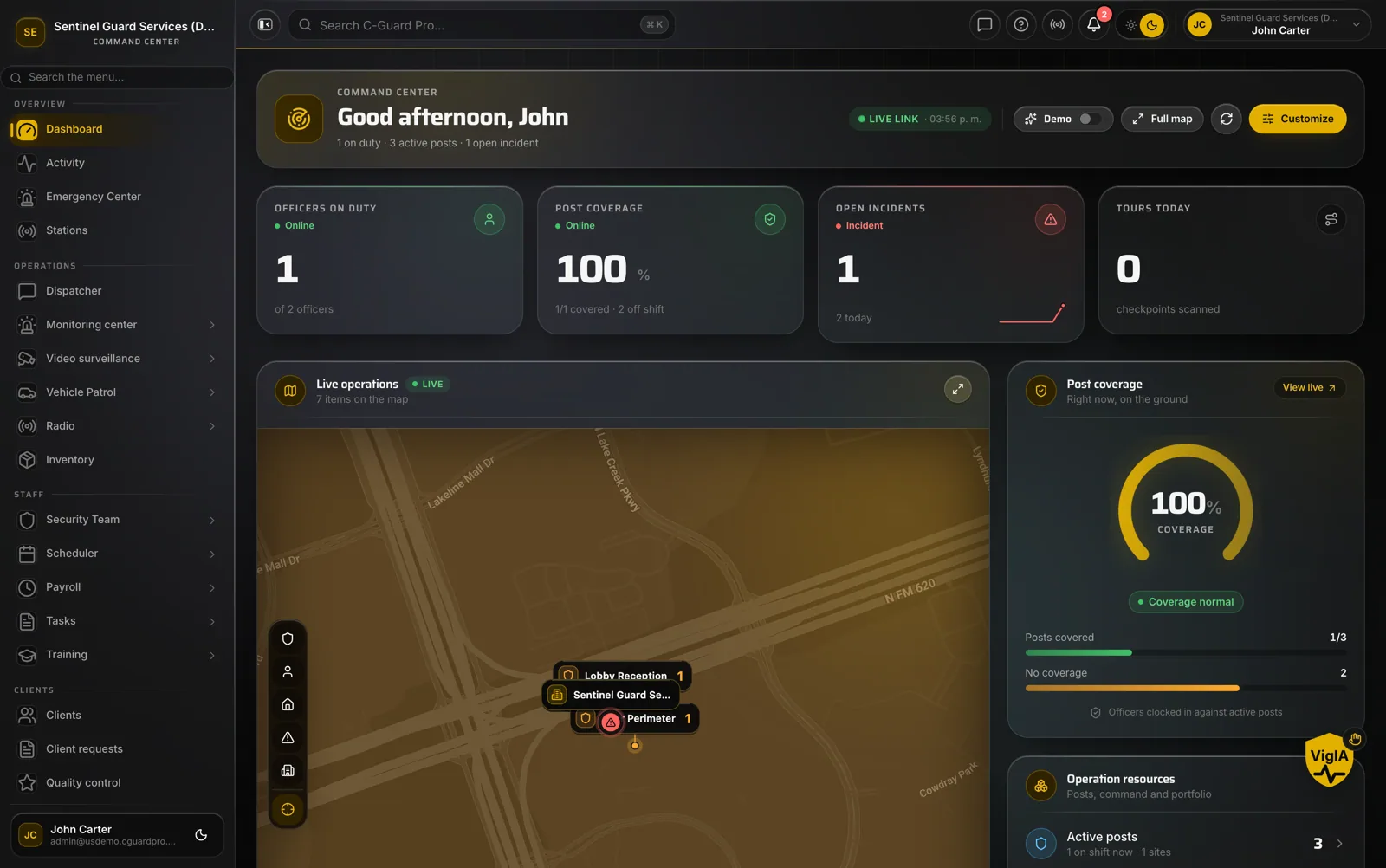
This is where operational discipline during the contract pays off later, at proposal time. A daily activity report log that shows consistent coverage over the full term of a small municipal contract is concrete evidence a contracting officer’s evaluator can review, not just a name on a reference sheet. An incident reporting history that shows problems were caught, documented and closed out — rather than either ignored or so frequent they raise a flag — demonstrates exactly the operational maturity a government evaluator is screening for.
Asking for the reference itself
Having run the contract well isn’t the same as having the reference in hand. Ask the client contact, before the contract ends if possible, whether they’d be willing to serve as a past-performance reference for future proposals, and get that agreement while the relationship is warm rather than months later when a proposal deadline is looming and the contact has moved on or forgotten the specifics. A reference contact who has to be reminded what your company even did for them is a weak reference regardless of how well the contract actually went.
It’s also worth asking the contact, specifically, what they’d say if called — not to script them, but to find out early if there’s a gap between how the contract felt from your side and how it’s remembered from theirs. Better to learn that before it surfaces as a lukewarm reference call during a live procurement.
Keeping the reference current, not just on file
A past-performance reference has a shelf life. A contact who left the agency two years ago, or a contract that ended long enough ago that the details have gone fuzzy even for the reference themselves, is a much weaker reference than one that’s recent and specific. It’s worth building a habit of checking in with past government references periodically — not just when a new proposal needs them — so the relationship stays warm and the contact stays reachable when a bid deadline arrives with little notice.
It also helps to keep an internal file on each government contract that goes beyond what any one proposal needs: the scope of work, the staffing level, any notable challenges and how they were resolved, and the reference contact’s current information. Proposal deadlines are almost never generous with time, and scrambling to reconstruct the details of a contract from two years ago while also writing the rest of a bid is a bad position to be in. A maintained file turns that into a five-minute lookup instead of a research project under deadline pressure.
Being honest about what a small reference can and can’t do
A single small municipal contract, well documented, is a real asset — but it’s not the same as a large-scale operational track record, and overstating what it demonstrates in a proposal can backfire if an evaluator digs into the details and finds the scope was much smaller than the pitch implied. The honest framing is that a small, well-run government reference demonstrates the same qualities a larger contract would — reliability, documentation discipline, responsiveness — at a smaller scale, and that the company is actively building toward larger opportunities rather than already operating at that scale. Evaluators generally respond better to an accurate, modest claim backed by real evidence than to an inflated one that doesn’t hold up under a reference call.
Building toward the larger opportunity
None of this is a shortcut around a large opportunity — it’s the groundwork that makes a company competitive when one appears. A company that’s spent two or three years building a small stack of solid, verifiable government facility references is in a fundamentally different competitive position than one bidding on its first-ever government contract with only commercial references to offer, even if the commercial work was excellent. Government buyers weight government-specific past performance heavily precisely because it answers a narrower, more relevant question: can this company operate inside a government contract’s specific reporting and accountability expectations, not just run a good post.
Start smaller than feels ambitious, document everything that happens on the contract, and treat every government-adjacent site — school, municipal building, housing authority — as an opportunity to build the reference you’ll need for the next bid, not just a contract to fulfill and move past.
If you want to see how coverage records and incident history come together into something you can hand a contracting officer as evidence, explore CGuardPro or get in touch.