Most guidance on security contracts is written for the guard company negotiating the deal — how to price it, how to protect the margin, how to avoid scope creep. A property manager or facilities director signing that contract from the other side is working from a different, shorter list of concerns, and it’s a list most buyers only fully learn the hard way, usually after something the contract didn’t address goes wrong on their property. Both sides are really asking what should a security guard contract specify — just from opposite ends of the negotiation.
What should a security guard contract specify, from the client’s side
The short answer is that a contract should specify enough operational detail that neither party is guessing during an incident, and enough legal detail that liability is clear before anything happens rather than argued about after. Most contracts get the second half right, because that’s the part attorneys review closely, and get the first half thin, because operational detail feels like something that belongs in a separate document — until the separate document doesn’t exist or doesn’t match what the contract says.
Post orders referenced, not just implied
A contract that says the guard company will “provide security services in accordance with industry standards” has said almost nothing. What a client should insist on is a direct reference to the site’s post orders as a governing document — named, dated, and updated on an agreed schedule — so that if an officer’s conduct is ever questioned, there’s a specific written standard to measure it against rather than a vague phrase in a services agreement. If post orders aren’t referenced by name in the contract, they’re not really binding on anyone; they’re just a document the vendor happens to maintain.
Reporting cadence and format spelled out
“Regular reports” means nothing until it’s specified: daily, per shift, weekly summary — and in what format. A client who assumes daily reporting and receives a weekly rollup has a real gap in visibility that nobody technically violated the contract to create, because the contract never said which one was expected. Specify the reporting cadence, what a report must contain at minimum, and whether incident reports are separate from the routine daily activity log or bundled into it — those are two different documents serving two different purposes, and a contract that conflates them usually gets reporting friction a few months in.
Response-time expectations, defined in a way that can actually be measured
“Prompt response” is not a standard — it’s a phrase that sounds reassuring and means nothing when a client is trying to determine, after the fact, whether the vendor met their obligation. A contract should specify what response time means for the specific services being provided: how quickly an officer engages after an alarm or alert, how quickly a supervisor is notified of an escalation, how quickly the account manager responds to a client call outside business hours. None of these have to be aggressive to be useful — they have to be specific enough that both sides can look at what happened and agree on whether it was met.
Indemnification and insurance, confirmed rather than assumed
Every security contract will have indemnification language, and most clients sign it without fully working through what it means for their own exposure if an officer’s action — or inaction — leads to a claim. This is genuinely a matter for legal review rather than a checklist item to breeze past: confirm what insurance coverage the vendor carries and at what level, confirm whether the indemnification is mutual or one-directional, and confirm how a claim involving both the client’s own staff and the guard company’s officers would actually be handled. Insurance requirements and what indemnification clauses can and cannot cover vary by state and by the specifics of the relationship, so this section of the contract should go through counsel before signing, not just through procurement.
Subcontracting disclosure
Some guard companies subcontract coverage for callouts, overflow, or specific services like alarm response, and a client who assumes every officer on their property is a direct employee of the company they contracted with is sometimes wrong. The contract should require disclosure of any subcontracting arrangement, including how those officers are vetted, trained, and supervised, because “who is actually standing at my building” is not a question a client should have to ask after signing.
Termination terms that don’t trap either side
Termination clauses get written defensively by whichever side’s attorney drafted the contract, and a client should read this section as closely as the pricing section. What notice period applies, what happens to officers currently assigned during a transition, whether there’s a transition-assistance obligation on the outgoing vendor, and what triggers termination for cause versus termination for convenience — these determine how painful a vendor change will be if the relationship doesn’t work out, and they’re much easier to negotiate before signing than after a relationship has already soured.
Change-order language for scope changes
Coverage needs shift — a client adds a special event, extends hours during a holiday season, or asks for an additional officer during a renovation. Without agreed change-order language, this kind of temporary scope adjustment tends to happen over a phone call and a handshake, which is fine until there’s a dispute over billing or over what was actually authorized. Specify, in the contract itself, how a scope change gets requested, confirmed in writing, and billed, so a short-notice addition doesn’t turn into an argument weeks later about what was agreed to.
The document that should sit next to the contract, not inside it
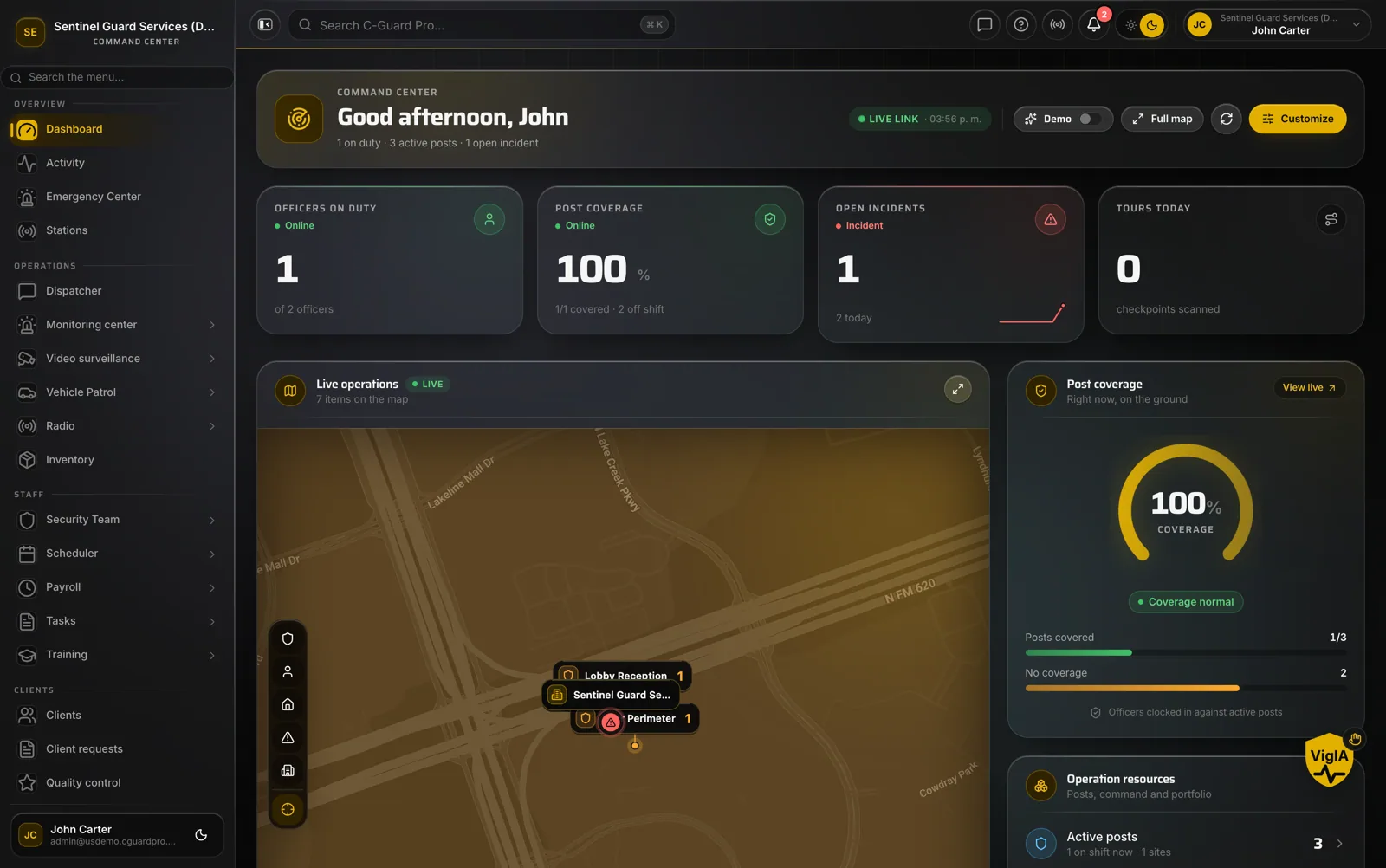
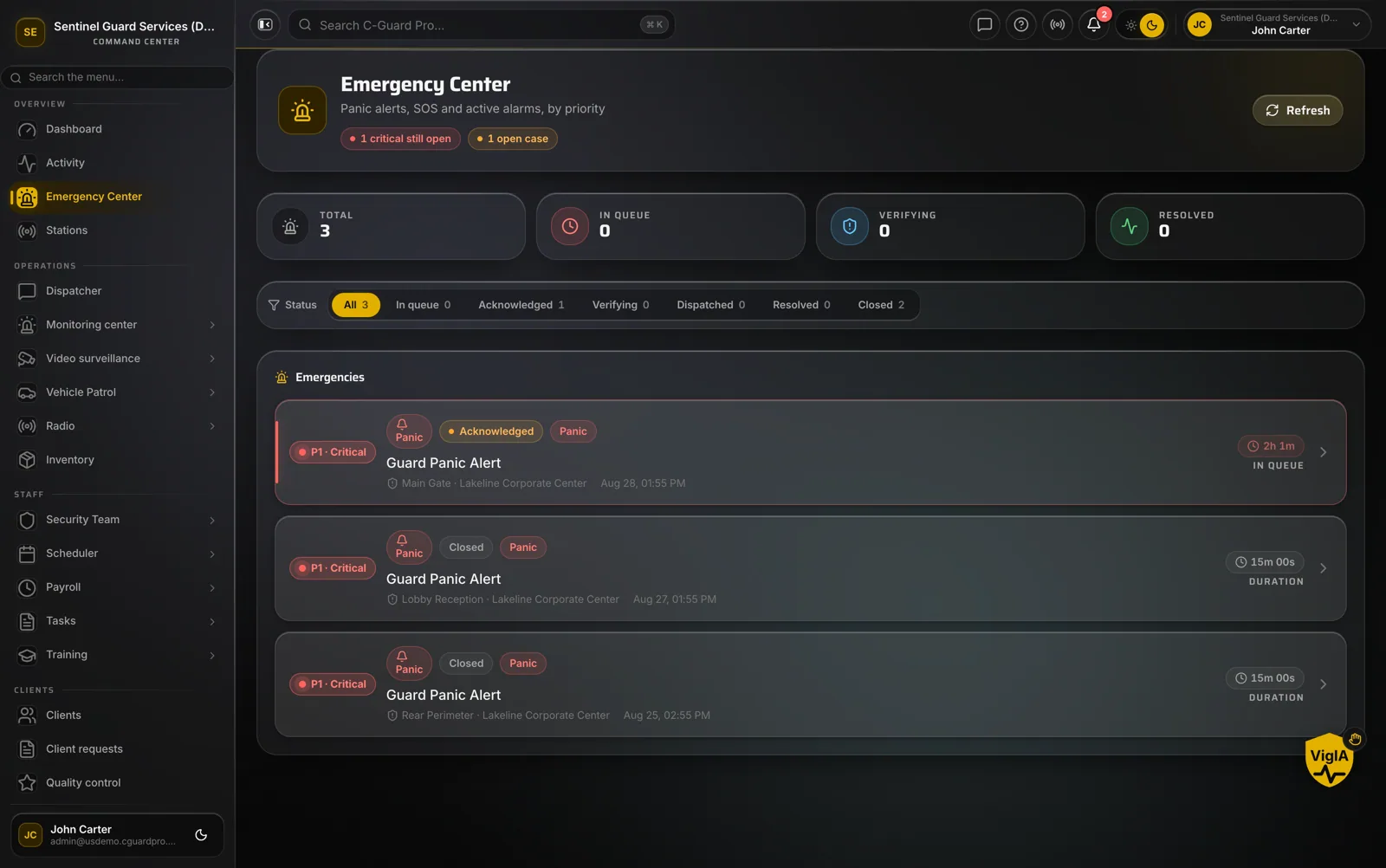
A client portal that gives a property manager direct visibility into reports, checkpoint activity, and incident logs doesn’t replace any of the above — it makes several of them easier to verify in practice. A contract that specifies a reporting cadence is only as good as whether the client can actually see, in real time, whether that cadence is being met, rather than waiting for a monthly summary to find out reporting had quietly slipped.
A note on the legal side
Nothing above is legal advice, and none of it should be treated as a template. Contract terms — indemnification, insurance minimums, licensing requirements referenced in the agreement, and what’s enforceable in a termination clause — vary by state and by the specifics of the relationship, and they should be reviewed by counsel before signing, on both sides of the table.
If you want to see how reporting, checkpoints, and incident logs stay visible to a client throughout the life of a contract, explore CGuardPro or get in touch.