Two guard companies quote you a similar price. One hands you a phone number, a promise, and a stack of paper log sheets you’ll never read. The other gives you a login where you can watch patrols complete, incidents get reported, and guards clock in — live, from your desk. On paper they cost about the same. In practice, only one of them lets you actually know what you’re paying for. That gap is the whole point of understanding the modern security guard company standard before you sign anything.
Technology hasn’t replaced the guard — a person still walks the property, still notices the propped door, still calms the situation in the lobby. What technology has done is make the service visible and verifiable. In 2026, that visibility is no longer a premium extra. It’s the baseline. A provider who can’t offer it isn’t cheaper; they’re just harder to hold accountable.
The 2026 baseline you should expect
When you evaluate a provider today, these capabilities should be present and demonstrable — not “on the roadmap,” not “we can look into that.”
- A live client portal. You log in and see the current state of your service: who’s on site, patrols done, incidents open. Not a monthly PDF — a screen you can open any time.
- GPS guard tracking. You can confirm guards are where they’re supposed to be, and see the trail of a patrol rather than trusting a signature.
- QR or GPS patrol proof. Each checkpoint produces a time-stamped record when the guard physically reaches it.
- Panic and emergency alerts. A guard in trouble can trigger an alert that reaches the right people fast, with location attached.
- Digital daily activity and incident reports. Legible, searchable, delivered as they happen — not a clipboard scanned days later.
None of this is exotic anymore. It’s the equivalent of expecting a delivery company to offer tracking. If your provider can’t show it, they’re running a service model from a decade ago and asking you to pay current prices for it.
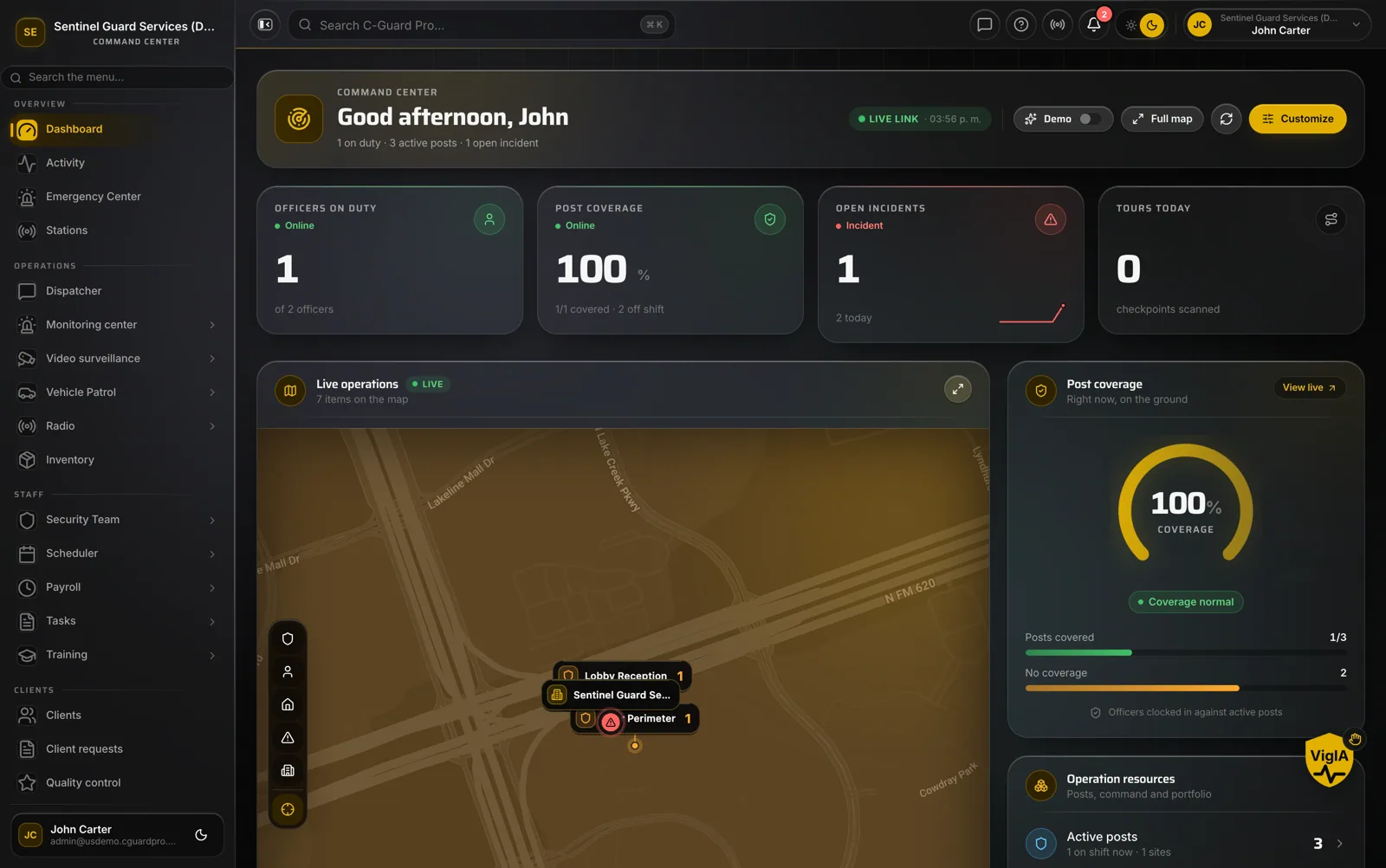 The modern baseline: one screen where a client sees coverage, patrols and incidents in real time instead of waiting for a monthly recap.
Why the modern security guard company standard protects you
It’s easy to see all this as gadgetry the provider uses to look impressive. It isn’t. Each capability closes a specific way the old model failed the buyer.
Paper hides problems; live data surfaces them. A guard who skips a round can sign the log anyway. A guard who’s supposed to be on site can be somewhere else. Under the old model you find out weeks later, or never. With GPS tracking and QR guard tours, the gap shows the same day, while you can still do something about it.
Real-time beats retrospective. A monthly report tells you about problems you can no longer prevent. A client portal lets you catch a missed patrol on Tuesday morning instead of reading about the burglary on Friday. The value isn’t the software — it’s the shift from explaining the past to shaping the present.
Documentation you can actually use. Digital incident reports don’t just look tidier. They’re searchable, time-stamped, and defensible if an incident ever ends up in a dispute or a claim. A box of handwritten logs is nearly useless when you need to reconstruct exactly what happened and when.
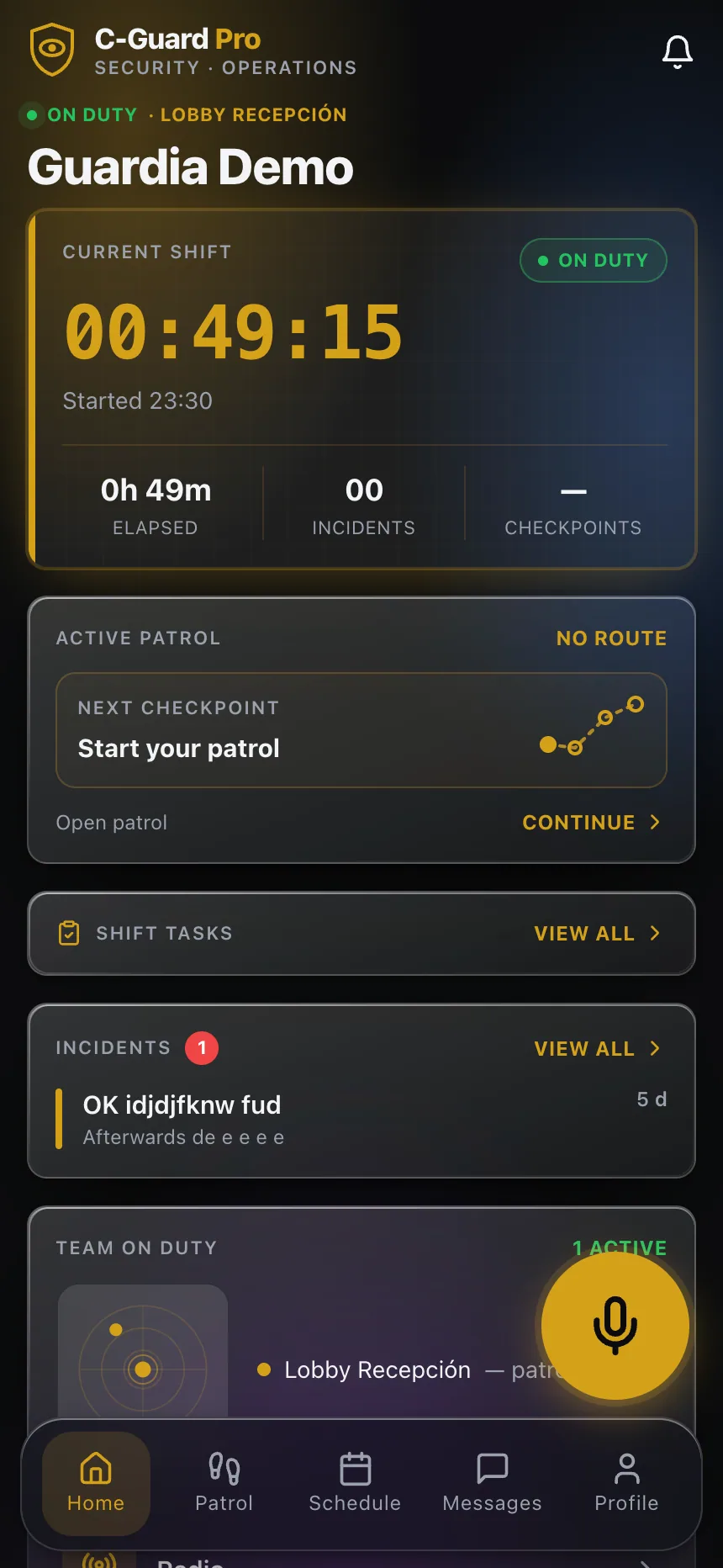 Guards run the shift from a phone; every check-in, patrol and report flows straight to the client, which is what makes the whole thing verifiable.
Technology serves the guard, it doesn’t replace them
Be wary of any pitch that leans on buzzwords — “AI-powered,” “autonomous,” “smart security” — as if software does the protecting. It doesn’t. A camera can flag motion but can’t intervene. An app can log a patrol but can’t decide the situation looks wrong and act on it. The judgment, presence and calm of a trained person remain the core of the service.
The right role for technology is to make that person more effective and their work visible: to guide a new guard through your specific post orders, to prove the patrol happened, to get help to them fast if something goes wrong, and to hand you clear evidence of it all. A modern provider uses tools to raise the floor on reliability. A weak one uses them as marketing.
How to spot the dated provider
During a sales conversation, ask direct questions and watch how they land:
- “Can I see a live portal for one of your current clients?” Hesitation or “we’ll send you a report instead” is a tell.
- “How do you prove a patrol was completed?” If the answer is “the guard signs the log,” you’re looking at the old model.
- “What happens the moment a guard hits the panic button?” A modern provider describes an alert flow. A dated one describes a phone call.
You’re not being difficult. You’re testing whether the service is verifiable or just promised.
Set the bar and hold it
The modern security guard company standard isn’t about chasing the flashiest technology. It’s about insisting on the visibility and accountability that today’s tools make ordinary: live coverage you can see, patrols you can verify, alerts that move fast, and reports you can actually use. Anything less is a service designed to be taken on trust, and trust is exactly what fails you at 3 a.m.
If you want a concrete sense of what that standard looks like from the buyer’s chair, explore the client portal a good provider should be able to show you today.