Two security companies can quote you nearly the same price and sound nearly identical in a sales meeting. The difference between them often comes down to one thing you won’t hear unless you ask: whether they can actually prove the service they promise, or whether you’ll be back to paper logs and taking their word for it. The right security company technology questions cut straight through the polish and tell you which kind of provider you’re really dealing with.
You don’t need to be technical to ask these. You just need to know what a good answer sounds like, and what a dodge sounds like. Here are the questions worth asking, in the order that matters most, along with what the answers reveal.
Start with visibility, because it changes everything
”Do you offer a client portal where I can see the service live?”
This is the single most revealing question you can ask, so ask it first. A modern provider will say yes and show you a client portal where coverage, patrols, incidents, and response times are visible without emailing anyone. A dated one will offer monthly summaries, or promise a report “whenever you need it,” which means the live data doesn’t exist.
The reason this question matters so much: it determines whether you’ll be verifying the service or trusting it. Everything else on this list feeds that portal. A provider who’s confident about what you’ll see is telling you something good; one who’s evasive is telling you something too.
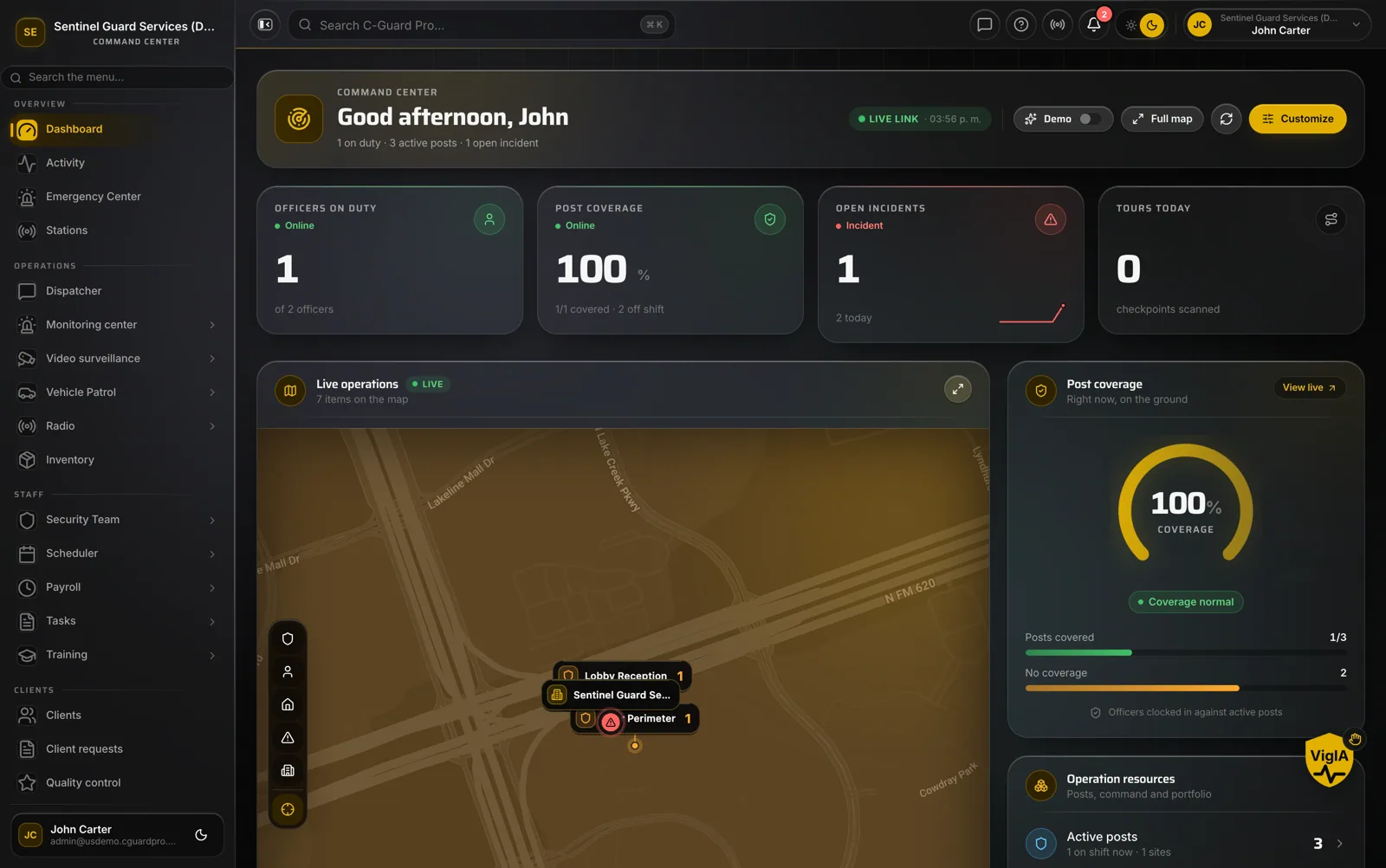 The first question to ask: can you see this kind of live view yourself, or do you wait for a monthly recap?
Then ask how they prove the basics
”How do you verify guards actually patrolled?”
Listen for QR or GPS-verified tours, where each checkpoint is scanned so a completed round means every point was genuinely visited, in order, at roughly the right time. If the answer is “the guard signs a sheet,” a skipped patrol simply never gets recorded, and you’ll never know. This question separates measurable coverage from a promise on paper.
”How do you confirm guards showed up and covered their posts?”
A good provider points to GPS-verified, geofenced clock-in, so a guard can only clock in from the actual site, and no-shows can’t be quietly billed to you as covered shifts. A vague answer here often means attendance is tracked loosely, if at all, which is exactly where clients end up paying for hours they never received.
Ask about the moments that matter most
”What happens the instant a guard hits a panic button?”
You want to hear that a panic alert fires instantly with location, that a defined chain of people is notified in seconds, and that the whole event is timestamped for later review. Push for specifics: who’s notified, how fast, and can you see afterward how quickly they responded? Emergencies are rare, which is exactly why you must confirm the mechanism before you ever need it.
”When something happens, how and when do I hear about it?”
The right answer is a prompt digital report with the facts, a photo, a timestamp, and a location, not a phone call days later or a one-line note. Slow, thin reporting doesn’t just annoy you; it leaves you exposed if you ever need a clear record of what happened and when.
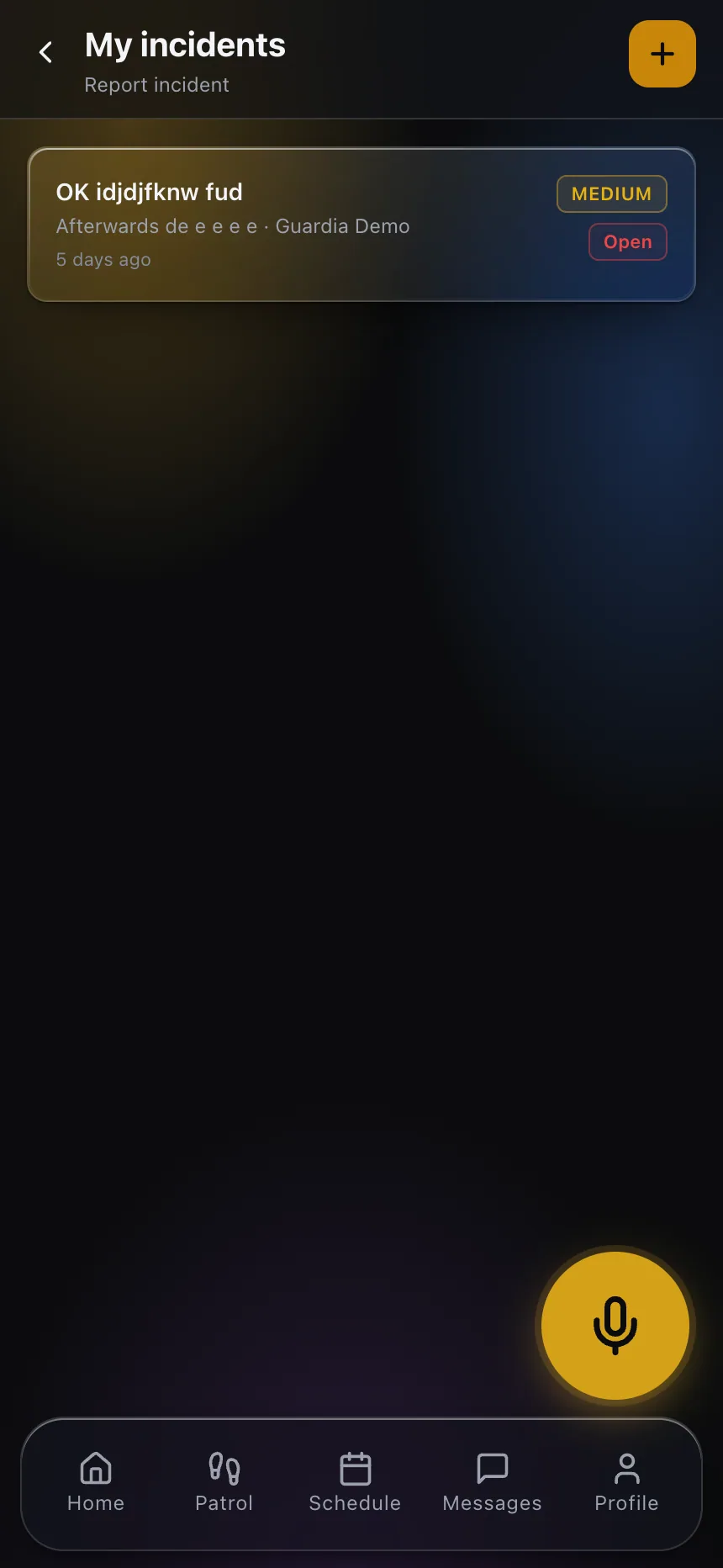 Ask to see a sample incident report. Facts, photo, time, and location, or a vague line days later?
Watch how they answer, not just what they say
The content of the answers matters, but so does the manner. A provider comfortable with technology will happily show you a live demo, walk you through a real (anonymized) report, and set up your portal access before their first shift. A provider stalling for time, insisting you don’t really need live access, or steering every answer back to their “experienced team,” is often covering for tools they don’t have.
Neither is a moral judgment. Plenty of decent guards work for providers still running on paper. But you’re buying verifiable service, and these questions test exactly that. The friendly ones tend to be running on hope; the specific ones tend to be running on systems.
A quick note before you sign anything: portals, GPS, and incident records involve location and personal data, which carry retention and privacy obligations that vary by jurisdiction. Ask what’s collected, how long it’s kept, and who can access it, and confirm the specifics with your own advisor. This isn’t legal advice.
You don’t have to grill a provider to get honest answers, you just have to know which security company technology questions expose the gap between promise and proof. Ask about the portal, the patrols, the attendance, the panic response, and the reporting, and you’ll know within one conversation whether you’re hiring a modern partner or a paper one.
Want a clear benchmark for the answers you should be hearing? Explore the client portal and hold every provider to what it shows.