When you hire a security company, you’re mostly buying promises: guards will patrol, they’ll show up on time, they’ll report what they see, and someone will respond fast if things go wrong. For decades, clients had no way to check any of that between incidents. You paid, you hoped, and you found out the truth only when something went badly wrong. Understanding security guard technology for clients is really about understanding how those promises stop being promises and start being things you can verify in real time.
The point of the technology isn’t gadgets. It’s accountability. Each tool a modern provider uses closes a specific gap between what you were told would happen and what actually did.
Technology doesn’t replace guards, it proves them
Let’s be clear up front: no app patrols your property, and no software confronts a trespasser. The guard does that. Technology’s job is to make the human work visible and coordinated, not to replace it. Anyone selling you a “guard robot” future is overpromising. The realistic, valuable version is simpler, tools that let a good guard do a better job and let you confirm the job got done.
That framing matters because it keeps your expectations honest. The right question isn’t “how automated is this provider?” It’s “can this provider prove the service I’m paying for actually happened?” Here’s how each core tool answers that.
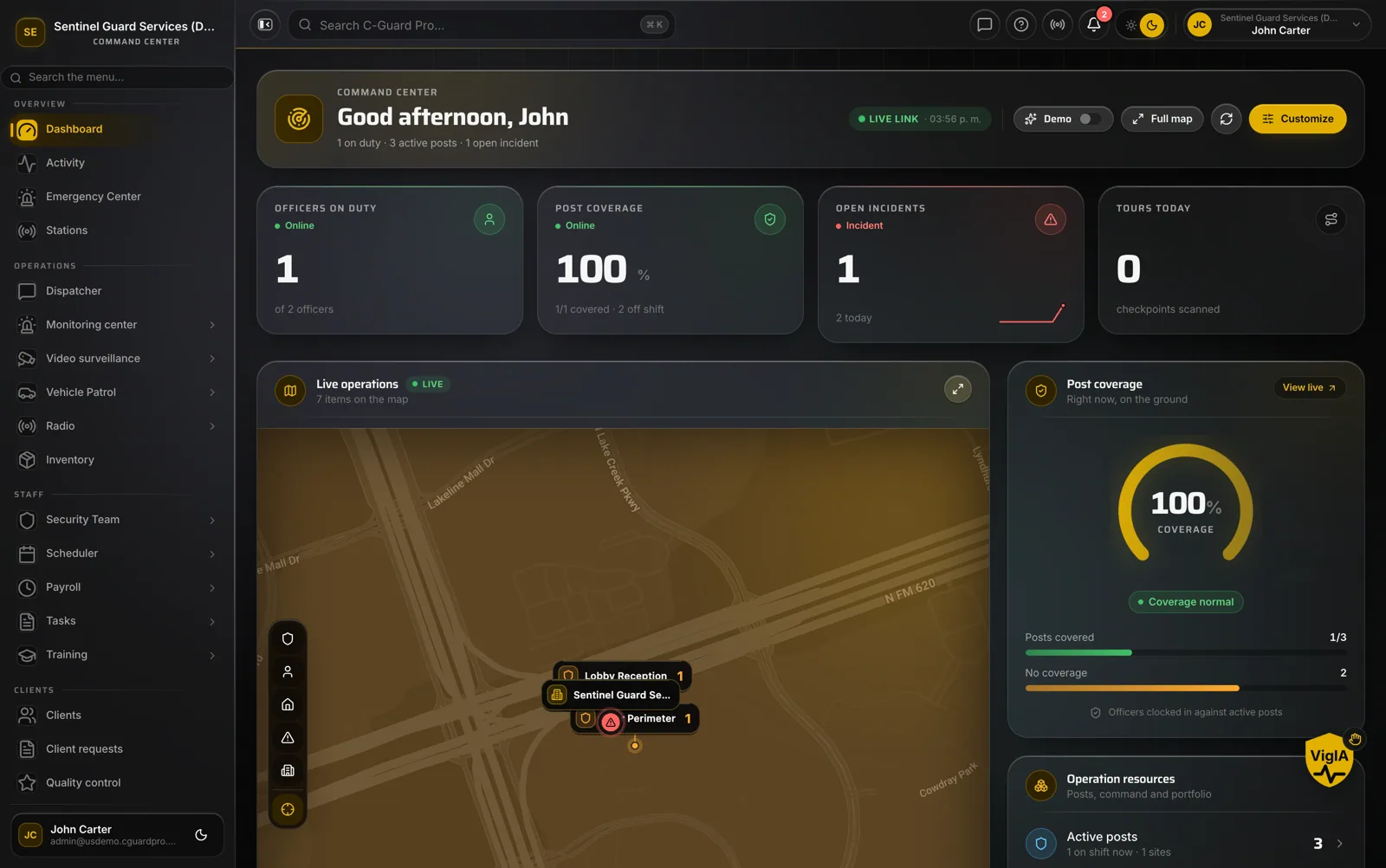 Each tool below feeds one live picture, turning a provider’s promises into a record you can check.
GPS tracking: proof of presence
The oldest question in contract security is simple: was the guard actually there? GPS guard tracking answers it. Instead of trusting a signature on a paper sheet that could have been filled in from a break room, you can see that a guard was physically at the posts and moving through the property as scheduled.
The honest limits: GPS drifts a little, and dense buildings can weaken the signal. It’s a strong indicator of presence, not a courtroom-grade tracker of every step. Used sensibly, it turns “the guard patrolled” from a claim into a record.
QR-verified tours: proof of coverage
Presence isn’t the same as coverage. A guard can be on the property and still skip the far stairwell every night. QR or NFC guard tours fix that by requiring a scan at each checkpoint, so a completed round is one where every point was actually visited, in order, at roughly the right time.
For you, that means missed patrols surface as visible gaps instead of vanishing into an unwritten paper log. It’s one of the clearest upgrades a client can insist on, because it directly measures the thing you’re paying for.
Panic alerts: proof of response
The rare emergency is what all of this ultimately exists for. A panic button in the guard’s app sends an instant alert with location the moment a guard needs backup, so response starts in seconds rather than after a phone call nobody picks up. Just as important, the alert and the response get timestamped, so you can review afterward how fast the provider actually reacted, exactly when it counted most.
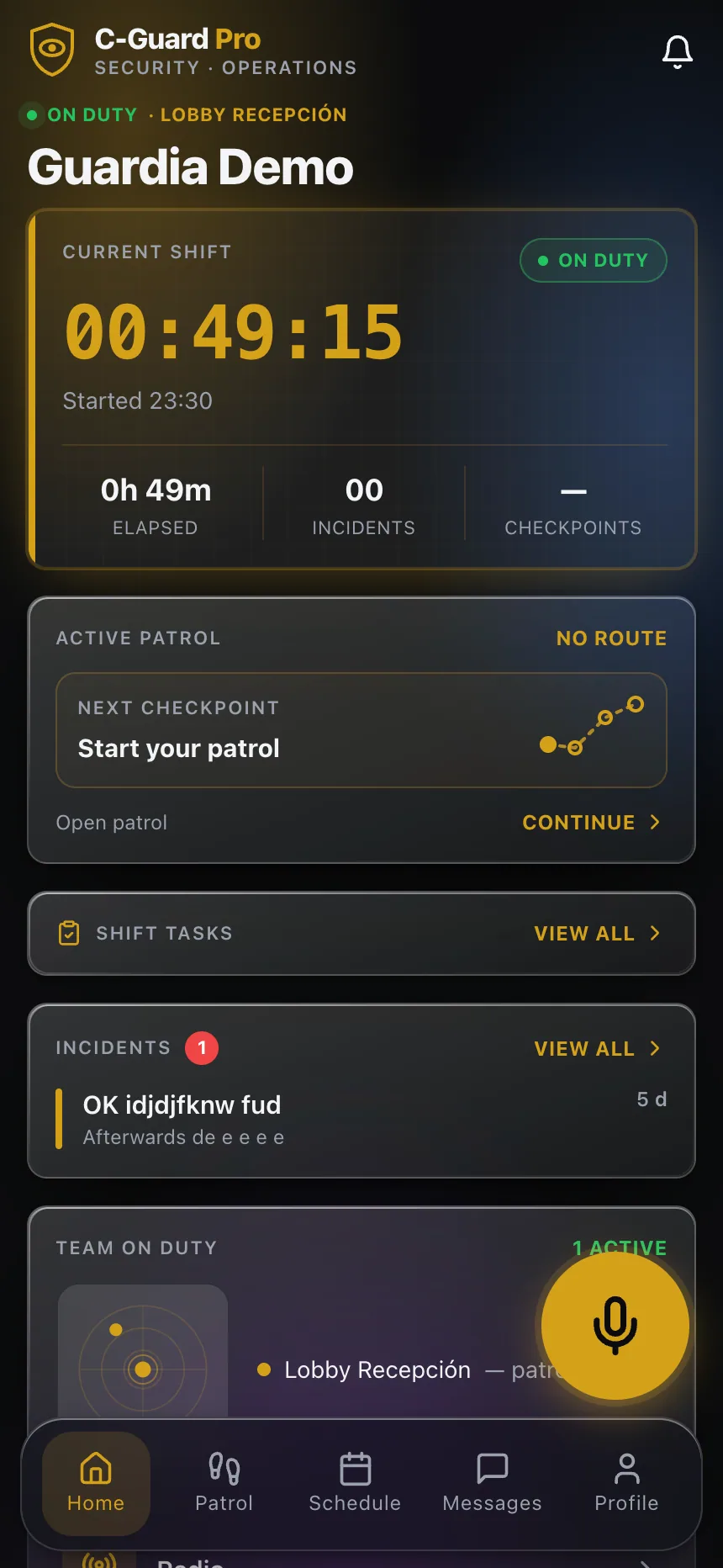 Digital reports and alerts carry facts, photos, time, and location, so nothing depends on memory.
Digital incident reports: proof of what happened
Paper reports arrive days late, go missing, or shrink to a single vague line. Digital incident reports reach you promptly with the facts, a photo, a timestamp, and a location, while the details are still fresh. That protects you twice: you learn about problems fast enough to act, and you have a clean record if you ever need to show what happened and when.
The client portal: where it all comes together
Individually, each tool closes one gap. Together, they feed a client portal, the single place where you see coverage, patrols, incidents, and response live, without emailing a supervisor and waiting a day. The portal is the payoff of all the other technology, because it puts the verified record directly in your hands instead of the provider’s.
This is also the cleanest test of who you’ve hired. A provider who offers a portal is confident in what you’ll see. One who can’t provide live visibility is asking you to go back to paying and hoping.
What this means for you as a buyer
The takeaway isn’t that you need to become a technology expert. It’s that these tools give you a right you didn’t used to have: the right to verify. When you evaluate or hold a provider accountable, you can now ask for proof of presence, proof of coverage, proof of response, and proof of what happened, and expect real answers.
A word of caution on the data side: GPS, footage, and incident records involve location and personal information, which carry retention and privacy obligations that vary by jurisdiction. Agree with your provider on what’s collected, how long it’s kept, and who can see it, and confirm the specifics with your own advisor. This isn’t legal advice.
Security guard technology for clients, at its best, is boring in the right way: it quietly converts trust into evidence. You still hire good people, because people do the actual protecting. But you no longer have to take their presence, their patrols, or their response purely on faith.
Want to see what verifiable service looks like in one place? Explore the client portal and use it as the standard you hold any provider to.