Cargo theft doesn’t happen randomly. It happens in the dark corners of a warehouse yard — an unlocked gate, a dropped trailer, a fence line nobody checked for six hours. A warehouse yard security plan is how you close those gaps. It tells your security provider exactly what to patrol, how often, and what proof to leave behind. If you manage a distribution center, cold storage facility, or logistics hub in Texas or anywhere in the U.S., this guide shows what your plan must demand.
A warehouse yard security plan is a written operational plan that secures trailer lots, dock doors, gates, fences, and vehicle areas by defining patrol routes, gate control procedures, incident escalation, and reporting. At a minimum, it should require GPS patrol tracking, QR checkpoints at high-risk zones, photo-documented incidents, and client-portal access so you can verify yard visibility without calling the guard post.
Why a warehouse yard security plan is non-negotiable
A warehouse yard security plan matters because trailer theft and perimeter breaches are preventable when you have proof of patrols — but nearly impossible to catch after the fact when you don’t. A single stolen trailer or a load of high-value cargo can cost more than a year of security technology. Beyond direct loss, repeat incidents raise insurance premiums, disrupt operations, and damage your reputation with customers who expect their freight to be secure.
For distribution center yard security, the risk is concentrated after hours. Guards may be fewer, visibility is lower, and dock doors, fence gaps, and dropped trailers become easier targets. A plan that exists only on paper won’t stop a breach. The plan must convert your high-risk zones into scheduled, documented tasks and give you a way to verify those tasks were done.
What a logistics facility guard plan should include
A logistics facility guard plan should define gate control, trailer yard patrols, perimeter checks, incident reporting, and escalation procedures in writing. If the plan only says “guard will tour yard,” it isn’t a plan. A usable logistics facility guard plan includes:
- Gate logs and trailer seal verification for every truck entering or leaving.
- Scheduled perimeter patrols with defined routes and checkpoints.
- High-risk spot checks: dock doors, fence gaps, blind corners, and trailer parking rows.
- Driver and visitor verification, including appointment checks and ID capture.
- After-hours alarm and emergency response procedures.
- Digital reporting: GPS trails, QR scans, incident photos, and daily activity reports.
Each item should have an owner, a frequency, and a proof method. Without those three elements, security becomes a hope instead of a process.
Distribution center yard security: gates and trailer lots come first
Distribution center yard security starts at the gate and extends to every trailer, container, and dock door in the yard. The gate is your first filter: guards should verify driver ID, seal number, appointment, vehicle plate, and time in/out. A rushed or missing gate log is often the first sign that trailer yard security is slipping.
Inside the yard, dropped trailers and loaded containers are prime theft targets. Guards should check seals, door conditions, and the exact location of high-value units on a regular cycle. Using QR checkpoints at the gate, dock doors, and trailer rows forces guards to physically reach those spots instead of radioing from a shack. This turns a walk-through into an auditable security task.
Trailer yard security best practices: layer physical and human controls
Trailer yard security best practices combine physical barriers, visibility, and verified patrols — not just a guard sitting in a booth. A guard cannot see every trailer at once, and a camera cannot challenge an intruder. But together, they create a much tighter yard.
Your warehouse yard security plan should layer these controls:
- Perimeter fencing with anti-cut or anti-climb design and clear signage.
- Controlled gate access with a single entry and exit point where possible.
- Bright, consistent lighting across dock doors, trailer rows, and fence lines.
- Cameras covering blind spots, gates, and high-value staging areas.
- GPS-verified patrols that move unpredictably and cover vulnerable zones.
- Digital incident reporting with photos and time stamps for any anomaly.
Theft often occurs because one layer fails — a dark corner, an unlocked gate, a guard who skipped a round. A layered approach reduces the chance that a single failure opens the whole yard.
Warehouse perimeter security plan: where patrols go and how often
A warehouse perimeter security plan should map every vulnerable point — fence line, gates, blind corners, dock doors, trailer parking — and assign QR checkpoints to each. Guards should not be left to improvise a route. The plan should state the exact sequence, the checkpoint ID, and what to look for at each location.
There is no universal U.S. legal rule for patrol frequency, but for most logistics facilities a realistic minimum is every 60–90 minutes during overnight and low-activity shifts. High-value distribution centers or yards with a recent theft or trespassing history should tighten that to every 30–60 minutes. The plan should specify frequency per zone and require proof that each patrol occurred. If your provider can’t agree to a written frequency, that is a red flag.
Overnight patrol accountability: GPS tracking, QR checkpoints, incident photos
Overnight patrol accountability is the difference between a guard who walked the yard and a guard who says he did. When you’re asleep and the yard is dark, the only thing protecting your trailers is evidence. Demand three forms of proof from your provider:
- GPS guard tracking that records the route, time, and duration of every patrol. A live trail shows whether a guard actually covered the fence line or just looped the parking lot. See GPS guard tracking.
- QR checkpoints at high-risk spots — dock doors, trailer rows, fence gaps, and gates. Scanning a QR tag proves physical presence, not just proximity.
- Incident photos that document damage, open gates, broken seals, suspicious vehicles, or anything unusual. A time-stamped photo is hard to fake and easy to review.
If your provider cannot show a patrol trail with timestamps, assume the patrol didn’t happen.
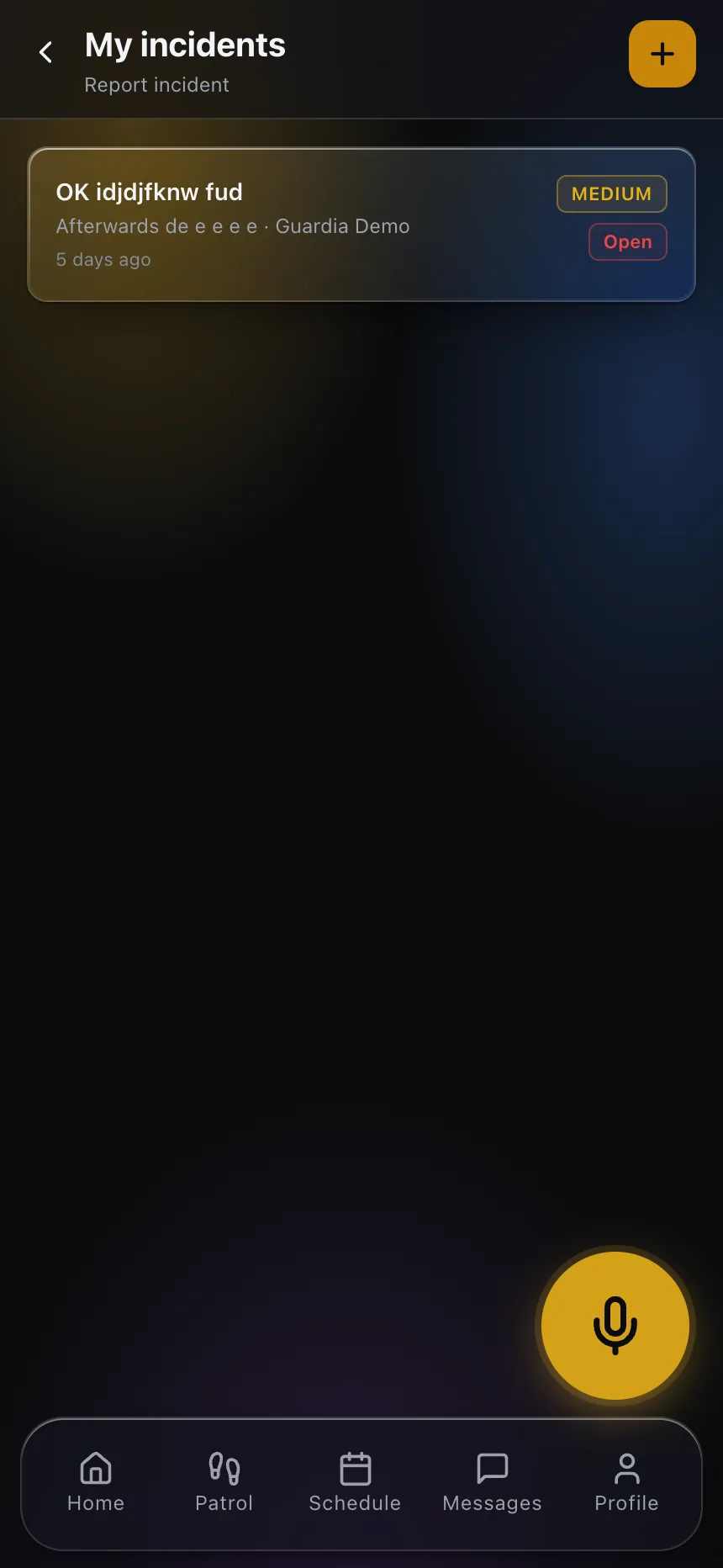 Figure 1: Require incident photos and time stamps from the yard — a digital report with photo evidence is harder to fake than a paper log.
Client-portal access: yard visibility without calling the guard
Your provider should give you a client portal where you can see yard activity, patrol completions, incidents, and guard attendance in near real time. As a buyer, you shouldn’t have to call the guard post to find out whether last night’s patrols happened.
A client portal shows you every QR checkpoint scanned, every GPS trail completed, and every incident reported with photos. You can review the overnight shift over morning coffee and spot gaps before they become patterns. This level of visibility also puts healthy pressure on the guard company: supervisors know you can see incomplete rounds, so they manage their guards more closely.
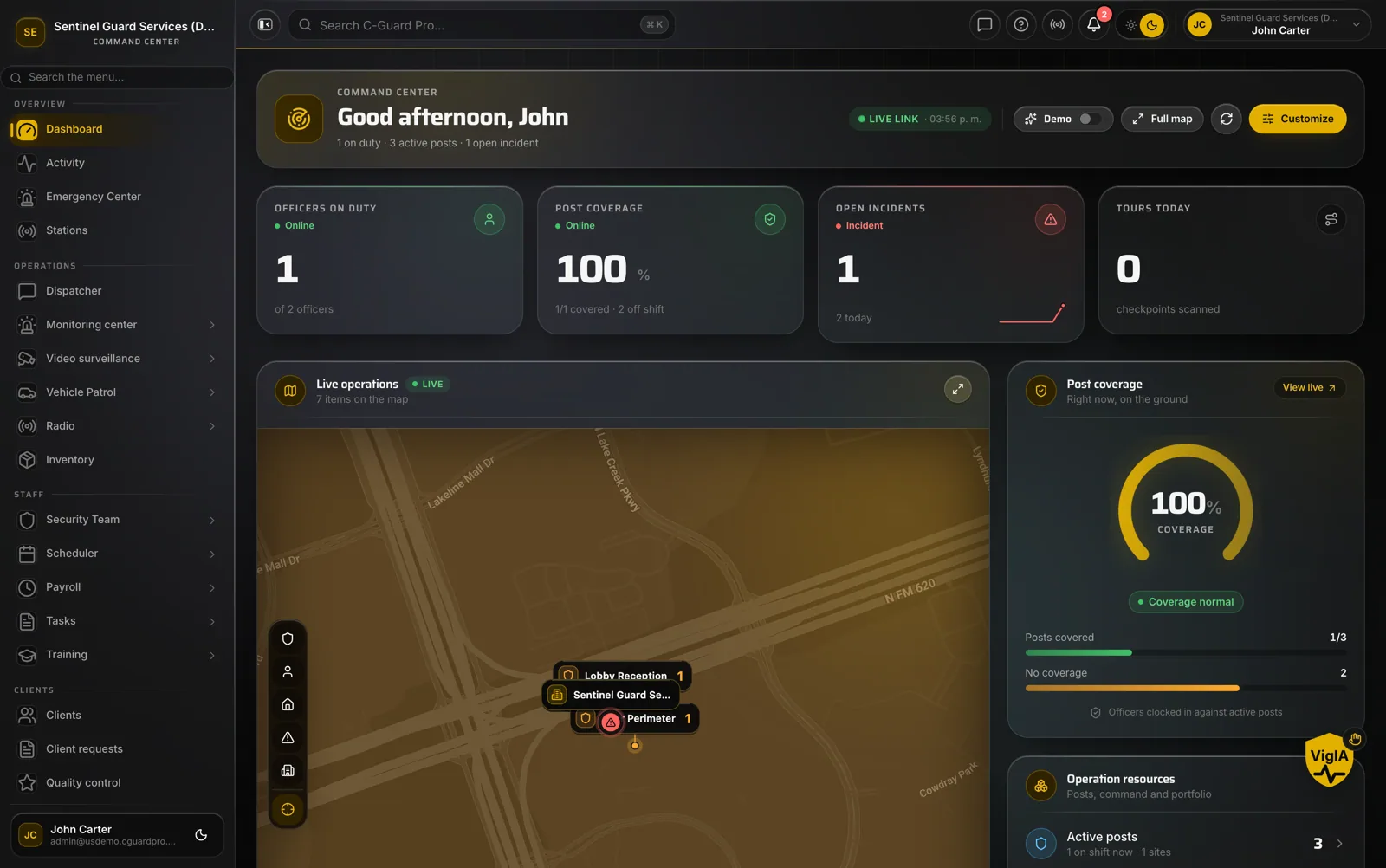 Figure 2: A client portal dashboard gives you near-real-time yard visibility — check completed patrols, open incidents, and guard presence without calling the site.
Warehouse yard security plan checklist
Use this checklist when reviewing your current security provider or evaluating a new one.
| Layer | What to demand from your provider | Proof you should see |
|---|---|---|
| Perimeter patrols | Scheduled GPS-tracked tours with defined QR checkpoints | Client portal map with timestamps per checkpoint |
| Gate control | Written log of trucks, drivers, seals, and appointments | Digital gate log export or daily report |
| Trailer and yard checks | Seal verification, door and trailer condition checks | Photo-documented checklists by checkpoint |
| Incident handling | Immediate photo report and escalation for any breach | Incident report in portal with photo and time stamp |
| After-hours visibility | Guard check-ins every 60–90 minutes or better | GPS trail and completed QR scans for the shift |
If a provider cannot show the right-hand column, you are paying for presence without proof.
Frequently asked questions
How do I secure a warehouse yard and trailer lot?
Start with a written warehouse yard security plan that combines fencing, lighting, gate control, and GPS-verified patrols. Require guards to check trailer seals, dock doors, fence lines, and blind spots on a set schedule, and to document every patrol with QR checkpoints and photos. The most important safeguard is visibility: your provider should give you client-portal access to see patrol completion and incidents in near real time.
What should guards check in a logistics yard?
Guards should check gates, fencing, dock doors, trailer and container seals, vehicle parking areas, lighting, and any blind corners where intruders or theft could go unnoticed. Each checkpoint should have a defined observation — seal intact, door closed, area clear — and require a time-stamped scan or photo. This turns a casual walk into an auditable security task.
How often should perimeter patrols be done at a warehouse?
There is no single legal rule for every U.S. warehouse, but a practical minimum is at least every 60–90 minutes during overnight and low-activity shifts. High-value distribution centers or yards with recent theft attempts may require checks every 30–60 minutes. The provider should commit to a written patrol frequency and prove it with GPS tracking and QR checkpoint logs.
What proof should my vendor provide that patrols happened?
Demand a client portal that shows GPS patrol trails, QR checkpoint scans with timestamps, and photo-documented incidents for every shift. A daily activity report is useful, but the underlying digital trail is what actually verifies presence. If a vendor can only provide paper logs or after-the-fact summaries, treat it as a red flag.
A strong warehouse yard security plan is a management tool, not paperwork. Before you renew or hire a provider, insist on GPS patrol tracking, QR checkpoints, incident photos, and client-portal visibility — and ask to see what you would see as the client. Explore CGuardPro’s warehouse and logistics security software to compare capabilities against your current yard security.