When a hard freeze hits Texas, property risks escalate fast: dark buildings, burst pipes, frozen access points, alarm trouble signals, and guards who may struggle to reach the site. That is why a texas freeze security plan for commercial properties matters for property managers, facility teams, and HOA boards. The real question is not whether you need security during a freeze, but whether your provider can still operate when normal routines break down.
A Texas freeze security plan for commercial properties should require your security company to switch into emergency operations: increased checks on life-safety risks, real-time incident updates, GPS-verified patrols, panic escalation for lone guards, and a client portal showing site status as conditions change. If your provider cannot prove patrols happened and cannot keep you updated during outages, you do not have a workable freeze plan.
What should a Texas freeze security plan for commercial properties include?
A strong plan should define how your provider protects the property when power, water, access, and staffing are disrupted. In practice, that means the guard force is not just “present” but working from a site-specific winter response playbook.
At minimum, ask your provider to cover these items:
| Freeze-plan requirement | What it means for you |
|---|---|
| Priority risk checklist | Guards check entrances, exposed pipes, sprinkler risers, electrical rooms, roof leaks, generator areas, and vacant suites |
| Adjusted patrol frequency | Patrols increase around high-risk assets during freezing hours and outage periods |
| GPS-verified supervision | You can confirm patrol activity and supervisor oversight, not just rely on phone calls |
| Digital incident reporting | A digital incident report is an electronic record of issues, actions taken, timestamps, photos, and escalation notes |
| Panic escalation | A panic button for guards is a one-touch emergency alert that signals dispatch or management when a guard needs urgent help |
| Client visibility | A client portal is a live online dashboard where you can review incidents, patrol completion, and current site status |
| Staffing contingency | Backup coverage exists if officers cannot safely travel or call off due to road conditions |
This is the difference between ordinary patrol service and security during a Texas freeze.
How should guard duties change during winter outages?
Guard duties during winter outages should become more focused, more frequent, and more documented. A normal patrol route is usually not enough when the building is partially dark, temperatures are dropping, and maintenance vendors may be delayed.
How often should guards check freeze-related risks?
Guards should check freeze-sensitive areas more often than during standard operations. That usually includes mechanical rooms, fire panels, water-entry points, pipe-exposed areas, loading docks, stairwells, vacant floors, and perimeter doors that may not latch correctly in severe cold or wind.
In a commercial building freeze response security plan, a guard may be instructed to:
- Recheck sprinkler and utility areas at set intervals
- Look for ceiling stains, active drips, ice buildup, or standing water
- Watch for open or damaged doors creating temperature loss
- Confirm emergency lighting and critical access points remain functional
- Report alarm faults or communication failures immediately
What should guards do in dark or partially powered buildings?
Guards should secure access, identify unsafe areas, and escalate maintenance and emergency issues quickly. A dark building creates both safety and liability exposure: slip hazards, elevator issues, unsecured doors, and unauthorized entry become more likely.
In those conditions, your provider should send:
- Immediate status updates when power is lost
- Photos of affected areas
- Clear notes on what remains operational
- Escalation logs showing who was notified and when
If your provider uses a client portal, you should be able to see those updates without waiting for the next-day report.
How do you monitor whether patrols really happened during a freeze?
You should require proof of patrol completion through location-based technology. During severe weather, buyers should not accept vague statements like “site checked” or “all clear” without timestamps and route evidence.
A guard tour system with QR or GPS proof records that a guard reached specific checkpoints or patrol zones at specific times. GPS supervision adds another layer by showing officer movement patterns and whether field supervisors actually visited the property.
This matters during a winter storm property security Texas event because:
- Roads may delay supervisors
- Officers may consolidate routes under pressure
- Client calls increase while documentation quality often drops
- Small failures become expensive insurance claims later
Ask your provider whether you can review patrol validation and supervisor activity through GPS guard tracking, not just after the event but while it is happening.
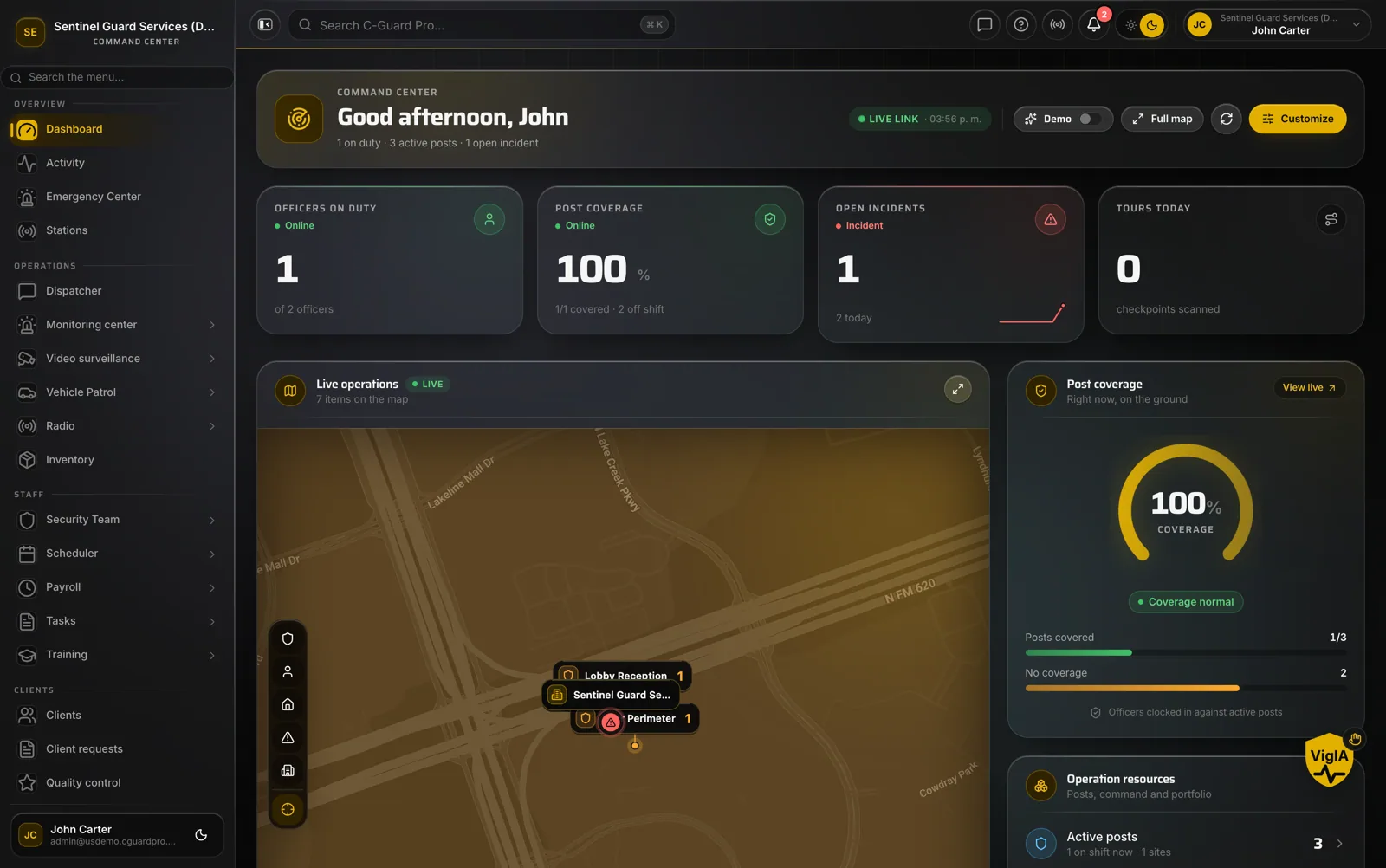 Example of a client portal view that helps property teams monitor site status during outages and freeze events.
What updates should you expect during a freeze emergency?
You should expect structured, time-stamped updates, not scattered texts or verbal summaries. In an emergency, silence is a risk because conditions can worsen fast: a small leak becomes a flood, a dark vestibule becomes a safety claim, and a forced-open door becomes a security incident.
A good reporting cadence usually includes:
- Initial condition report when the freeze response starts
- Immediate alert for power loss, water leaks, fire/life-safety issues, or access failures
- Ongoing update intervals for unresolved conditions
- Final stabilization summary with actions taken and open issues
A daily activity report is a digital summary of patrols, incidents, observations, and actions completed during a shift. During severe weather, that report should include exception-based updates in real time, not just an end-of-day recap. See what that can look like in daily activity reports.
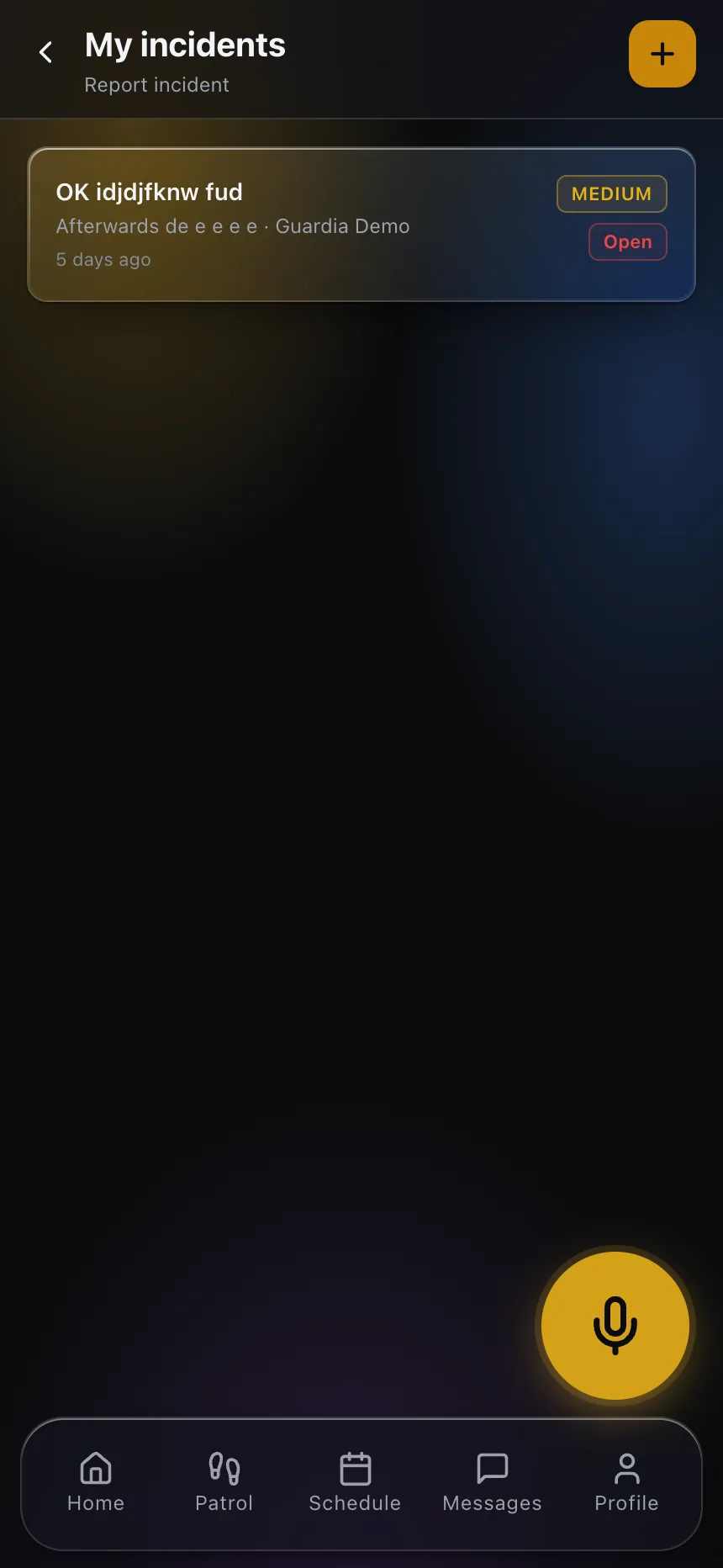 Field incident reporting should capture photos, timestamps, and escalation notes while the event is still active.
Why is panic escalation important for guards during winter events?
Panic escalation protects both the officer and your property when conditions become unsafe. During a freeze, guards may work alone in dark areas, respond to trespassers near warming points, encounter flooding near electrical risks, or need urgent backup when phones and radios are unreliable.
A panic feature gives the officer a faster path to help and gives you confidence that a single guard is not isolated. For lone-post properties, this is one of the most important requirements you can set for guard duties during winter outages. If you are evaluating emergency readiness, review how panic button security for guards should work.
How should buyers evaluate staffing resilience during a Texas freeze?
You should ask how the vendor will maintain coverage if officers cannot travel, are stuck on-site, or must be replaced mid-shift. Weather plans fail most often on staffing, not policy.
Look for direct answers to these operational questions:
- Does the vendor have backup officers positioned by zone?
- Can supervisors cover posts if relief is late?
- Are extended-shift procedures defined and lawful?
- How will meal, warmth, and communication needs be handled for stuck-on-site officers?
- Who updates you if the vendor must modify the post order temporarily?
This is especially important in Texas, where freeze events are infrequent enough that some providers may not have a mature storm protocol. State and local requirements can vary, so your provider should tailor the response to your property type, life-safety systems, and occupancy profile rather than offer a generic weather statement.
Frequently asked questions
What should security do during a Texas freeze or winter storm?
Security should focus on life-safety and property-damage prevention: checking for leaks, frozen access points, power-related issues, alarm trouble signals, and unauthorized entry risks. Guards should also send real-time updates, document incidents with photos, and escalate urgent issues immediately.
How do I protect a commercial property during widespread power outages?
Protect the property by tightening access control, increasing patrol attention around dark or vulnerable areas, and requiring fast reporting on hazards and equipment failures. Your security provider should also give you live visibility through a client portal and verified patrol activity through GPS or checkpoint records.
Should my security vendor change patrols during severe weather?
Yes, patrols should change during severe weather because the risk profile changes. Your provider should increase checks on utilities, mechanical areas, entrances, vacant spaces, and any zone exposed to water intrusion, while documenting those patrols more closely than usual.
What updates should I expect from guards during an emergency?
You should expect an initial status report, immediate alerts for major issues, periodic progress updates, and a final summary of what happened and what remains unresolved. Those updates should be time-stamped, clear, and preferably visible in a client portal rather than delivered only by phone or text.
A freeze plan is only useful if your provider can execute it under stress and show you what is happening in real time. If you want to see the kind of client visibility modern buyers should require, review the client portal for security companies.