A solar farm doesn’t look like a target from the highway. It looks like a flat field of panels behind a chain-link fence, quiet, unattended most of the day, with nothing that reads as valuable to anyone driving past. That’s precisely the problem. Underneath the panels is a site with miles of copper conductor, combiner boxes, and inverter stations spread across acreage that a two-person patrol crew cannot possibly cover continuously, and the people who target these sites know the difference between what looks valuable and what is. That mismatch is the whole solar farm security guard copper theft prevention problem in one image.
Solar farm security guard copper theft prevention starts with the perimeter, not the panels
Copper theft at a solar site isn’t opportunistic in the way a smash-and-grab is. It’s reconnaissance-driven. Someone interested in stripping conductor from a combiner box doesn’t show up once and start cutting — they watch the site first, often over multiple visits, timing when a patrol vehicle passes a given section of fence line and how long the gap is before it comes back. A predictable patrol — same route, same order, same rough timing every night — is not a deterrent. It’s a schedule the thief can plan around, and a thousand-acre site with a two-hour patrol loop has plenty of time built into that gap for someone who’s done the homework.
This is the part that gets missed when a client asks for “more patrols” as the fix. More patrols on a fixed schedule just means a shorter, still-predictable gap. The variable that actually matters isn’t frequency, it’s whether the timing can be predicted at all. A patrol that hits the northeast fence line at roughly 11 p.m. every night, even if it happens every ninety minutes instead of every three hours, is still giving away exactly when that section is unwatched.
Why randomization beats frequency
Randomized patrol timing breaks the thing reconnaissance actually depends on: the ability to predict when a given stretch of fence line will be empty. If the same section might get checked at 9:40 one night and 1:15 the next, with no pattern an outside observer can detect over a few nights of watching, the calculation changes from “we have a two-hour window” to “we don’t know how long our window is” — and that uncertainty is worth more deterrent value than adding another fixed pass to a predictable loop.
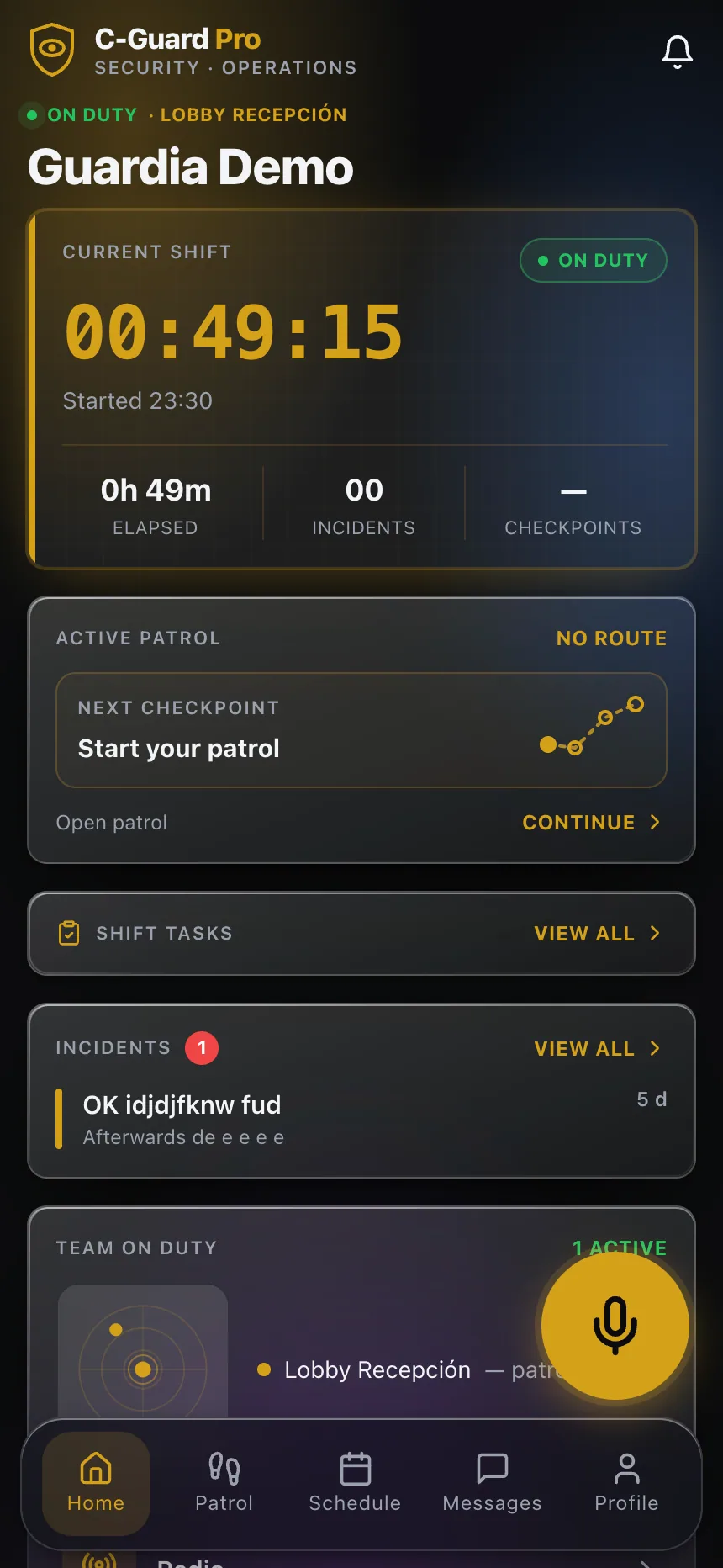
The practical way to enforce this without leaving it to an individual officer’s judgment — which tends to drift back toward habit and convenience over a few weeks — is a route built with randomized timing in the software itself, so the variation is real rather than something an officer intends to do and doesn’t quite manage on a cold night.
Where drones and remote video actually fit
Solar sites are exactly the kind of property where drone patrols and remote video monitoring get pitched as a replacement for a physical patrol, and that pitch oversells what the technology actually does. A drone or a fixed camera on a mile of fence line is genuinely good at one thing: telling you something happened, usually after the fact, and usually with enough delay that a response vehicle is arriving well after anyone involved has left. It’s much weaker at telling you something is about to happen, and weaker still at physically being a deterrent to someone who’s already decided the risk is worth it and is testing whether anyone’s watching.
The honest way to use them is as a force multiplier alongside a walked or driven patrol, not a substitute for one — video coverage narrows down which stretch of fence to check first after an alert, and a drone can cover ground faster than a vehicle when something needs a quick look. Neither one puts a checkpoint scan on record at a specific gate at a specific time, and neither one is what makes a thief reconsider before they’ve cut anything, because a camera doesn’t interrupt a plan already in motion — a patrol vehicle showing up unpredictably does.
Proving the randomization actually happened
This is where the theft-prevention argument and the accountability argument converge. A client paying for randomized patrol timing on a large remote site has no way to verify it happened that way unless the checkpoints themselves record when each one was actually scanned. Checkpoint software that timestamps each scan gives you the record that shows the fence line really was checked at unpredictable intervals across the week, not just that a patrol vehicle exists on paper.
That record matters twice: it’s what lets you tell a client, after an incident, exactly when the affected section was last checked and how long the gap actually was — which is a very different conversation than guessing — and it’s what lets a field supervisor confirm the randomization is genuinely happening rather than drifting back toward the same convenient loop an officer settles into after a few uneventful weeks.
What a client should actually ask for in the contract
A property owner or asset manager contracting for solar site security should ask specifically for randomized timing and checkpoint verification in the service agreement, not just “regular patrols.” A vague reference to patrol frequency lets a contractor satisfy the letter of the agreement with a fixed, predictable loop, which defeats the purpose entirely. Naming the randomization requirement directly, and asking to see the checkpoint record periodically rather than only after an incident, keeps the deterrence real instead of assumed.
What a realistic patrol plan for a solar site looks like
Start with the sections of fence and the combiner boxes that are actually worth stealing from — not a uniform loop that treats every quarter-mile of perimeter the same. Weight the randomization toward those higher-value sections without making them so obviously prioritized that the pattern becomes its own predictable tell. Vary the direction of the loop, not just the timing, since a patrol that always moves clockwise is still giving away information even if the clock time varies. And treat security patrol software built for multi-site, large-acreage rounds as the baseline expectation for this kind of property, not an upgrade — a fixed-route tool designed for a single building doesn’t translate to a site measured in acres rather than floors.
None of this eliminates copper theft. Remote sites with valuable conductor and long fence lines will keep attracting attempts regardless of how good the patrol plan is. What randomized, recorded patrol timing does is take away the one thing that makes the attempt easy: certainty about when nobody’s watching.
If you want to see how randomized patrol routes and checkpoint records work for large remote sites, explore CGuardPro or get in touch.