It’s 9:40 p.m. and a contractor shows up at the loading dock claiming he’s here to fix the rooftop HVAC unit before tomorrow’s inspection. He’s got a badge from his own company, a work order on his phone that he says is from the property manager, and zero patience for a guard who wants to slow him down. An after hours contractor escort security procedure only works if it survives that exact moment: after hours, alone, under pressure, with someone insisting the paperwork is fine. This exact scene, or a close variant of it, is where more access-control policies quietly fail than at any other point in a typical post’s post orders — not at the main entrance during business hours, when there’s a receptionist, cameras, and other people around, but after hours, when it’s one officer, an empty building, and a stranger asking to be let in.
Here’s what that procedure actually needs to cover.
Step one: verify the work order before the conversation about escorting even starts
The guard’s first job isn’t deciding whether to escort — it’s confirming the visit is legitimate at all. That means checking the work order against something the property manager or account contact provided in advance, not against what the contractor is showing on his own phone. A work order the contractor produces himself proves he has a phone and a document; it doesn’t prove the property manager actually authorized tonight’s visit.
Post orders should specify exactly what “verified” means for that site: a name on a pre-approved list, a confirmation call to a specific after-hours contact, or a code the property manager provides in advance for expected work. Whatever the method, it has to be something the officer can actually execute alone at 9:40 p.m., not a process that assumes daytime staff are available to confirm.
Step two: the escort decision isn’t optional just because the client wants it waived
Once the visit is verified, the next decision is whether the contractor is escorted for the full duration of the work or left to move through the building alone. This is where clients push back hardest, especially with contractors they consider “regulars” — the same HVAC company, the same electrician, someone the property manager has used for years and trusts.
The post orders need to state the escort rule plainly and the officer needs to hold it regardless of how familiar or insistent the contractor seems, because familiarity is not verification and a contractor’s history with the client doesn’t change what an unescorted stranger can access in an empty building after hours. If a client wants an exception for a specific recurring vendor, that’s a conversation for the account manager to have with the client in advance, documented in the site’s post orders — not a decision an officer improvises on the spot because someone sounds credible.
Step three: log entry and exit, not just entry
A surprising number of access logs record who came in and never confirm when they left. That gap matters specifically for after-hours contractor work, because an unaccounted-for contractor still in the building at 2 a.m. — whether because the job ran long or because something else is going on — is a very different situation from one the log shows left an hour after arriving.
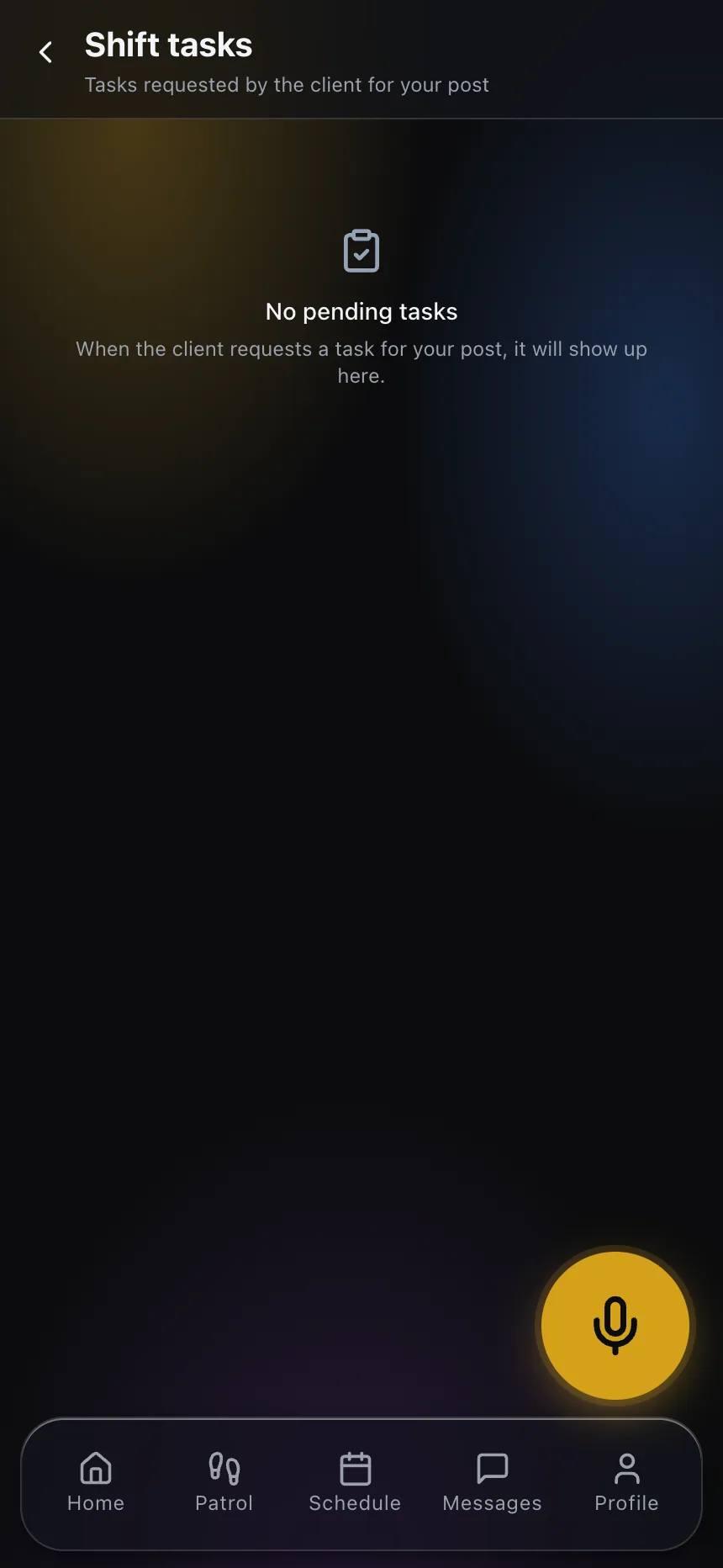
The log entry should capture the verified work order reference, the escorting officer if one was assigned, actual arrival time, and actual departure time confirmed by the officer, not an assumed departure based on how long the job was supposed to take. If a contractor is still on-site well past the expected duration, that should trigger a check-in, not just a note added to next shift’s pass-down.
Why field supervisors need to see this in real time, not the next morning
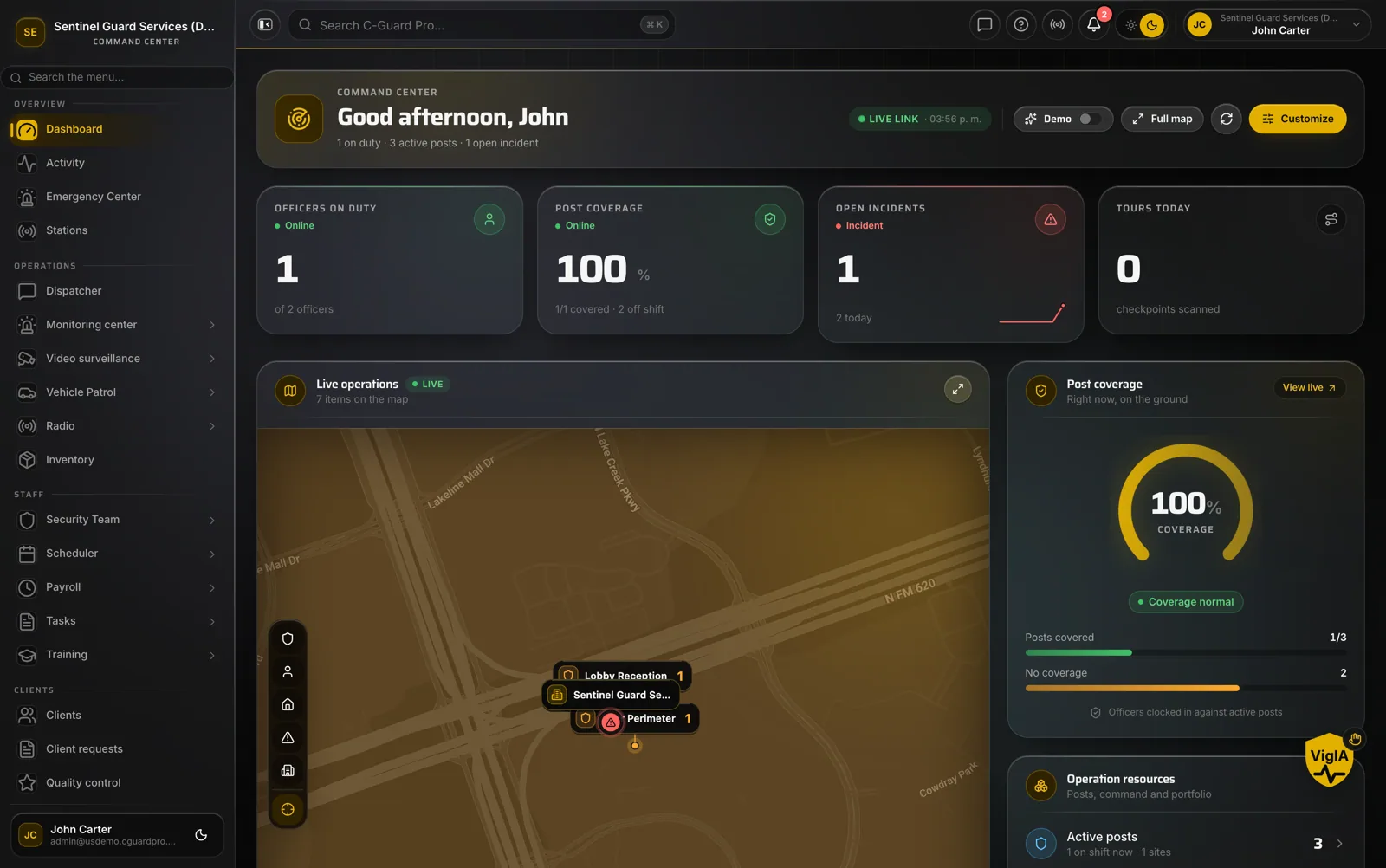
The officer on post isn’t the only person who needs visibility into an after-hours contractor visit. A field supervisor covering several sites overnight benefits from seeing, at a glance, which properties currently have an active contractor on-site, how long they’ve been there against the expected duration, and whether the visit was verified through the normal channel or flagged as an exception. That visibility is what turns a supervisor’s overnight rounds from a blind drive-by into an informed check — knowing to swing by the property with the contractor who’s been on-site two hours longer than expected, rather than treating every stop on the route as equally uncertain.
This matters more on nights with multiple simultaneous contractor visits across a portfolio of properties, which is exactly when an individual officer’s radio call to dispatch is easiest to lose track of if it isn’t also visible on a shared dashboard. A supervisor who can see current site status across the whole book of business catches the outlier — the visit that’s run long, the site where verification wasn’t completed before access was granted — before it turns into the call nobody wants to get at 3 a.m.
When the client wants the escort waived
This is the argument every field supervisor eventually has: a property manager who considers the escort requirement an insult to a trusted vendor, or simply inconvenient because it ties up an officer who has other rounds to make. The right response isn’t for the officer to make a judgment call in the moment — it’s for that conversation to happen in advance, between the account manager and the client, with the outcome written into the site’s post orders where every officer working that post can see it.
If the client’s answer is genuinely “no escort required for this specific vendor,” the post orders should say so explicitly, including which vendor, under what verification, and who owns that risk decision — the property manager, not the guard company by default. What should never happen is an officer weakening the standard escort policy on their own because a contractor was persuasive or a client contact seemed annoyed, since that decision, made informally and undocumented, is exactly what turns into a liability question if something goes missing or gets damaged that night.
Building an after hours contractor escort security procedure that survives shift changes
None of this holds up if it lives only in one experienced officer’s head. Post orders covering after-hours contractor access should be written down, current, and available in the app on post, not stored as an assumption that “whoever’s been here a while knows the drill.” New officers, relief officers covering someone’s night off, and anyone filling a callout need the same procedure available to them as the regular assigned guard.
Track completion of each verification step the same way you’d track a checkpoint on a round — recorded, attributable to a specific shift, and visible to the dispatch desk if something needs to be escalated in real time.
If you want to see how post orders, task verification, and access logs stay consistent across shifts, explore CGuardPro or get in touch.