Eight months after a February storm, a claims adjuster calls asking for the patrol log from a specific Tuesday night. Nobody at the property remembers that Tuesday. The officer who worked it may not even work there anymore. The only thing that speaks for what actually happened on that walkway at 11:40 p.m. is whatever got typed into the log at the time — and in a surprising number of these cases, what got typed in was “lot checked, all clear,” written by an officer doing a patrol during an active snowfall, because that’s the phrase every patrol note on every other night says and nobody thought to write something different for this one. Documenting weather hazards security patrol officers encounter takes more than the standard phrase.
That single habit — logging a hazard patrol the same way you’d log a routine one — is the most common and most avoidable failure in weather-hazard documentation, and it’s worth understanding exactly why it happens and what a note should look like instead.
Documenting Weather Hazards Security Patrol Logs Get Wrong: Why “All Clear” Is a Trap
“All clear” is true, exactly true, at the moment an officer writes it — the officer checked, and at that instant nothing dangerous was visibly happening. The problem is that it’s also the same phrase used for a night with dry pavement and nothing to report, and eight months later, a log full of identical “all clear” entries reads as either a real absence of hazard or a template nobody varied, and there’s no way to tell which from the text alone. When ice is actively forming, or snow is actively falling and accumulating, a note that doesn’t say so is technically not false, but it also isn’t documenting the condition that actually matters for a later claim.
The fix isn’t complicated: during weather that creates a slip hazard, the patrol note has to describe the conditions, not just confirm the check happened. What was actually observed — ice forming on a specific walkway, salt already down or not yet applied, snow accumulation depth if it’s estimable, visibility. “Lot checked, all clear” tells a reviewer nothing eight months later. “Light ice forming on north entrance ramp, salt applied at 11:15 p.m., re-checked 12:00 a.m., surface dry” tells them exactly what they need.
What a hazard note needs that a routine note doesn’t
A useful weather-hazard log entry has a few things a routine patrol note usually skips:
- Specific location, not “the lot” or “the walkway” — which entrance, which ramp, which section of curb. A generic location is useless when the claim is about one specific spot.
- What was actually done about it, and when. If salt or ice melt was applied, when, and by whom, matters as much as the observation itself — a hazard noted but not addressed is a different situation than a hazard noted and treated.
- A time-stamped re-check, not just the initial observation. Conditions during an active storm change fast enough that a single check at the start of a shift doesn’t describe what the walkway looked like three hours later when someone actually crossed it.
- What wasn’t done and why, when applicable — if the property’s snow contractor hadn’t arrived yet, or a specific area couldn’t be treated for a stated reason, that’s worth recording rather than leaving a gap the log doesn’t explain.
When a photo actually helps, and when it’s just noise
Photos are useful when they capture something a written note can’t fully convey — the extent of ice coverage across a large surface, standing water that’s about to refreeze, a section of curb where snow removal clearly missed. They’re less useful, and sometimes counterproductive, when an officer takes one photo of an already-cleared area as proof of due diligence without a timestamp visible or metadata preserved in a way anyone can later verify. A photo that can’t be tied to the specific time and location it claims to represent doesn’t add much over the written note it’s supposed to support.
The practical guidance: take a photo when a hazard is actively present and being addressed, not as a routine habit for every clear patrol. A folder of a hundred identical photos of an empty, dry lot is not evidence of anything specific when a claim eventually asks about one particular hour.
When to escalate to the client instead of just recording it
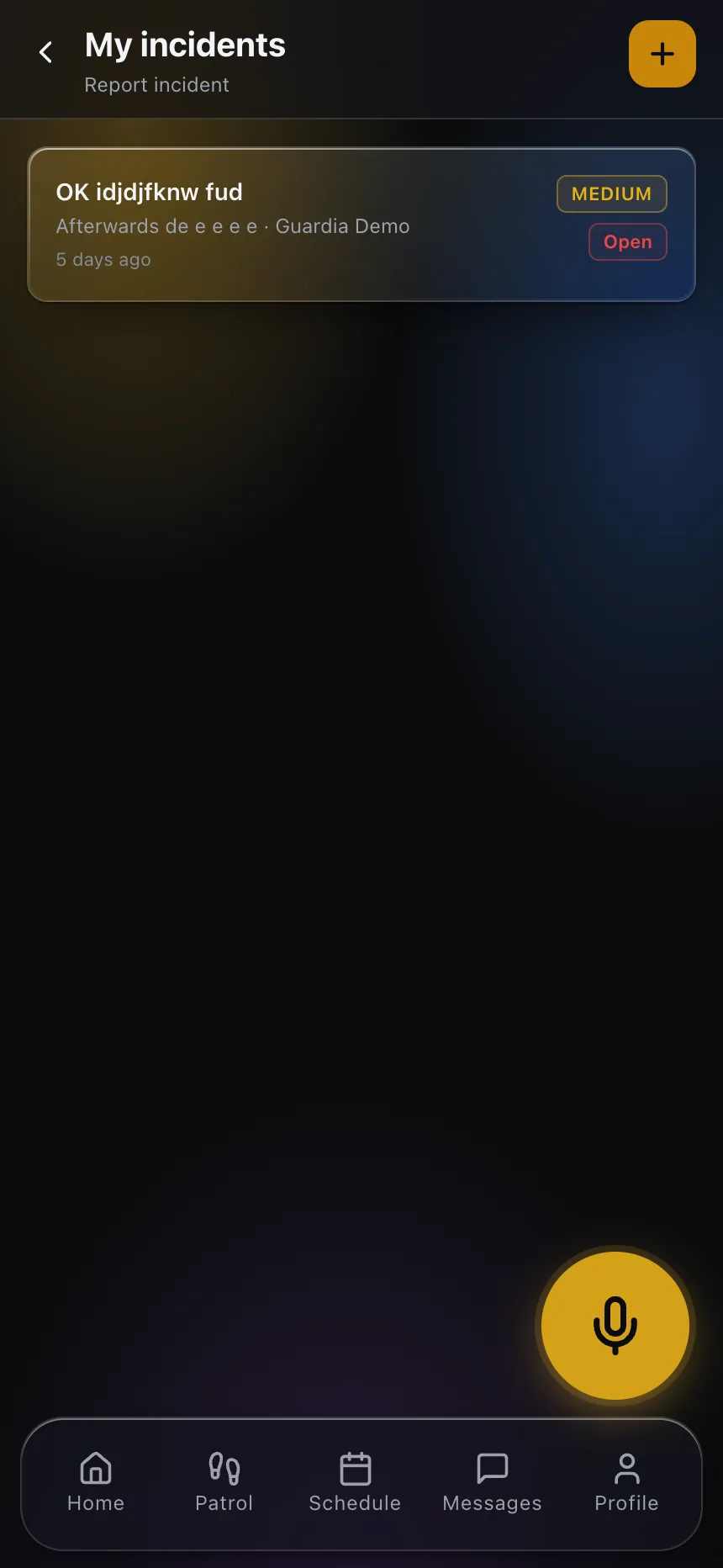
Not every hazard is something the officer’s log entry alone resolves. If a walkway is icing faster than salt application can keep up with, if a property’s snow removal contractor hasn’t shown up hours into a storm, or if a specific area is a known problem spot that keeps reappearing shift after shift, that’s a conversation with the property manager, not just another log line. An officer who quietly documents the same recurring hazard for three consecutive shifts without escalating it to the client has technically done their job on paper, but has left a property manager unaware of a pattern they’d almost certainly want flagged before it becomes a claim.
This is where the routine daily activity report and a genuine incident report need to function differently. A single, isolated ice patch that’s treated and rechecked belongs in the routine log. A hazard significant enough to need client notification, or one that’s recurring across shifts, belongs in an incident report that gets escalated and tracked to closure — not buried in a patrol note that only gets read if someone goes looking for it later.
Making the record visible before the claim, not after
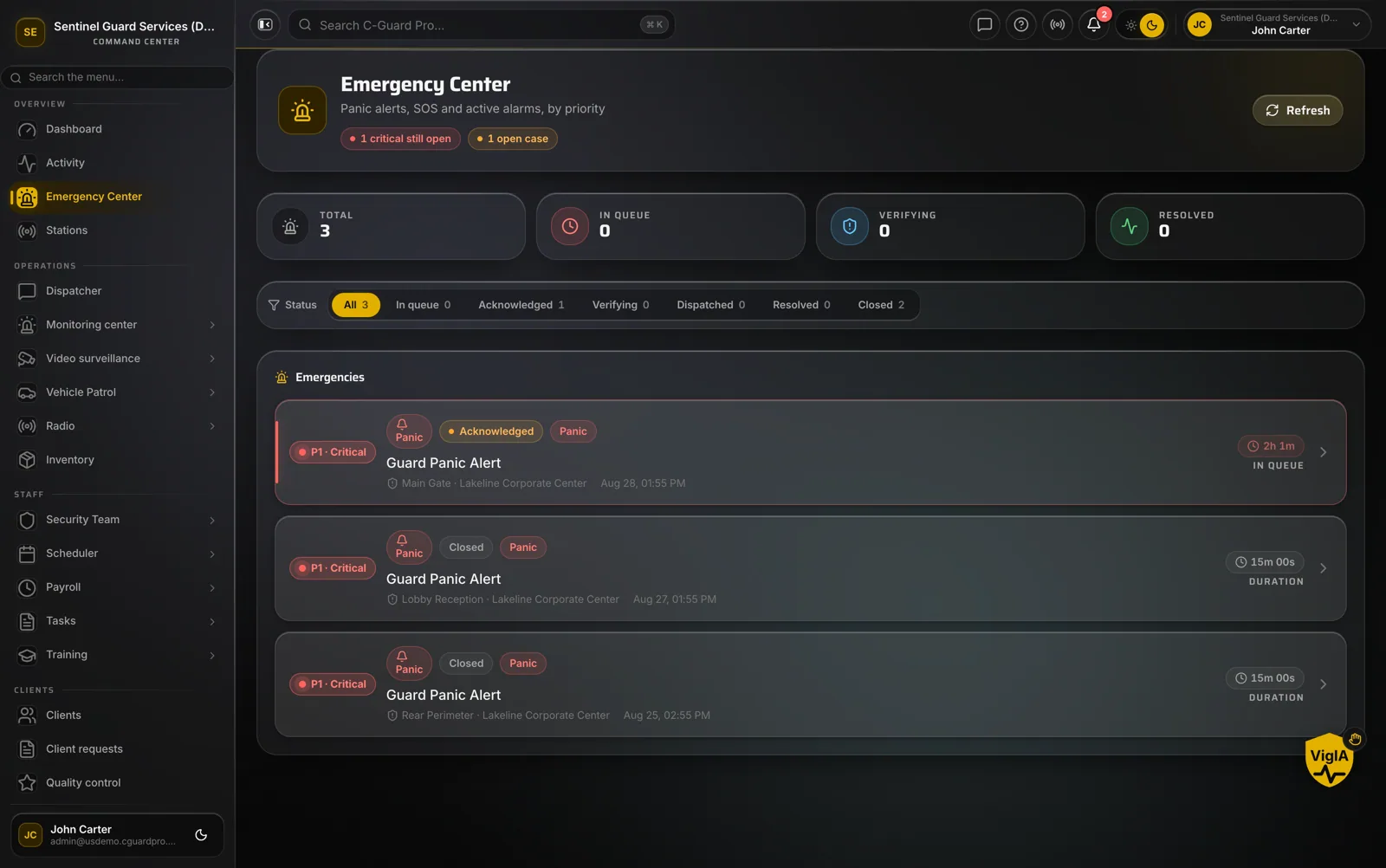
The property manager finding out about a recurring ice hazard for the first time from a claims adjuster’s phone call, rather than from the security company during the storm, is a bad outcome for the relationship regardless of how the claim itself resolves. A client portal that lets the property manager see hazard notes and incident escalations as they happen — rather than only the monthly summary — turns weather documentation from a defensive record into something the client actually uses to manage their own risk in real time.
Weather patrols are one of the clearest examples of documentation that only matters months after the fact, when nobody remembers the shift and the log is the only witness left. Write the condition, not just the check. If you want to see how CGuardPro handles patrol logging and incident escalation for exactly this kind of record, get in touch.