A dealership owner asking for overnight security almost always frames the request the same way: put a guard on the lot at night. It sounds like a complete answer, and it’s the one a lot of guard companies are happy to sell, because a single static post is the easiest thing in the world to quote. It’s also, on most dealership lots, the wrong shape of coverage for the actual problem. Car dealership overnight lot security guard coverage is a geometry question before it’s a staffing question, and getting the geometry wrong means selling a client a post that looks like protection and behaves like a formality.
Why a single fixed post loses the geometry
Picture a dealership lot laid out in rows, vehicles parked close together, with the building and showroom at one end and inventory stretching back toward a fence line at the other. A single officer stationed near the entrance — where most owners instinctively want the guard, because that’s where they’d stand — has direct sightlines down maybe one or two rows. Everything past that is outside effective observation, especially at night, when contrast and depth perception both degrade and a parked row of similar vehicles becomes a wall the eye slides past rather than scans.
That’s the part the simple version of the request misses. A guard “on the lot” sounds like the whole lot is watched. In practice, a fixed post watches a cone of visibility from wherever it’s standing, and a dealership lot’s shape — long, dense, low sightlines — means that cone covers a small fraction of the inventory at any given moment. Vehicle theft and stripping crews that target dealership lots know this, and they don’t work the row nearest the showroom. They work the back rows, near the fence, exactly where a fixed post’s visibility runs out first.
Car dealership overnight lot security guard coverage: what closes the gap
The fix isn’t more officers standing in more spots — that’s the expensive version of the same mistake, since a second static post just adds a second small cone of visibility rather than covering the ground between them. The fix is converting the post from stationary to moving, with proof that the movement actually happened.
A patrol route that walks or drives the full perimeter and interior rows on a set rotation covers ground a fixed post physically cannot. The relationship that matters here isn’t a specific number of officers — it’s that a lot’s exposure scales with its size and row count while a single fixed observer’s effective coverage does not scale with anything; it stays roughly the same cone regardless of how big the lot behind it gets. Past a certain lot size, a static post is providing a visible deterrent at the entrance and very little else.
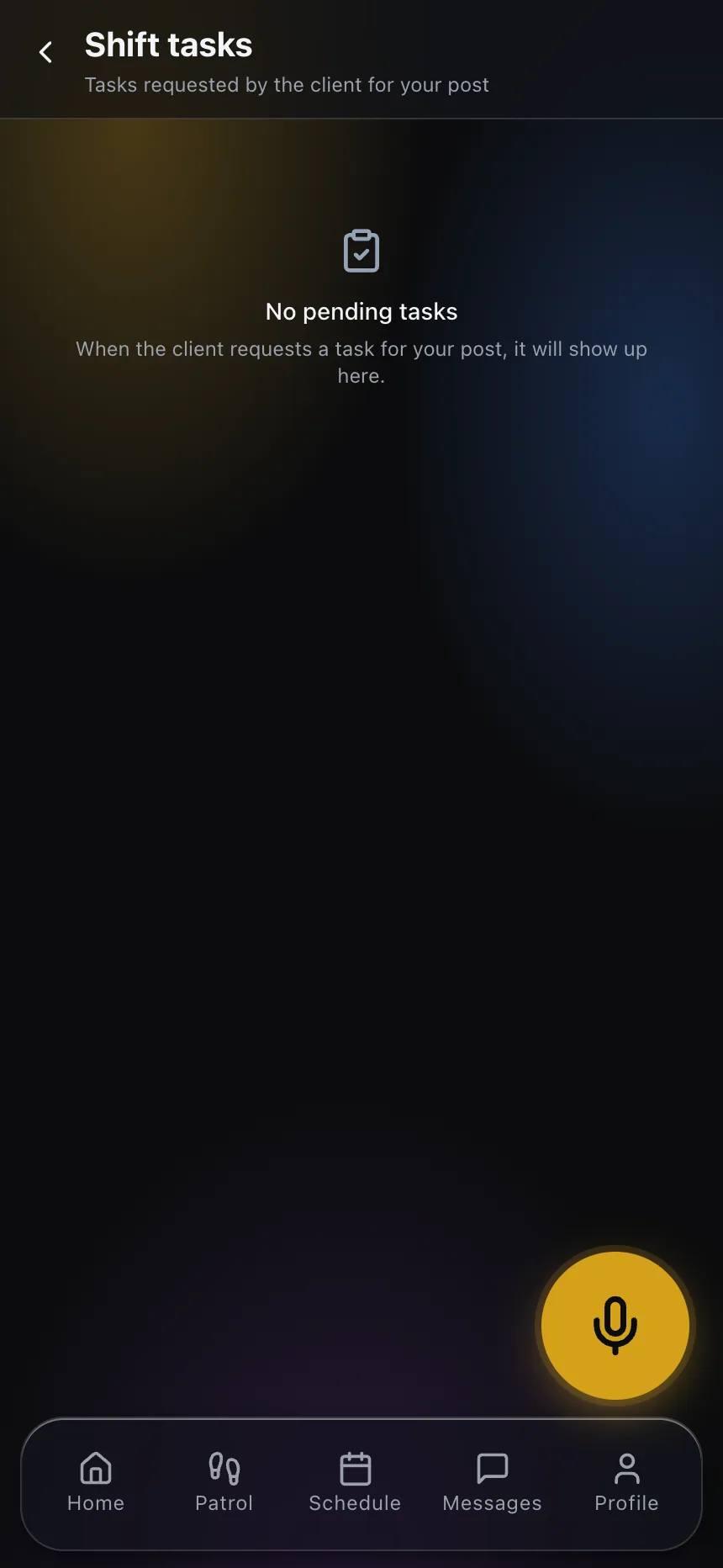
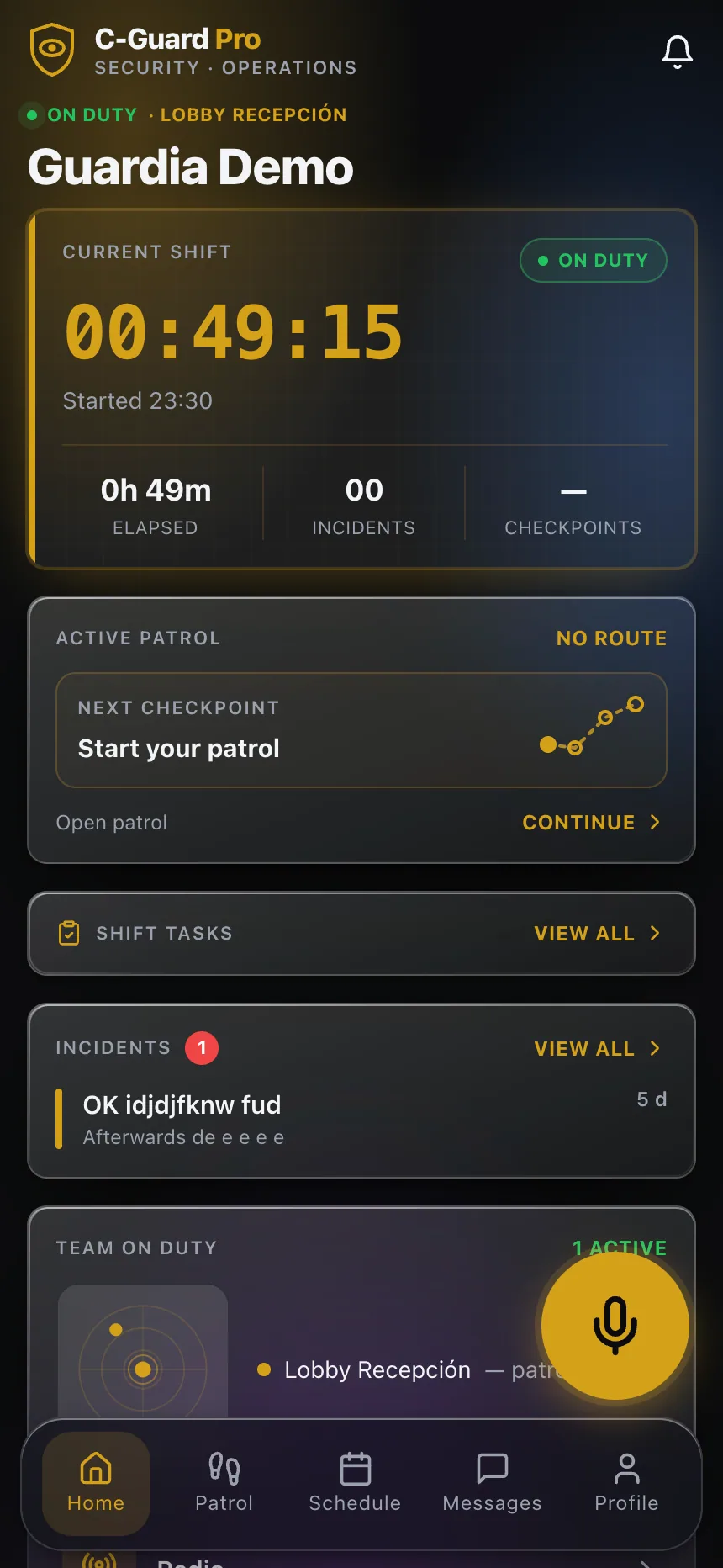
Checkpoints turn that patrol from a promise into a record. Placing QR checkpoints at the back fence line, the row ends nearest the perimeter, and any blind corners the building creates gives you proof the far end of the lot was actually walked at 2 a.m., not just that an officer was somewhere on the property. That record matters twice: it tells the account manager whether the route is actually being run as designed, and it gives the dealership something concrete to point to if a vehicle does go missing and the timeline needs reconstructing. A field supervisor checking dispatch at midnight can see whether the overnight officer is running the route on schedule instead of waiting until morning to find out a checkpoint was missed.
Where lighting and cameras change the equation
This is also where it’s worth being straight with a client about what a guard alone can and can’t do, because a lot with poor lighting defeats even a well-run patrol. An officer walking a dark row at 2 a.m. is relying on a flashlight and peripheral vision; a would-be thief working that same row has already scouted where the dark spots are. Lighting doesn’t replace the patrol, but it does the one thing a moving officer can’t do alone — it makes the whole lot visible continuously, including the minutes between patrol passes when nobody is physically present in that row.
Cameras add the same kind of continuous coverage from a different angle, and they add something a patrol log can’t: footage after the fact, when a vehicle is missing and the question is which direction it left in and when. Neither lighting nor cameras replaces the officer — a camera records a theft in progress, it doesn’t stop one, and a poorly lit camera view at night is often not much more useful than no camera at all. The combination is what closes the gap a single static post leaves open: lighting and cameras cover the lot continuously, the patrol adds a physical presence and a human ability to notice what a camera wouldn’t flag, and the checkpoint record proves the patrol actually happened on the schedule it was supposed to.
What the officer does when the patrol turns something up matters as much as the route itself. A missing vehicle, a broken window, or catalytic-converter theft in progress needs a specific response spelled out in the post order — call it in immediately, hold position at a safe distance rather than approach, and photograph the scene before anything gets moved or driven off by dealership staff arriving in the morning. A route that’s walked well but has no defined response when it finds something is only half a plan.
Selling the actual coverage, not the reassurance
The honest version of this conversation with a dealership owner is harder to close than “we’ll put a guard on your lot,” because it means explaining that a fixed post at the entrance is mostly theater against a threat that works the back fence line. But it’s the version that actually reduces theft, and it’s the version that protects your company when something does go missing and the client asks what the guard was doing at the time — a checkpoint log showing the back row was walked forty minutes before the incident is a very different conversation than a fixed post with no record of where the officer actually was.
Recommend the patrol route with checkpoints as the baseline, flag the lighting and camera gaps you see on the site walk even though you’re not selling either one, and let the client decide what to invest in with a clear picture of what each layer actually buys them.
If you want to see how checkpoint-verified patrol routes work for a dealership lot or any large exterior site, explore CGuardPro or get in touch.