Property managers rarely fire a security vendor over one dramatic failure. It’s almost always a slow accumulation of small ones — a report that reads exactly like last week’s, a guard who can’t answer a basic question about the post, a call to dispatch that goes to voicemail — until one day the property manager realizes months have passed without a single piece of real information about what’s actually happening on-site overnight. Here are the signs its time to switch your security guard company that actually hold up, without disparaging any specific competitor — just describing what a vendor that’s stopped paying attention to your account looks like from the outside.
Signs Its Time to Switch Your Security Guard Company
The guard can’t answer basic post-order questions
Walk up to an officer on post and ask something simple: what’s the protocol if the fire alarm goes off after hours, or who’s the on-call contact for a maintenance emergency tonight. An officer who’s been properly briefed and has current post orders answers without hesitation, or checks something they clearly know how to find. An officer who shrugs, guesses, or has never seen written post orders for that site is a symptom, not an isolated bad hire — it means whoever’s supposed to be training and briefing officers on your account isn’t doing it, and it’s very likely true of more than the one officer you happened to ask.
Reports are late, generic, or both
A daily activity report that says “all quiet, no incidents” every single night, worded identically week after week, isn’t evidence that nothing happened — it’s evidence that nobody’s actually documenting what did. A property with any real activity — deliveries, visitors, maintenance work, weather events — generates something worth a specific sentence most nights. A report that never varies is either copy-pasted or written from memory at the end of a shift rather than logged as things actually occurred, and both are signs that the reporting habit at your account has broken down.
You have no real-time visibility into your own property
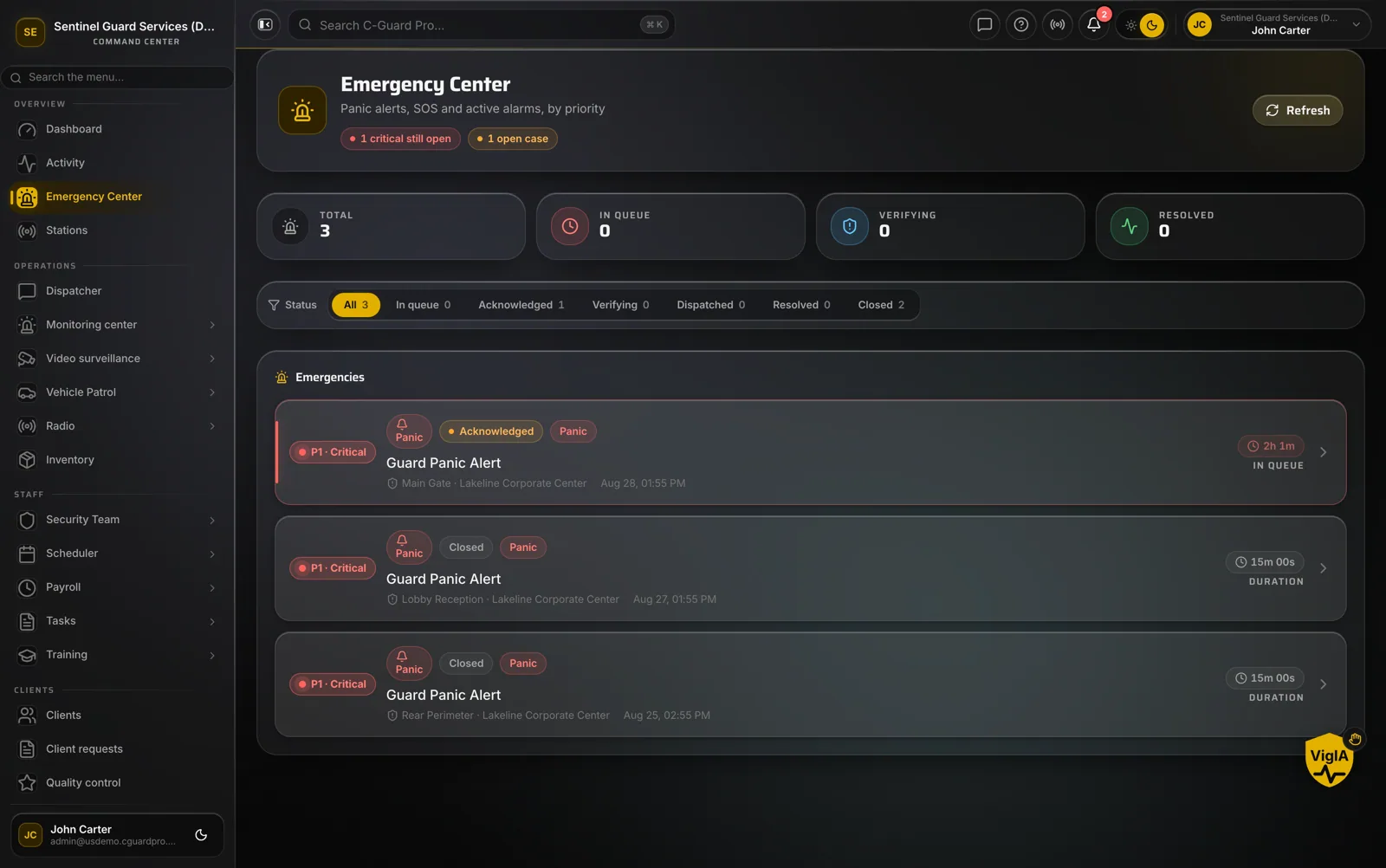
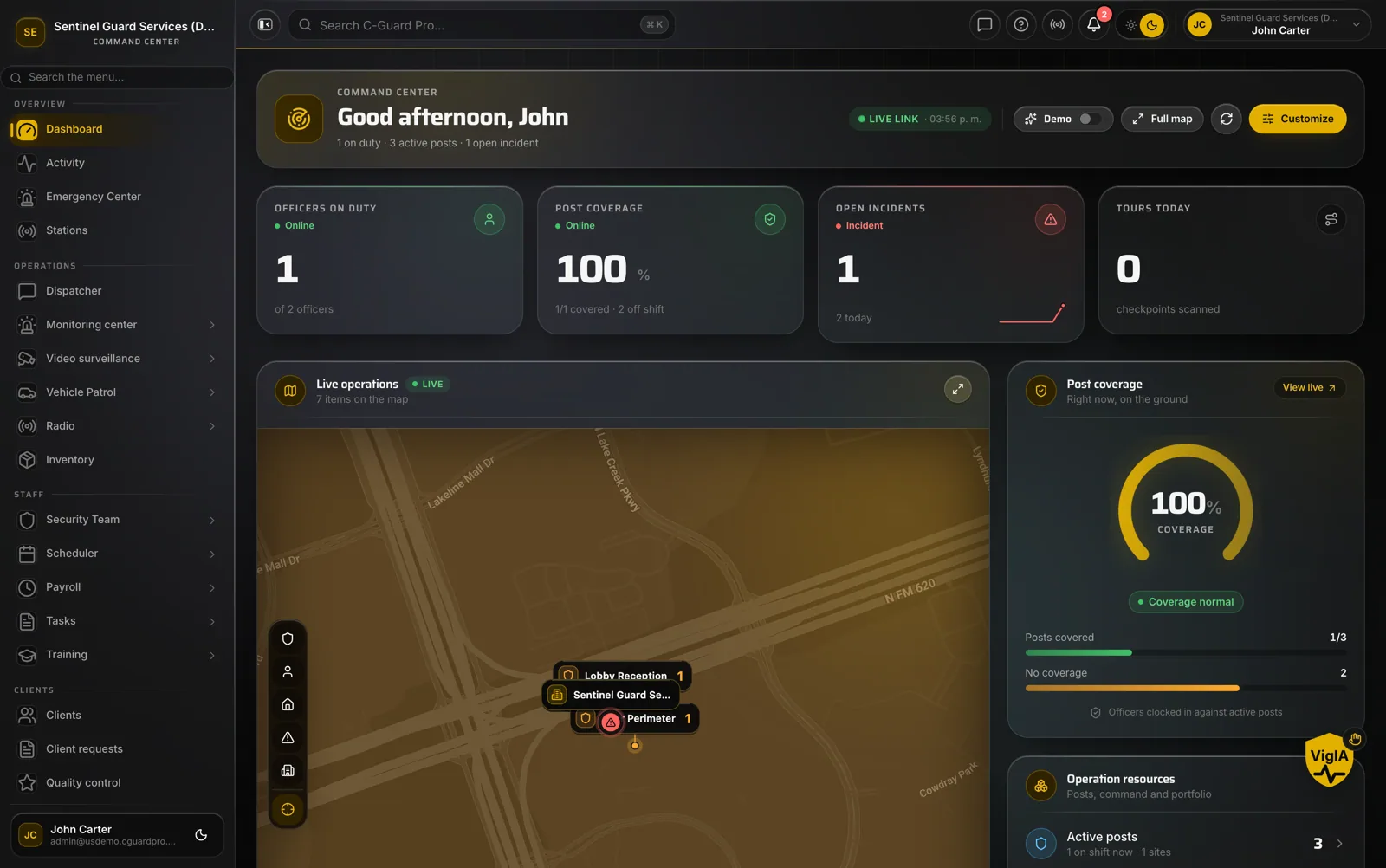
This is the one property managers describe most often after they’ve already switched: “I had no idea what was happening on my own site.” If the only way to find out whether your contracted coverage showed up on time, completed their rounds, or handled an incident is to call the guard company’s office and wait for someone to check, you don’t have a security vendor — you have a name on an invoice. A vendor that can show you, in real time or close to it, where an officer currently is, whether scheduled checkpoint rounds were actually completed, and what got logged when something happened, is giving you a fundamentally different level of accountability than one whose only proof of work is a signature on a timesheet at month’s end.
Turnover you only hear about after the fact
Some officer turnover is normal in this industry and isn’t itself a red flag. What is a red flag is finding out about it only when a completely unfamiliar face shows up on post with no notice, no introduction, and no evidence they were briefed on your site’s specific post orders before their first shift. A vendor managing your account well tells you about a personnel change before it happens on post, not after you’ve already noticed a stranger at your gate.
The escalation call goes nowhere
Test this directly: call your account’s after-hours contact with something that genuinely needs attention, not an emergency, but something that should get a real response within a reasonable window. A vendor that has your account under control responds, follows up, and closes the loop. A vendor that’s stretched too thin or has stopped prioritizing your account lets that call sit, or responds with a vague acknowledgment and no actual resolution. If this has happened more than once, it’s not a fluke.
Invoices don’t match reality
Compare billed hours against what you can actually verify happened — scheduled shifts, confirmed coverage, any dispatch record of a callout or a schedule change. Small, unexplained discrepancies that keep recurring, rather than the occasional honest correction, point to a company whose internal tracking has gotten sloppy — and a vendor with sloppy internal tracking on billing is very unlikely to have tight tracking anywhere else in the operation.
Nobody can show you a coverage overview across your whole portfolio
If you manage more than one property with the same vendor, ask for a single view of coverage across all of them — which posts are staffed right now, which shifts have open gaps, which sites have an active incident. A vendor running a modern operation can pull that up in the time it takes to answer the question. A vendor running the account off phone calls and a whiteboard in the office has to call around to each site’s supervisor and get back to you, which tells you something about how they’d actually respond if two of your properties had a problem on the same night.
This is a useful test to run during a renewal conversation even with a vendor you’re not necessarily unhappy with — the answer tells you whether the visibility you’d get in an emergency is real-time or reconstructed after the fact.
What to do before you switch
None of these signs individually is necessarily a reason to terminate a contract immediately — a single bad report or one missed call can be an isolated failure by an otherwise solid vendor. What matters is the pattern. Before you switch, put the specific issues in writing to your account manager, ideally through a client portal that keeps the exchange on record, with dates and examples, and give them a defined window to show the pattern has actually changed, not just apologize for it. A vendor worth keeping treats that conversation as a wake-up call. A vendor that’s already stopped paying attention to your account will show you that, too, in how they respond.
If you’re evaluating a new vendor, ask directly and specifically how they’d give you visibility into the exact things on this list — real-time coverage, verified checkpoint completion, specific incident documentation — rather than taking a generic promise of “we’re very responsive” on faith.
If you want to see what real-time visibility into guard coverage and reporting actually looks like, explore CGuardPro or get in touch.