A security company owner who qualifies for a set-aside program often treats the certificate itself as the win — get certified, and the federal contracts follow. That’s backwards, and it’s why a fair number of businesses holding sdvosb minority owned security company certification never actually land a federal guard contract despite having done everything the paperwork asked of them. The certification doesn’t get you the work. It gets you into rooms you couldn’t otherwise enter. What happens once you’re in the room is still entirely about whether you can run the post.
Set-aside programs exist because federal agencies, and the VA in particular, are required to direct a portion of contracting dollars toward qualifying small businesses — which is where SDVOSB minority owned security company certification and similar disadvantaged-business designations come in. The certifying body for the federal programs is the U.S. Small Business Administration, and it’s worth being precise about that: this is a federal contracting eligibility framework, not a state security-guard license, and it doesn’t replace anything your state licensing board requires. Requirements for ownership, control, and eligibility vary by program and change over time, so anything beyond that basic description should be confirmed directly with the SBA and with counsel before you rely on it — this isn’t legal advice.
What SDVOSB minority owned security company certification actually opens up
The practical value of set-aside status is access, not preference in the sense most owners imagine. Certain federal and VA solicitations are restricted to certified small businesses, meaning a company without the designation may not even be eligible to bid regardless of how competitive its price or its capability statement would be. For a guard company that’s spent years chasing commercial accounts and building a track record nobody at the federal level has ever heard of, that’s the real unlock: it puts you on a shorter list of eligible bidders instead of competing against every large incumbent contractor in the country on a fully open solicitation.
It’s a sales tool in the truest sense — it changes who will look at your proposal, not what’s in it. A contracting officer working a set-aside solicitation still evaluates past performance, staffing plans, security clearances where relevant, and technical capability the same way they would on any other award. The certification narrows the field you’re competing in; it doesn’t lower the bar you’re competing against.
Past performance is the gate behind the gate
Even inside a restricted, set-aside-only pool, the solicitation still asks for past performance references, and this is where a newly certified company without a federal or VA track record hits a second wall the certification never mentioned. A contracting officer weighing two eligible bidders will lean toward the one who can point to a similar contract executed well, and “similar” usually means comparable scope — a hospital, a federal building, a base — not just any commercial guard contract with a good client reference.
This is why the common path for a newly certified small business is to team with, or subcontract under, a more established prime as a first step rather than bidding as prime on day one. It’s slower than owners want, and it means sharing margin on early awards, but it’s how a company without federal past performance builds the reference it will need to bid competitively as a prime later. Skipping straight to solo prime bids on a company’s first set-aside solicitation is possible, but it’s a harder sell to a contracting officer with no track record to weigh against the risk of a low-performing incumbent showing up mid-contract.
It’s also worth knowing that eligibility isn’t a one-time event. Ownership, control, and other qualifying facts generally have to remain true for a business to keep its status, and programs typically require some form of periodic recertification or reporting to stay in good standing. Exactly what’s required and how often varies by program and can change, so don’t assume a certification earned once is permanent — build a habit of checking your status and any renewal obligations directly with the SBA rather than assuming your paperwork from initial certification still covers you two or three years in.
The capability gap certification doesn’t close
This is where the shortcut thinking breaks down. Federal and VA contracts, especially in guard services, tend to carry documentation and reporting expectations that a mid-size commercial security company may not yet have built into its daily operations — consistent post orders, verifiable time and attendance, incident reporting that holds up to audit, and a scheduling record that can withstand a contracting officer’s review months after the fact. None of that is exotic; it’s the same operational discipline a well-run commercial contract should already have. But a company that’s been running loosely on paper logs and verbal pass-downs for its retail and HOA accounts will find that gap gets exposed fast the moment a federal solicitation asks for documentation to back up a past-performance claim.
The companies that convert set-aside eligibility into actual awards are usually the ones that treated the certification as step two, after already tightening how they run guard operations — not as a substitute for that work. If your post orders aren’t standardized and enforced today, a federal contracting officer evaluating your proposal has no reason to believe they will be on a VA facility. If your scheduling can’t produce a clean, defensible record of who covered a post and when, that’s a weakness a set-aside designation does nothing to hide.
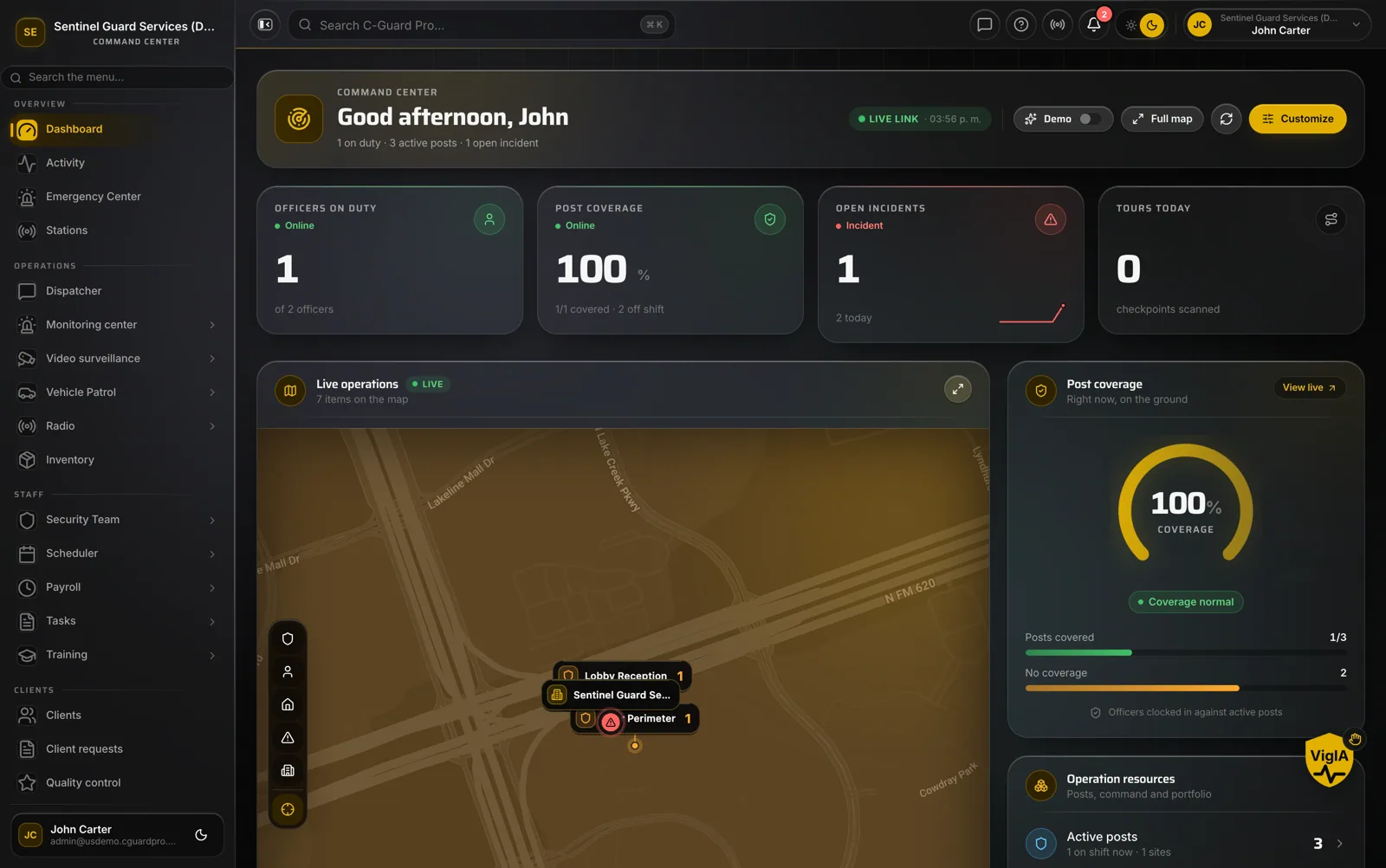
Building the record before you need it
Treat the run-up to certification, and the bidding that follows it, as the moment to formalize what may currently exist informally. That means documented post orders your officers are trained on and can be checked against, attendance records that tie cleanly to invoiced hours, and incident reporting that produces a paper trail rather than a verbal account days later. A client portal that lets a government point of contact see coverage and reporting directly does more for your next proposal than another line on a capability statement — it’s evidence, not a claim.
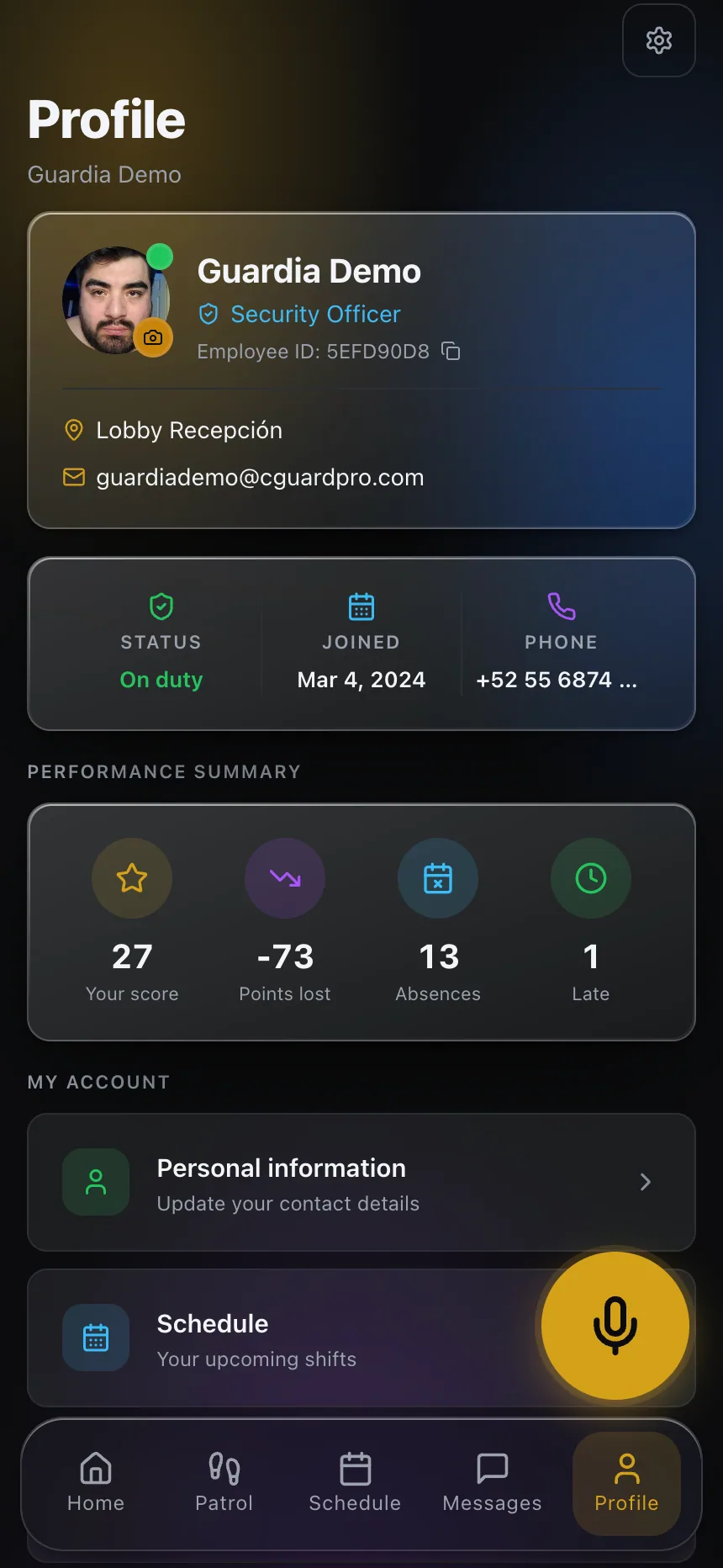
Set-aside status is worth pursuing if federal or VA work fits your growth plan, and it’s a legitimate advantage once you have it. Just don’t expect the certificate to do the work that a documented, auditable operation still has to do on its own. Confirm eligibility requirements directly with the SBA, and talk to counsel before you represent your company’s status on any bid.
If you want your operation to already look ready when that solicitation lands, explore CGuardPro or get in touch.