Three proposals land on a property manager’s desk for the same building. One lists two officers on twelve-hour shifts. Another lists three officers on eight-hour shifts. The third just says “24/7 coverage, one officer” with no shift structure spelled out at all. Every number on every page is different, the scopes of work use different language for what sounds like the same tasks, and the instinct is to skip straight to the bottom line and pick the lowest total. That instinct produces a bad decision almost every time, because the three numbers on the bottom line aren’t actually pricing the same thing. How to compare security guard bids apples to apples starts well before the price line — it starts with converting every proposal to the same units before any number gets compared at all.
Why the bids don’t match in the first place
Security proposals resist comparison for a structural reason: there’s no standard format, and companies genuinely differ in how they’d staff the same site. A company that runs mostly twelve-hour shifts will propose twelve-hour shifts. A company built around eight-hour rotations will propose that instead. Neither is wrong on its face — different shift lengths carry different tradeoffs in coverage continuity, fatigue, and relief planning — but comparing a two-officer twelve-hour proposal to a three-officer eight-hour proposal by headcount alone tells you nothing, because headcount isn’t the unit that matters. Coverage hours are.
The scope language is the second source of mismatch, and it’s usually the more consequential one. “Perimeter checks” on one proposal might mean a documented, scheduled patrol route. On another, it might mean whatever the officer happens to notice while stationed at the desk. Both proposals can use nearly identical wording and describe completely different levels of service.
How to compare security guard bids apples to apples: start with coverage hours
Before comparing a single dollar figure, work out the actual number of officer-hours each proposal delivers per week. Two officers on twelve-hour shifts covering the same schedule as three officers on eight-hour shifts, both running full 24/7 coverage on the same site, land on the same total coverage hours despite looking completely different on the page. Once you’ve done that conversion, the two proposals are finally describing the same underlying commitment, and any remaining price difference is telling you something real — about pay rates, overhead, or margin — rather than an artifact of how each company chose to structure shifts.
This is also where a bid that looks suspiciously cheap usually reveals itself. A proposal with a lower total but the same claimed coverage almost always turns out to have fewer actual coverage hours once you do the conversion — a gap shift nobody mentioned, a “24/7” that’s actually a roving check rather than continuous presence, or relief coverage that isn’t accounted for at all. A bid comparison worksheet that forces this conversion for every proposal is worth building once and reusing for every future bid cycle, because the conversion step is the same regardless of what’s being staffed.
Step two: match the scope line by line
Once coverage hours are aligned, go through each proposal’s scope of work and translate the vague language into specific, comparable tasks. “Perimeter checks” becomes: how often, on what route, is there a record that it happened. “Incident reporting” becomes: what format, delivered how fast, with what level of detail. “Visitor management” becomes: is that a person checking IDs at a desk, a kiosk, or nothing more than an open door with a sign-in sheet nobody enforces.
This step is uncomfortable because it usually means calling each vendor back and asking pointed questions rather than trusting the proposal’s own summary of itself — and it’s exactly the step most buyers skip, because the first two proposals read as similarly professional on the page. The difference between them almost never shows up until something happens on-site and one company can produce a checkpoint-scan record proving a route was walked at a specific time, and the other has nothing beyond an officer’s word.
Step three: ask how each company would prove the work happened
This is the question that separates a real operational capability from a line item in a proposal, and it’s worth asking directly: if something happens at 3 a.m. and you need to know exactly what the officer did and when, what does that company actually have to show you?
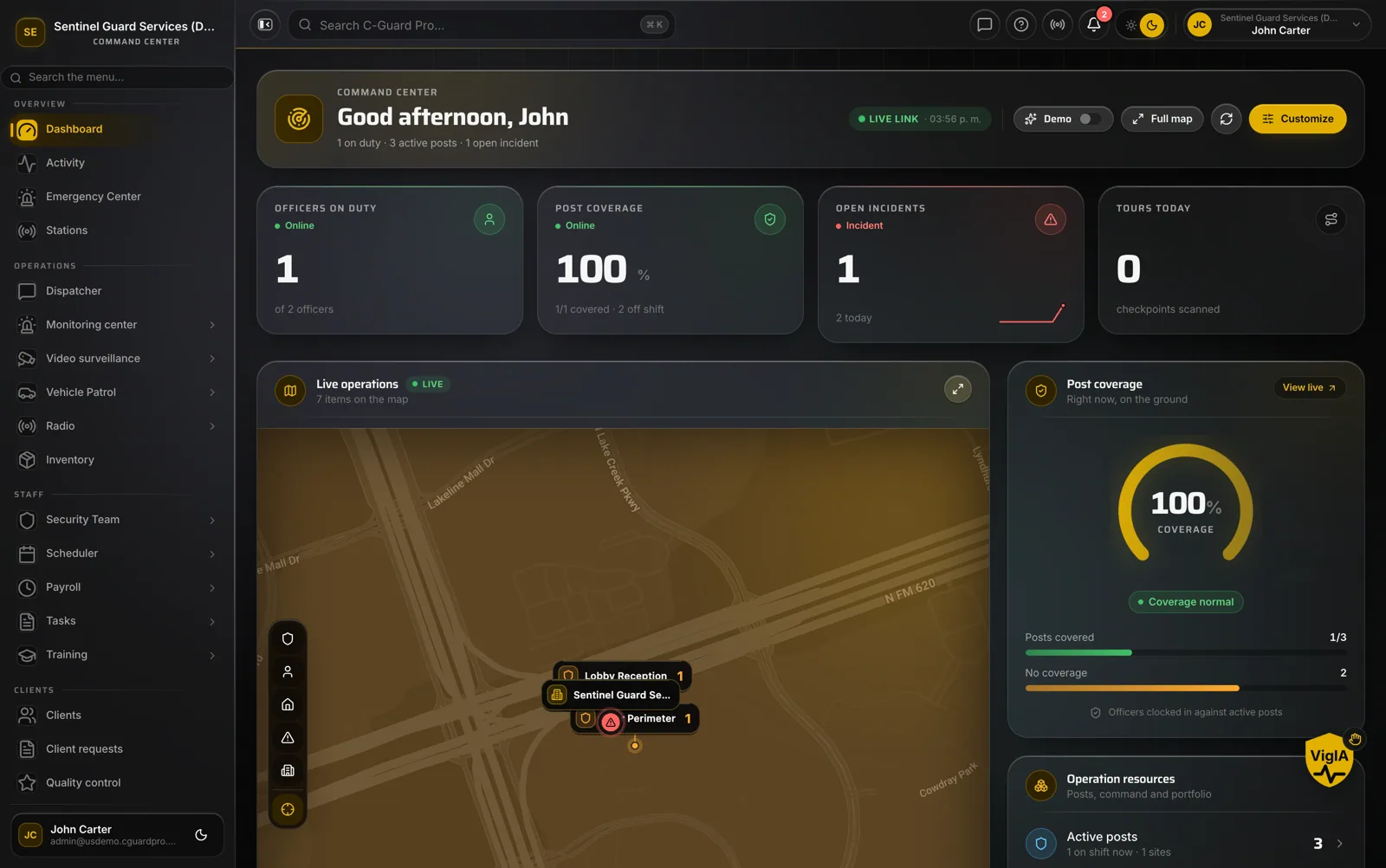
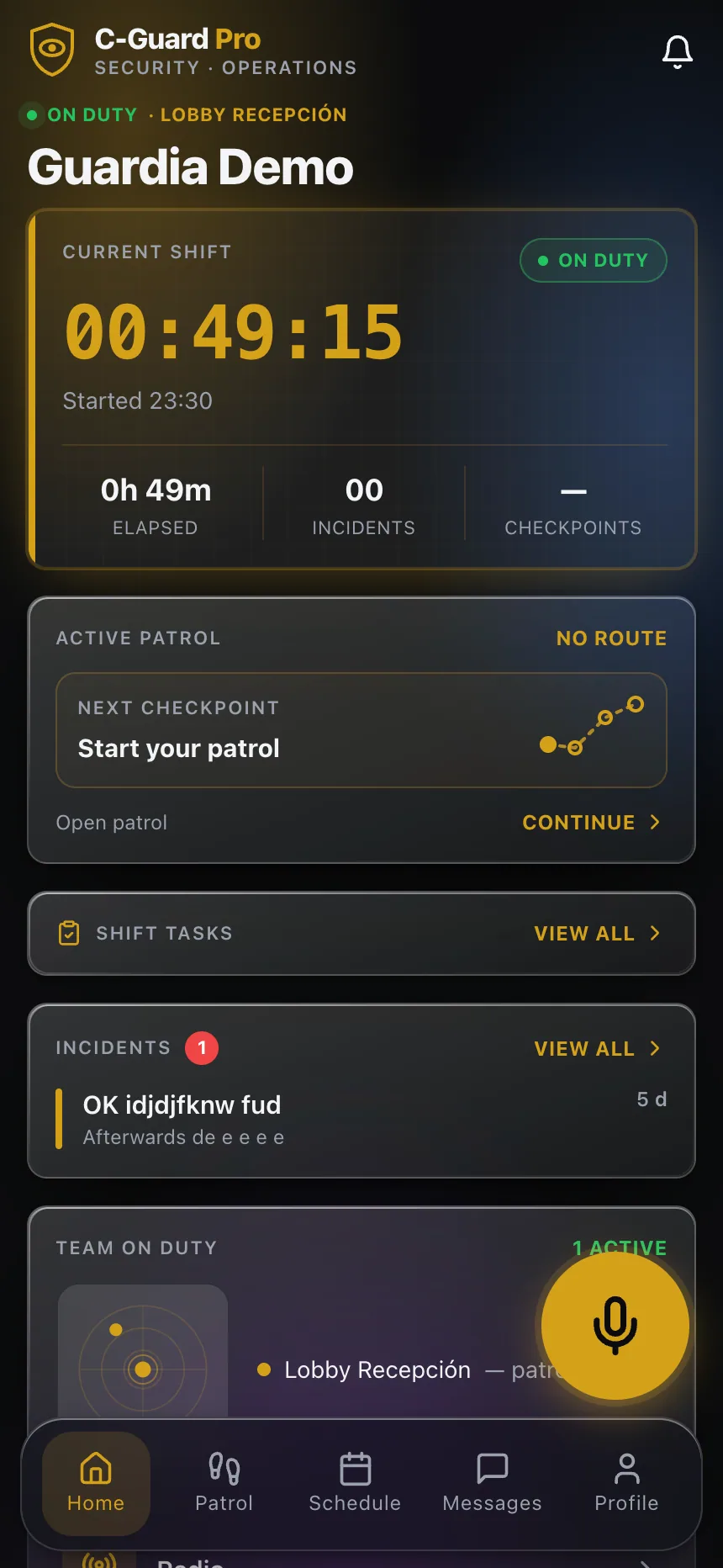
A company running patrol and checkpoint scans through an app can produce a timestamped record of every checkpoint hit, the daily activity report from that shift, and — if something happened — an incident report with photos logged at the time. A company still running paper logs can produce a handwritten sheet that may or may not have actually been filled out in real time. Both companies can put “documented patrols” on the same line of a proposal. Only one of them can back it up when it matters.
It’s worth asking to see this directly rather than taking a proposal’s word for it — request a sample of what an actual shift record looks like, not a marketing screenshot. A vendor with nothing real to show, or who can only produce a mock-up rather than an actual account’s history, is telling you something about how new their documented-patrol capability actually is.
What this process is not for
None of this is about finding leverage to squeeze a vendor’s rate down to match a competitor’s number — that misses the point entirely and usually produces a contract nobody can actually staff at the price agreed to. It’s about making sure the number you’re comparing represents the same commitment, so that when you do pick a vendor, you’re picking based on what they’ll actually deliver rather than which proposal happened to describe a smaller version of the job in more flattering language. A slightly higher price for genuinely more coverage hours and a company that can prove its work is usually the better deal, even though it never looks that way on the first page of the proposal.
If you’re the guard company on the other side of this process, the same discipline works in your favor: a proposal that shows exact coverage hours and points to a system that can prove the work happened closes faster than one competing purely on the bottom-line number.
If you want to see what a documented, checkpoint-verified operation looks like from the inside, explore CGuardPro or get in touch.