A property management group puts out an RFP for lobby and loading-dock coverage at a federal building, and buried in the solicitation documents is a wage determination naming an hourly rate and a fringe benefit rate for every guard classification the contract will need. Bid under those numbers and you haven’t found an edge over the company down the street — you’ve written a contract you cannot legally perform. The service contract act wage determination security guards get bid under is the piece of federal contracting that trips up security companies more than almost any other line item, and it isn’t buried or obscure. It’s attached to the solicitation. Ignoring it is a choice, not an accident.
What a wage determination actually controls
A wage determination sets a floor, not a suggestion. It specifies the minimum hourly rate and fringe benefit amount for each labor classification the contract will use — unarmed guard, armed guard, site supervisor — and every employee who performs work on that contract has to be paid at least that floor, regardless of what your normal market rate would otherwise be. It applies whether you’re the prime contractor or a subcontractor brought in to staff part of the coverage; the obligation flows down and doesn’t dilute.
This matters for how you build a bid. The wage determination isn’t a starting point you can shave against to look competitive on price — it’s a fixed input, the same for every company bidding the same solicitation. Two firms bidding the identical wage determination should be quoting the identical labor floor. Where bids should differ is overhead, management structure, equipment, technology, and margin — not the base wage and benefit line, which every legitimate bidder is required to hold to the same number.
The Service Contract Act Wage Determination Security Guards Fall Under, and Why DOL Notices
Security staffing has a structural profile that makes wage compliance harder to get right than it looks on paper, and it’s the reason the industry shows up disproportionately in Department of Labor, Wage and Hour Division enforcement activity. A single federal contract can run multiple posts, multiple shifts, and a roster that turns over throughout the year — each new hire, each site transfer, each shift swap is a fresh place for a classification or a fringe calculation to drift from the determination. A contract that spans a wage determination revision adds another point of failure: the rate in effect at the start of a multi-year award is not necessarily the rate in effect two years in, and payroll built around the original number doesn’t correct itself.
None of that requires bad intent. It requires enough moving pieces, run by hand or in a system that wasn’t built for it, that a small error compounds across many employees and many pay periods before anyone notices. That compounding is exactly the pattern that turns a bookkeeping slip into a federal back-wage finding.
Where the classification actually breaks
The recurring failure points aren’t exotic:
- Misapplied classification. A site supervisor or a lead officer doing genuinely different duties gets paid and reported at the base guard classification because the payroll setup only has one guard line item.
- Fringe benefits paid as an afterthought. The wage determination’s fringe amount can be satisfied through actual benefits or a cash equivalent, but the calculation has to match the determination’s terms — treating it as a rounding buffer on top of base pay is where firms drift under the floor without meaning to.
- Successor contractor obligations. Taking over a federal contract from an incumbent carries its own wage and benefit continuity questions for the employees you’re absorbing, separate from the wage determination itself.
- Overtime layered on the wrong base. Overtime has to be calculated on the actual regular rate paid, and if the base rate was already wrong, the overtime is wrong twice.

Building compliance into the bid, not after the award
The wage determination has to be read at the solicitation stage, for that specific solicitation — not pulled from memory of a similar contract you ran two years ago in a different market. Price the loaded labor cost off the actual determination attached to the bid documents, fringe included, and treat that number as fixed rather than as something to optimize during negotiation.
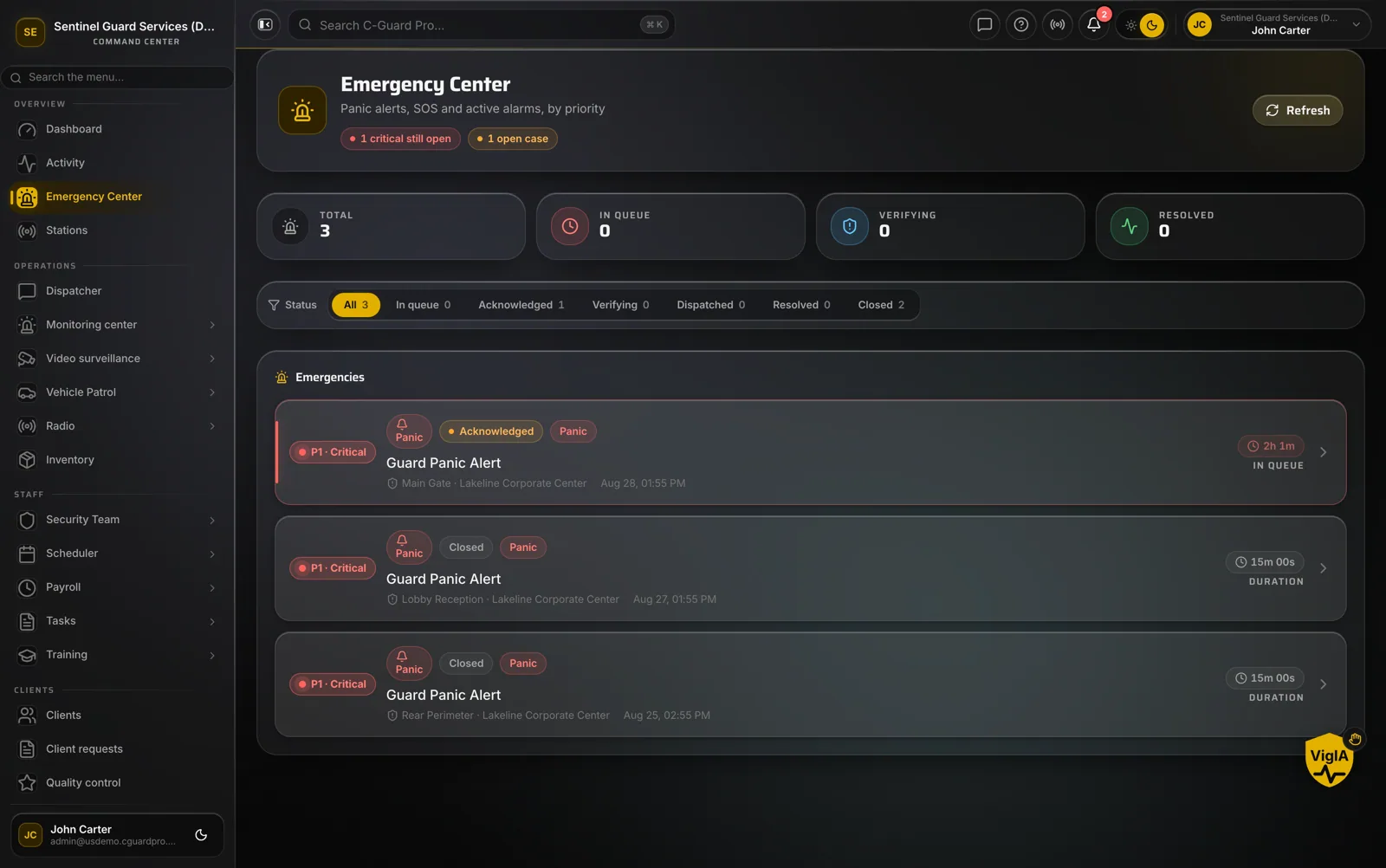
Once the contract is running, the operational discipline that keeps you compliant is the same discipline that makes any multi-site contract manageable: clean records of who worked which post, in which classification, for how many hours, tied to a schedule you can reconstruct months later. A security guard payroll and billing system that ties hours worked to the specific post and classification — rather than a spreadsheet someone reconciles at the end of the pay period — is what makes it possible to show, if a contracting officer or an investigator asks, exactly what was paid against exactly what was worked. When a question comes up about conditions on a post during a given shift, having a dated, timestamped record from that day carries far more weight than a reconstruction from memory.
If your bidding process still relies on a rough sense of “market rate” rather than the specific determination in the solicitation, that’s worth fixing before your next federal bid, not after an award. A bill rate calculator can help you check that your loaded cost assumptions are internally consistent, but it isn’t a substitute for reading the actual wage determination line by line.
What to check before you assume the Service Contract Act applies
Not every contract carries a wage determination, and whether a particular award is covered depends on factors like contract value and whether the work is being performed directly for a federal agency versus further down a subcontracting chain. If you’re bidding into government contract security work and you aren’t certain whether a solicitation is covered, that’s a question for the contracting officer and for counsel before you submit a price, not after.
Wage determination requirements, coverage thresholds, and enforcement procedures are set and interpreted by the Department of Labor’s Wage and Hour Division, and the details vary by contract and can change. Nothing here should be read as a summary of what applies to your specific bid — verify directly with the Wage and Hour Division and with legal counsel before you rely on it. This post is not legal advice.
Getting the labor cost right on a federal bid starts with visibility into what you’re actually paying against what’s actually worked. If you want to see how CGuardPro tracks hours, posts, and classifications for exactly that kind of accountability, get in touch.