A property manager gets two bids for the same lobby post. One comes in noticeably cheaper. On paper, both proposals list the same coverage hours, the same uniform standard, the same “trained, licensed officers” — the classic security guard staffing agency vs security guard company comparison where nothing on paper looks different. The property manager takes the cheaper bid, and six months later is on the phone with a regional director trying to figure out why nobody can explain what happened during an incident three shifts ago, why the officer who “usually” works that post has been a different person four times this month, and why the only documentation of the last two weeks is a sign-in sheet.
That gap — not price, not the license, not the uniform — is the real difference in a security guard staffing agency vs security guard company comparison. It matters to a prospect trying to evaluate two bids that look identical on paper, and it matters just as much to an owner who runs an accountable company and has to explain, in the room, why the cheaper number isn’t the same product.
What a staffing model actually sells
A staffing agency’s core product is bodies against hours. It sources people with the right license, places them on a schedule, and bills for time worked. That’s a legitimate business model for a lot of use cases — short-notice event coverage, a warehouse that needs a warm body at a gate for a defined window, a client who genuinely just wants headcount and nothing more.
The thing a pure staffing model doesn’t build in, structurally, is supervision of the work itself. Nobody is necessarily reviewing whether the officer at the gate is doing rounds, whether the post orders are being followed, or whether last Tuesday’s near-miss got written up. The agency’s obligation ends at “the shift was filled.” Whether it was filled well is, in a lot of these arrangements, the client’s problem to notice.
Security guard staffing agency vs security guard company: what the accountable model sells instead
A security company built around post orders, field supervision, and reporting is selling a different thing entirely, even when the invoice looks similar. The post orders define exactly what “doing the job” means at that specific site — not a generic guard-duty description, but the actual expectations for that lobby, that warehouse, that campus. A field supervisor visits the post, not to babysit the officer, but to catch the small deviations before they become the client’s problem: a checkpoint being skipped, a visitor log going unfilled, an officer who’s clearly the wrong fit for that account.
And the daily record — who was on post, what happened, what got logged — exists independent of any one person’s memory. When something does go wrong, the company can hand the client documentation instead of an apology.
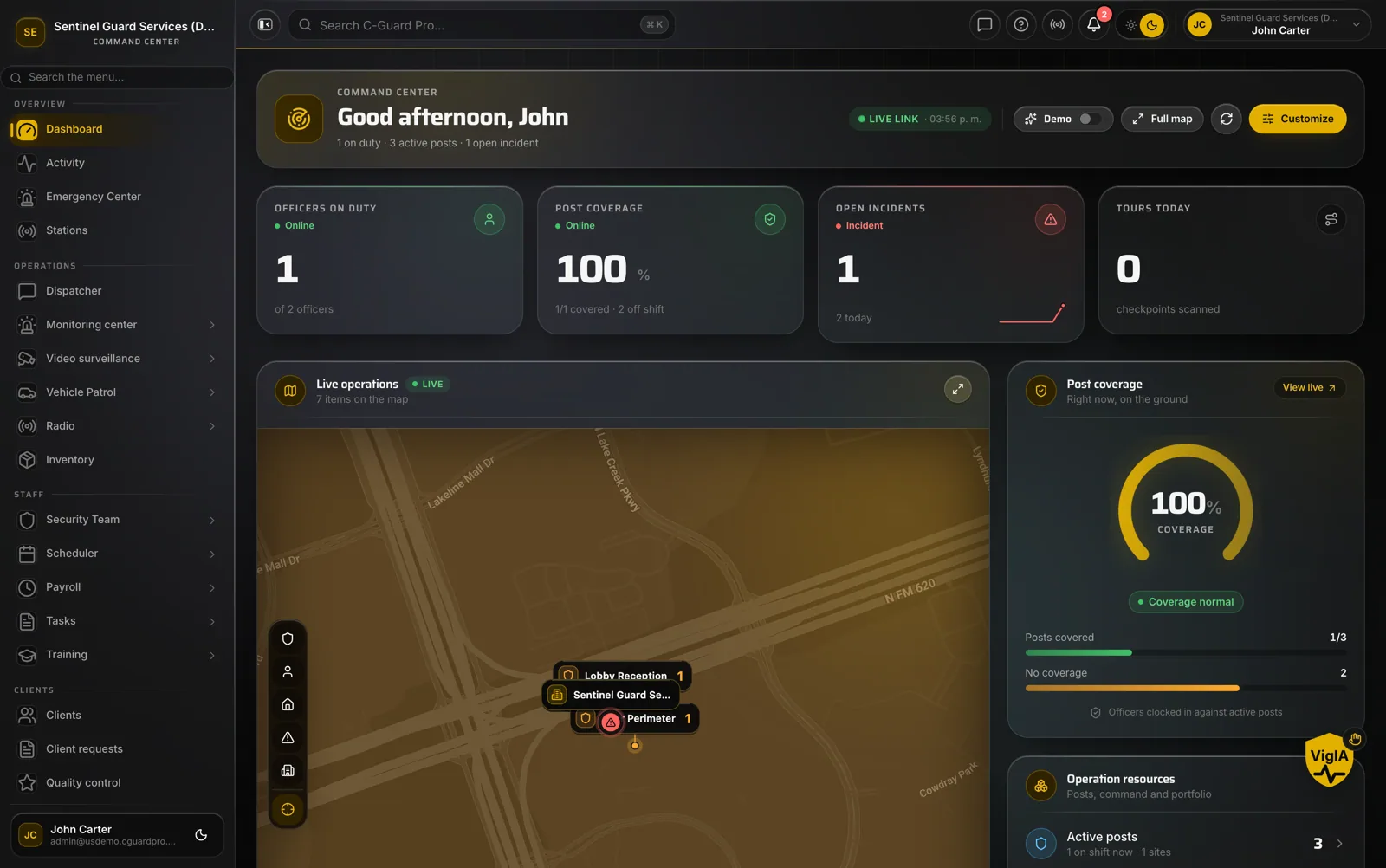
That’s the pitch a company built on accountability should be making against a cheaper staffing competitor: not “we’re better,” but “here’s what you’re actually buying with us that you aren’t buying with them.” A dashboard the client can see, showing which posts are covered right now and by whom, does more to make that case in a sales meeting than any adjective in a proposal.
Where prospects actually feel the difference
The difference rarely shows up on a normal, uneventful day — both models can staff a quiet lobby just fine, and the client may never notice the gap until it costs them something. It shows up in three specific moments.
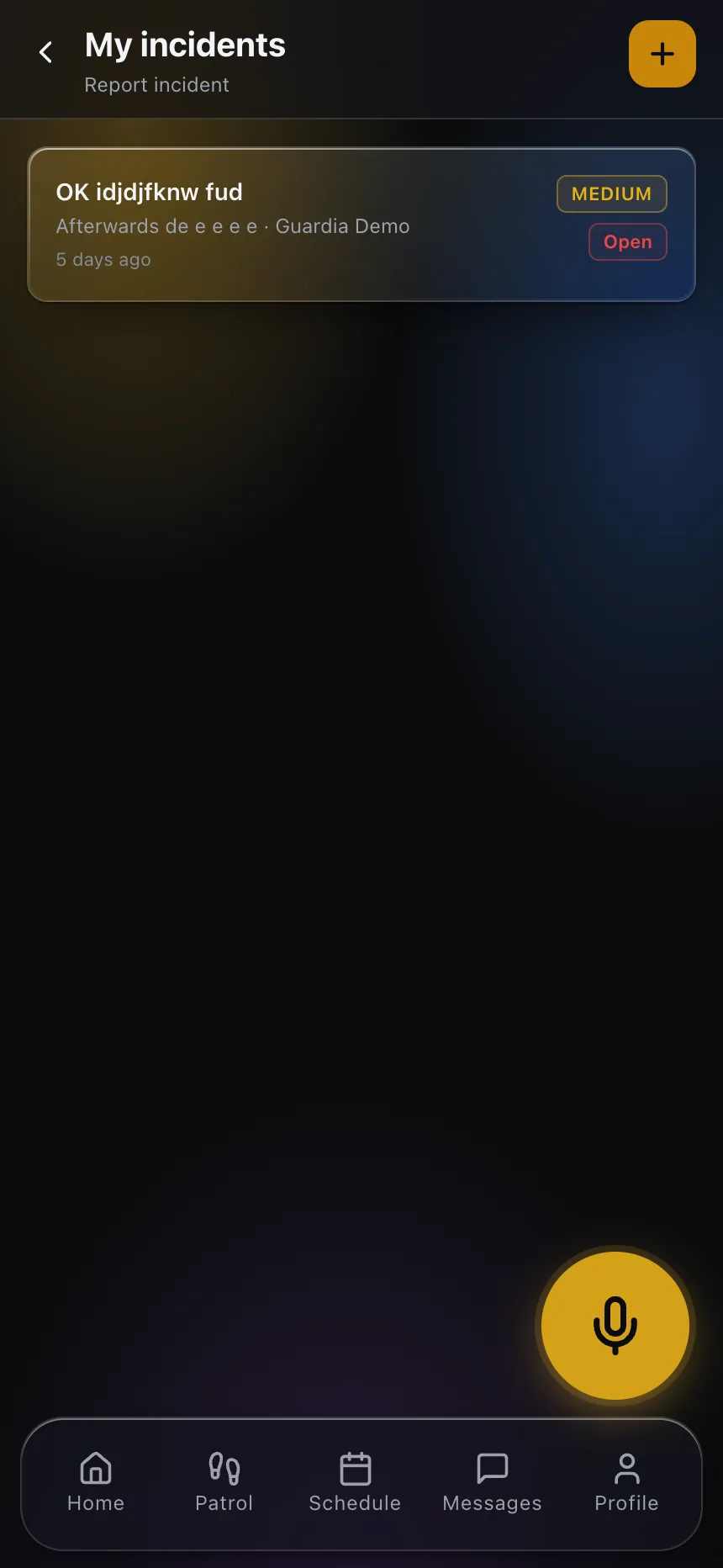
When something happens. An incident, a theft, a dispute with a tenant — the property manager needs a written account with enough detail to hold up if it’s questioned later, and needs it fast. A company with a real incident reporting workflow produces that. A pure staffing arrangement produces whatever the officer remembers to write down on a notepad, if anything.
When the officer changes. Staffing models tend toward higher turnover on a given post because there’s less structural investment in fit — a body that meets the license requirement is a body that meets the license requirement. An accountable company with active supervision notices earlier when an officer and a post are mismatched, and has post orders detailed enough that a replacement officer can actually be briefed rather than dropped in cold.
When the client asks for proof. “Was someone actually here at 2 a.m.” is a question a staffing arrangement often can’t answer with anything better than a timesheet. A company running checkpoint scans and a documented tour route can answer it with a timestamped record. Guard tour systems exist for exactly this gap — not because officers can’t be trusted, but because “trust me” isn’t proof, and property managers increasingly know the difference.
Questions a prospect should actually ask during a walkthrough
Two proposals that read identically on paper stop looking identical the moment a property manager asks the right questions during a site walkthrough. Who visits this post, and how often — a named field supervisor with a defined cadence, or nobody unless something goes wrong? What happens the moment an officer calls off — is there a documented callout process, or does the vendor just find “someone”? Who actually writes the incident report if something happens at 2 a.m., and can I see a sample of what that report looks like? Can I see coverage and reporting myself, or do I have to call and wait for someone to check?
None of those questions require the prospect to understand the industry deeply. They just require the prospect to ask for evidence of the thing they’re actually paying for, rather than accepting “trained, licensed officers” as a sufficient answer. A staffing-model vendor will often struggle to answer the supervision and reporting questions with anything concrete, because those functions were never built into the product in the first place — not out of dishonesty, but because that’s simply not what a body-shop model is designed to deliver.
Positioning this in a sales conversation
If you’re the owner pitching against a lower staffing-agency number, don’t argue the price — argue the deliverable. Walk the prospect through what they’ll actually receive: post orders specific to their site, a field supervisor who visits, an incident reporting process with photos and a timeline, and a client portal where they can see coverage and reports themselves instead of waiting for a phone call. A prospect who understands they’re comparing two different products, not two prices for the same thing, is a prospect who can justify paying more to their own boss.
The honest caveat: not every site needs this. A short, low-stakes staffing arrangement is sometimes exactly the right tool. The mistake is treating every bid as interchangeable when the underlying product isn’t. If you want to see what the accountable version of this looks like in practice, explore CGuardPro or get in touch.