If you run a jobsite, you know the theft pattern by heart: it happens at night, it targets whatever is expensive and easy to resell, and it sets the schedule back further than the dollar value suggests. Copper, tools, fuel, and materials disappear, and the loss is not just the replacement cost, it is the crew standing around the next morning waiting on gear that is gone. When you hire construction site security guards, you are buying two things: a deterrent presence during the vulnerable hours, and proof that the site was actually watched. This guide is about buying both, and not paying for a guard who parks in a trailer all night.
Why construction sites get hit
A jobsite is uniquely exposed. It changes shape week to week, it is full of valuable and portable material, it often sits in an area with limited lighting, and it is empty for long stretches. Perimeter fencing helps, but a fence is a suggestion to a motivated thief. The human deterrent is what changes the math.
That means the value of construction site security guards is concentrated in the off-hours: nights, weekends, and the gaps between trades. When you evaluate a provider, focus your questions there. Daytime presence is easy; the real test is 2 a.m. on a Saturday, and whether the guard actually walked the site or waited out the shift in the warm trailer.
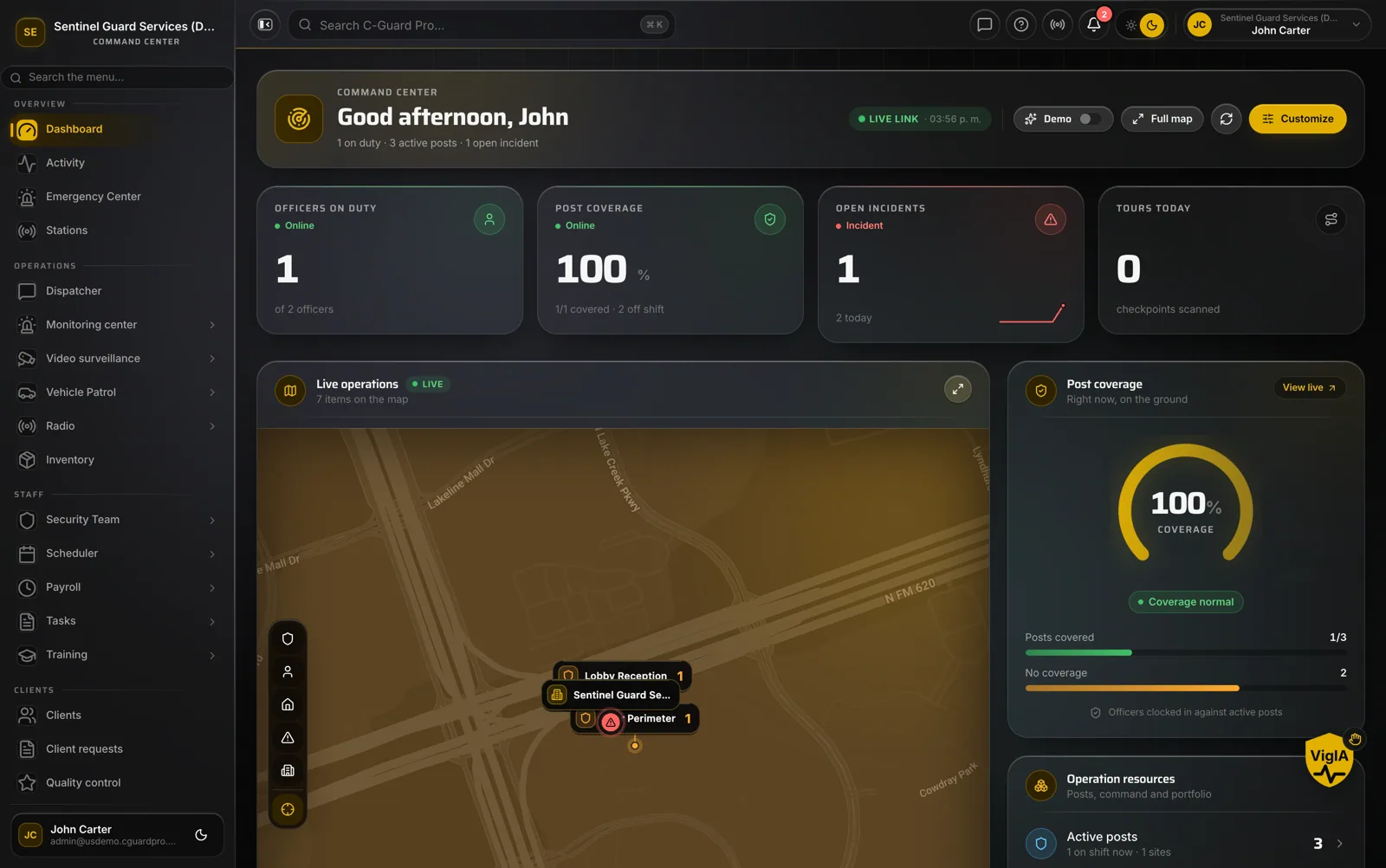 A site superintendent should be able to see that night patrols actually happened, not just that a guard was billed for the shift.
Night patrols you can verify
The single most important requirement for a jobsite is verified patrols during the vulnerable hours. You are not on site at night, so you need proof that the guard was, and that they covered the whole thing, not just the entrance.
Two tools do this together. A QR guard tour system puts checkpoints at the material laydown area, the copper and wire storage, the fuel tanks, and the far corners of the site, and each scan is stamped with a time and location. GPS guard tracking shows the route the guard actually covered between those points, so a straight line on a map does not pass for a patrol. Require both, define the checkpoints, and require that you can review the results the next morning.
This is also how you settle the recurring argument with providers. “The guard patrolled all night” is a claim. A set of timestamped scans and a GPS route is proof, and it is proof that protects you when an insurer or an owner asks what happened.
Access logs for a moving cast
Jobsites have constant, changing foot and vehicle traffic: subcontractors, delivery drivers, inspectors, and equipment operators. Controlling and logging that traffic matters, because a huge share of jobsite theft is not a stranger climbing the fence, it is someone who had a reason to be there and took more than they should.
Require a digital access log: who arrived, which trade or company, what vehicle, time in and time out. A searchable record means that when material goes missing, you are not staring at a blank clipboard. You have a list of who was on site and when. Ask your provider how they handle the after-hours delivery, the sub with no scheduled visit, and the person who “just needs to grab something.”
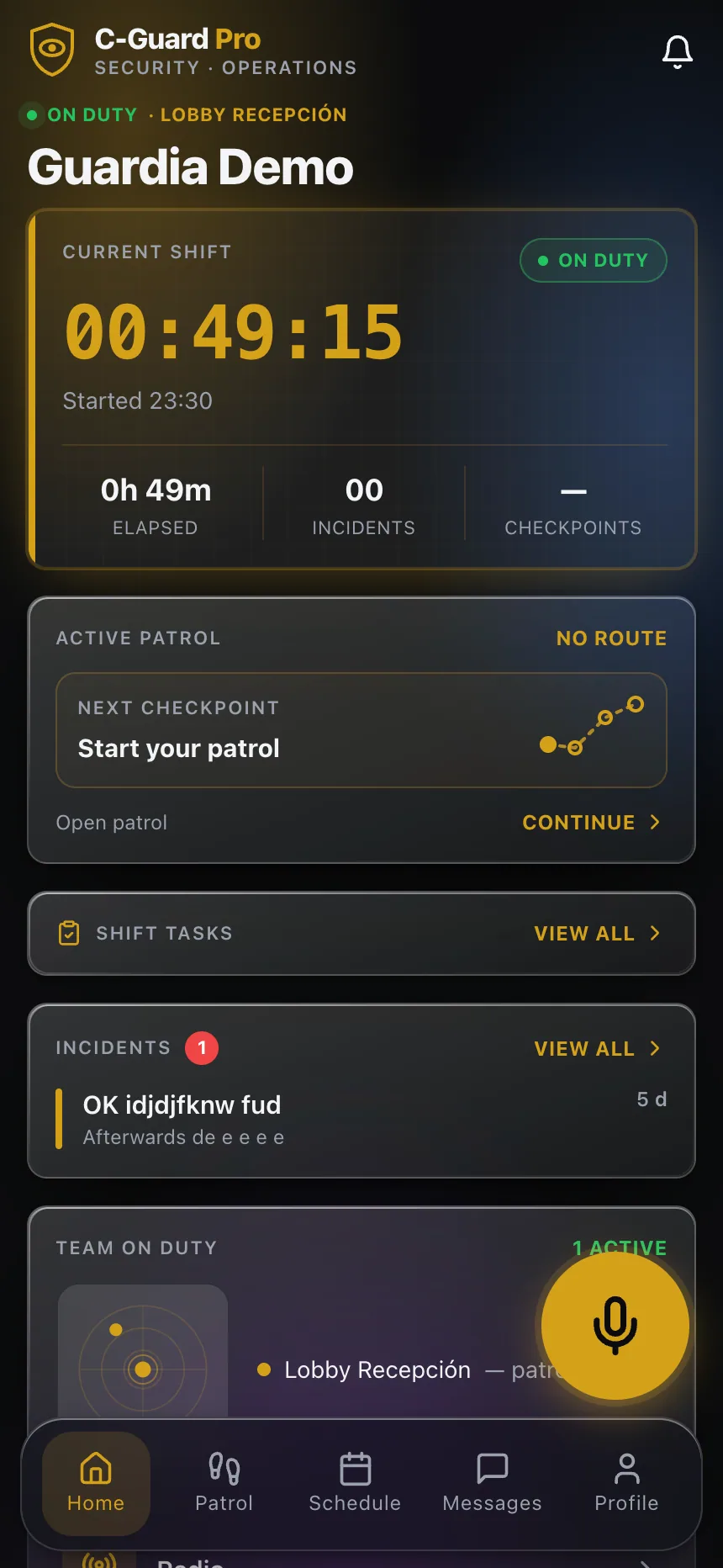 Access checks, patrol scans, and shift notes flow into one record you can pull up when material goes missing.
Document incidents while the trail is warm
When something does happen, a cut fence, a missing spool of copper, a damaged piece of equipment, the record you capture in the first hours is what makes a police report, an insurance claim, or a subcontractor conversation actually go somewhere. Require digital incident reports with time, location, description, and photos, logged on the spot rather than reconstructed days later.
Over a long project, those reports also reveal patterns. If theft attempts cluster on a particular night or at a particular gate, you can shift coverage there. That is far better than replacing stolen material month after month and hoping it stops.
For the fuller picture of how a program fits a jobsite, the construction site security software page lays out the pieces.
Give yourself visibility from the office
You are managing a project, not babysitting a guard. A client portal for security lets you check overnight patrol activity, access logs, and incidents from your desk with your morning coffee, instead of calling the guard company to ask if anything happened. That visibility is also your documentation trail for owners and insurers, ready when they ask rather than assembled in a panic.
What to require from your provider
Put it in the contract:
- Verified night and weekend patrols with defined checkpoints and frequency.
- GPS-tracked routes so you can see the whole site was covered.
- A digital, searchable access log for people and vehicles.
- Written protocols for after-hours access and deliveries.
- Digital incident reports with time, location, and photos.
- A portal where you can review overnight activity from the office.
A word on limits and rules
Technology narrows the blind spots; it does not eliminate them. GPS can drift near heavy steel or in a deep excavation, and a scan proves the guard reached a point, not that nothing slipped past elsewhere. Treat the tools as an amplifier of a real, well-supervised guard presence, and ask your provider how they train and check on their people overnight.
Requirements for guard licensing, cameras, and privacy vary by state and locality, and this article is not legal advice. Confirm specifics with the relevant authority and your own counsel.
The takeaway
On a jobsite, the theft happens when you are not there, so buy proof that the guard was. Require verified night patrols by checkpoint and GPS, a searchable access log, and documented incidents, then give yourself a way to check it all from the office. To see what that morning-after visibility looks like, explore the CGuardPro client portal.