Most buying guides for hiring a guard company give you a checklist to fill out after the meeting — licensed, insured, references checked, box ticked. That’s useful for comparing proposals side by side, but it doesn’t help you in the room, when a sales rep is giving you a confident, well-rehearsed answer and you need to know whether to push further. What follows are the actual questions to ask a security company before hiring them, worded the way you’d say them out loud, with a note on what a real answer sounds like versus a rehearsed one.
On supervision — because “we check in regularly” means nothing specific
“Walk me through what a field supervisor actually does on a normal week for an account my size.” You’re listening for specifics: how many site visits per week or per shift, whether visits are scheduled or random, and whether the supervisor’s visits are documented anywhere you’d ever see. A vague “our supervisors are very hands-on” with no number or process behind it is a sign the answer is aspirational, not operational.
“If an officer doesn’t show up for a shift, what happens in the first thirty minutes?” This is the question that separates a company with a real dispatch process from one that’s hoping it doesn’t happen. You want to hear about a specific escalation path — who gets notified, how fast, and what the backup coverage plan looks like — not “we’d figure it out.”
“Can I see what a site visit report or a shift log actually looks like?” Ask them to show you a real (redacted) example, not describe it. A company that documents supervision seriously can pull one up in the meeting. A company that documents it loosely will describe the process in the abstract instead.
On reporting — because format matters as much as frequency
“What does my monthly or weekly report actually contain, and can I see a sample?” Get specific about what’s in it: incident summaries, patrol completion, attendance exceptions, or just a generic cover letter. A lot of “regular reporting” turns out to be a boilerplate email with the same three sentences every period.
“If something happens on my property at 2 a.m., how soon do I find out, and how?” This is different from asking about the monthly report — you’re asking about real-time notification for anything serious. A specific answer names a channel (a call, a text alert, a portal notification) and a rough timeframe. A vague answer talks about “keeping you informed” without saying how.
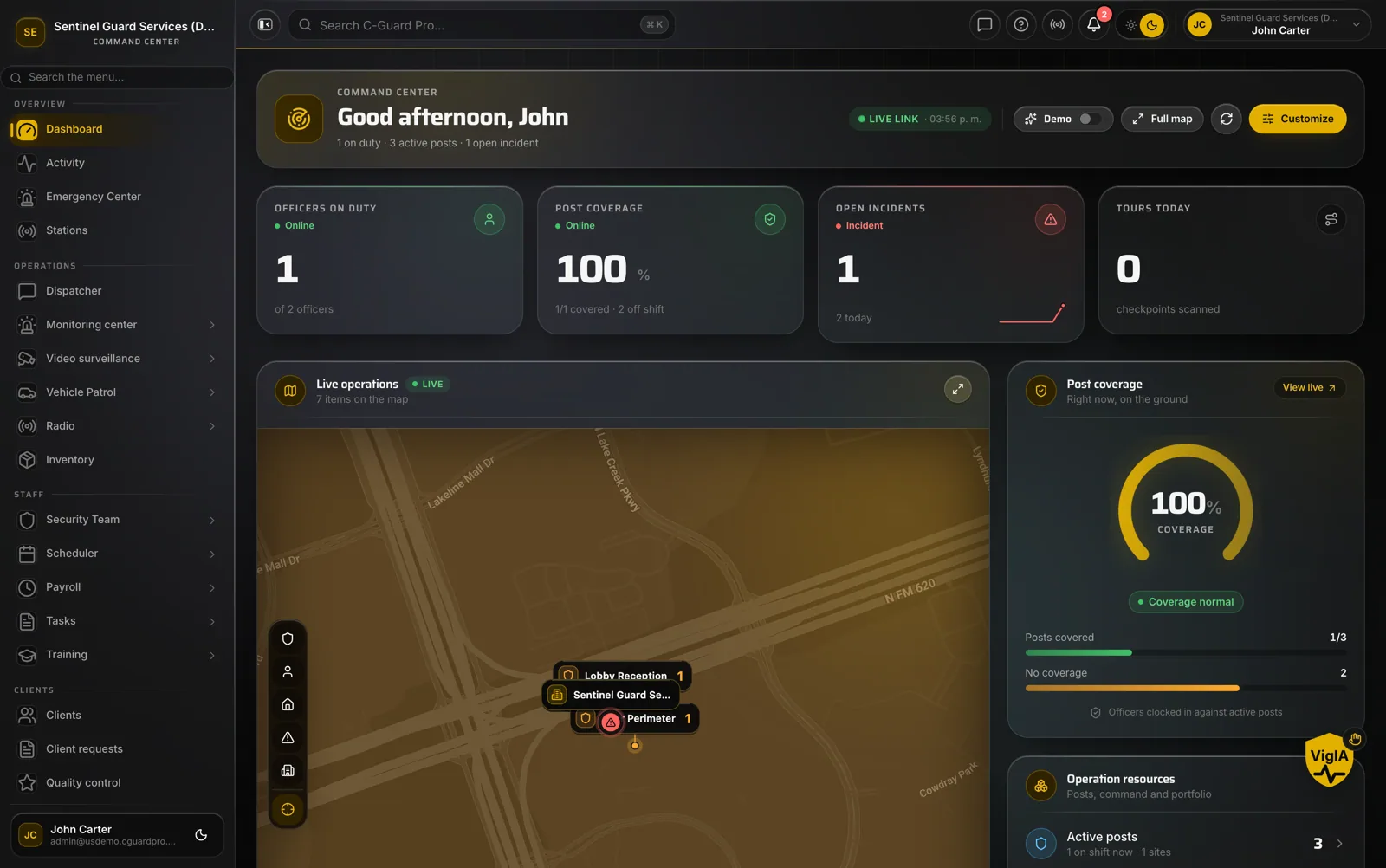
“Do I get to see this information myself, whenever I want, or only when you send it to me?” This question exposes whether the company can offer you actual visibility versus periodic summaries on their schedule. A company running a real client portal can show you a live view of activity at your site during the meeting itself — which is a very different answer than “we’ll email you a report.”
On screening and hiring — because this is the question people are most afraid to ask directly
“What does your background check process actually cover, and does it happen before or after someone is assigned to my site?” Ask directly whether checks are completed before an officer ever sets foot on your property, not after. Also ask what triggers a re-check — some companies only screen at initial hire and never again.
“How much training does an officer get specific to a site like mine before their first shift, separate from whatever general training they received when they were hired?” You’re not asking for a training-hour number — you’re asking whether site-specific orientation is a real, separate step, or whether “training” means only the generic onboarding every officer gets regardless of where they’re posted.
“What’s your turnover like on accounts similar to mine, and how do you handle it when it happens?” A company that’s honest about turnover and has a real transition process — overlap shifts, a documented post-order handoff, a supervisor present for the first few shifts of a new officer — is giving you a more useful answer than one that claims turnover isn’t an issue for them.
A follow-up worth asking after every answer
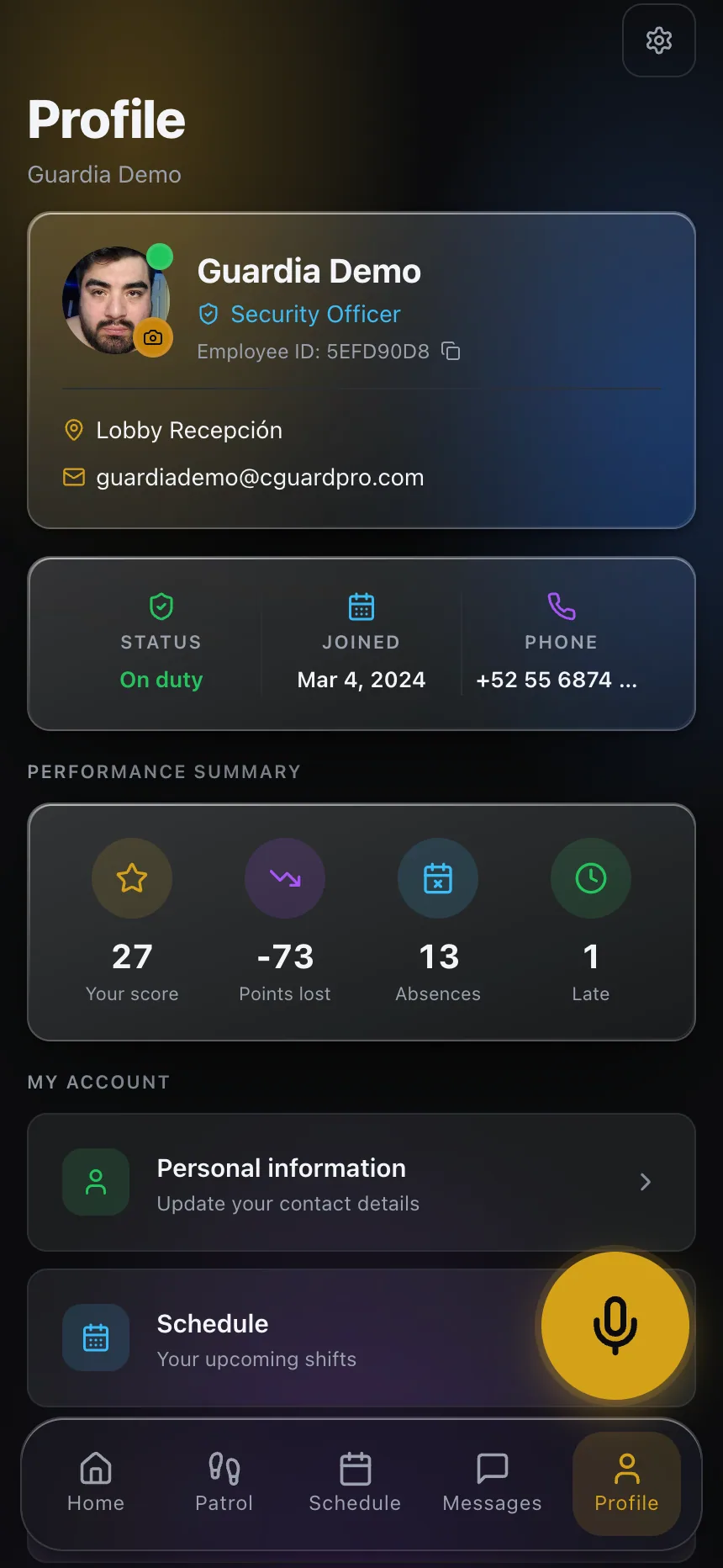
Whatever the sales rep says to any of the questions above, there’s one follow-up that does more work than the original question: “Can you show me that, right now, instead of describing it?” A company that documents supervision, reports incidents fast, and screens officers properly can usually pull something up on a laptop during the meeting — a sample report, a live dashboard, a recent (redacted) background-check confirmation. A company that can only describe its process in words, no matter how confidently, is telling you the process may exist mostly as a description. This single follow-up, asked consistently, does more to separate a real operation from a well-rehearsed pitch than any of the individual questions on their own.
On real-time visibility — the question most buyers don’t know to ask
“If I wanted to know right now, at this moment, whether the officer is actually on my property, could you show me?” This is the single most revealing question in the whole conversation, because the honest answer for a lot of companies is no — they’d have to call the officer and ask, the same way you would. A company with real GPS visibility into active shifts can pull up a live view and show you, on the spot, during the sales call.
“How do officers report an incident, and how fast does that reach someone who can act on it?” You want a specific path — a mobile report with photos that reaches dispatch or a supervisor immediately — rather than “they write it up and someone reviews it later.”
What to do with the answers to these questions to ask a security company before hiring
None of these questions have a single right answer that disqualifies a company on its own — a smaller company might genuinely handle supervision well with a simpler process than a larger one, and that’s fine. What you’re actually testing is whether the answers are specific and consistent, or vague and reassurance-shaped. A company that answers every one of these with a real process, a real example, or a live demonstration is telling you something concrete about how they operate day to day — which is worth more than any brochure or reference list, because a reference will always be their best client, not a representative one.
For a broader framework to run alongside this conversation, our guide on how to evaluate guard management software covers the operational side of the same question from the technology angle, and it’s worth reviewing before the meeting so you know which of these answers to press on. It’s also reasonable to ask directly how billing and hours reconciliation work — a company using real payroll and billing tools tied to actual clock-ins will have a cleaner answer than one relying on manual timesheets, and disputes over billed hours are one of the more common sources of friction later in a contract.
If you’re a guard company preparing to answer these questions well, and honestly, explore CGuardPro or get in touch.