There’s a specific failure mode that shows up on accounts where a supervisor treats the pass-down log as the briefing. The outgoing officer wrote a note, the incoming officer read it — or skimmed it — on the way to post, and that’s treated as the officer being briefed for the shift. It isn’t. A pass-down is a handoff between two officers about what happened on the last shift. A pre-shift briefing roll-call checklist for security supervisors is a different thing entirely: it’s a supervisor actively confirming, before anyone walks a post, that the officer has working equipment, knows the assignment, and can actually reach dispatch if something goes wrong.
Why pass-down isn’t a substitute for a briefing
Pass-down answers “what happened last shift.” A briefing answers “is this officer ready for this shift” — a question pass-down was never designed to cover. An officer can read a thorough pass-down note and still show up with a radio battery at ten percent, no idea the post orders changed last week, and no idea a supervisor wants extra attention on a specific area because of something that happened two nights ago on a different shift. None of that gets caught by handing off notes between two officers with no supervisor in the loop.
The supervisor who skips the briefing and relies on pass-down is effectively delegating quality control to whichever outgoing officer happened to be on shift — which means the standard of what gets communicated varies by officer, and nothing gets verified, only reported.
The pre-shift briefing roll-call checklist for security supervisors
A briefing that’s worth the five or ten minutes it takes covers four things, in a specific order, because each one is checking for something different.
Equipment check, done in front of the supervisor, not self-reported. Radio charged and functioning, any required PPE present, a phone with the app installed and logged in if that’s how the officer receives tasks and reports incidents. “I checked, it’s fine” from the officer isn’t the same as the supervisor confirming it. Equipment failures found at the start of a shift are an inconvenience. Equipment failures discovered during an actual incident are a real problem.
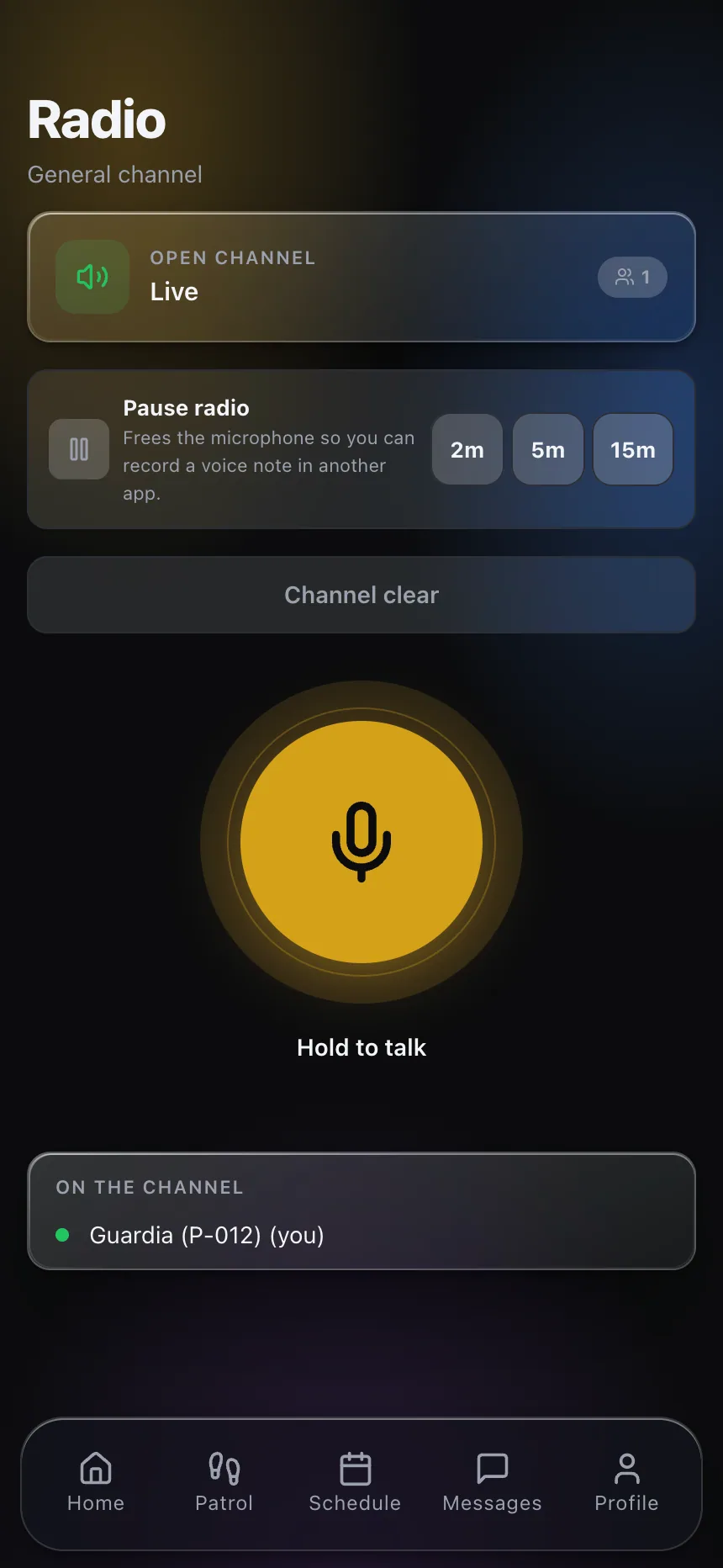
A radio test, specifically, not assumed as part of the equipment check. A radio that powers on isn’t the same as a radio that transmits and receives clearly from the officer’s actual post location, especially in buildings with dead zones — parking structures, stairwells, basement levels. Have the officer key up from where they’re actually headed, not from the guard shack, if that’s practical, because a radio that works fine at the briefing point and drops out at the post is a gap you want to know about before the shift starts, not during a callout.
The actual assignment for this specific shift, stated out loud, not assumed from the schedule. Which post, any coverage changes from the normal rotation, anything different about today — a scheduled event, a maintenance crew on site, a VIP visit, extra attention requested on a specific area. A published schedule tells an officer where to be. It doesn’t tell them what’s different about today, and “different about today” is exactly what a briefing exists to communicate.
Anything flagged from the previous shift or from the supervisor’s own knowledge that needs active attention, not passive awareness. This is where pass-down content resurfaces, but with a difference: the supervisor confirms the officer actually understood it and knows what to do about it, rather than assuming a written note accomplished that on its own.
What a briefing looks like when the supervisor can’t be there in person
Not every shift start has a supervisor standing at the guard shack — overnight shifts, remote sites, and accounts spread across a large territory often mean the officer arrives alone. That doesn’t mean the briefing gets skipped; it means it happens over the phone or over radio instead of face to face, and the four items still get covered in the same order, just verbally. The equipment check becomes the officer confirming radio and phone status out loud instead of a supervisor watching them do it — a weaker form of verification, but a real one, as long as the supervisor is actually asking each item rather than accepting a blanket “all good” over a two-second call. The radio test still has to happen live, from the actual post, because a phone call proves the phone works, not the radio. If a supervisor genuinely can’t reach every officer before every shift on a large or spread-out account, that’s worth naming honestly as a coverage gap rather than pretending a text message that says “have a good shift” is doing the job of a briefing.
Keeping it fast enough that it actually happens every shift
A briefing that takes twenty minutes doesn’t survive contact with a busy morning where three officers are starting shifts within ten minutes of each other. The four items above should take five minutes for a straightforward post and closer to ten for a site with something unusual going on that day — not because the checklist is long, but because each item is quick to confirm when it’s a habit.
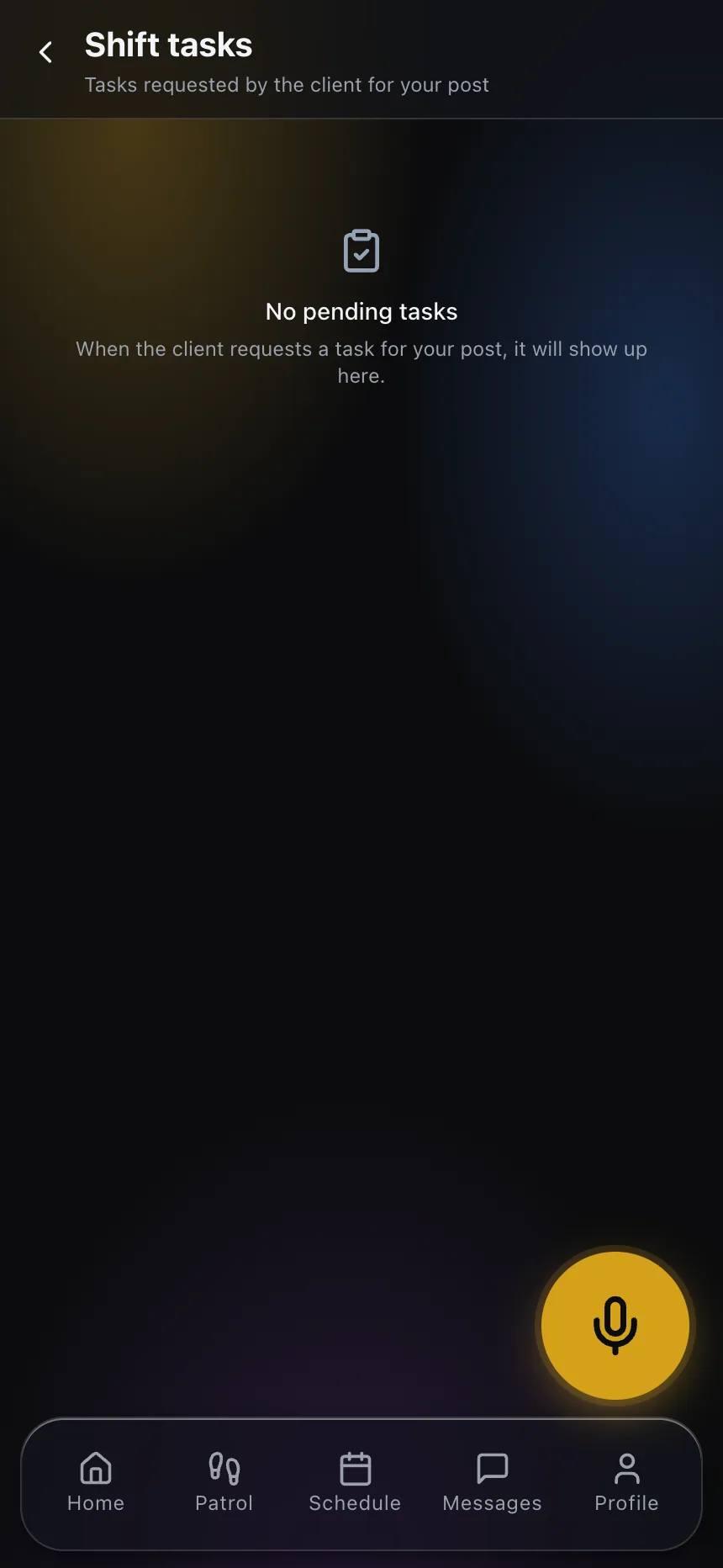
The place this breaks down in practice is documentation — a supervisor who’s genuinely running the briefing every shift often has no record that it happened, which matters the first time a client or a corporate audit asks whether pre-shift checks are actually being done, not just claimed. Tying the briefing to a specific task the supervisor completes for each officer, rather than a mental habit, gives you that record without adding real time to the process.
Where this connects to post orders and scheduling
The briefing is also the natural moment to catch anything that’s changed in post orders since the officer’s last shift on that post — a briefing that only covers equipment and radio checks but skips confirming the officer has seen the current post orders is missing the piece most likely to cause an actual problem later. And on accounts running rotating crews, the briefing is where a scheduling gap or a last-minute swap actually gets caught by a human, rather than assumed to have gone smoothly because the schedule shows coverage.
The habit that makes the rest of supervision easier
A supervisor who runs a real pre-shift briefing every shift, on every post, builds something beyond just catching equipment failures early: officers learn that someone is actually checking, which changes behavior on its own. An officer who knows the radio will get tested doesn’t show up with a dead battery in the first place. That’s the quieter benefit of a briefing done consistently — it’s not just catching problems, it’s preventing the ones that would have happened because nobody was checking.
If you want to see how briefing checklists and task tracking work together for supervisors, explore CGuardPro or get in touch.