Every guard company has a new-hire checklist: application, background check, uniform issued, badge assigned, sign here, sign there. Almost none of that checklist touches the thing that actually determines whether a new officer succeeds on post — judgment under conditions nobody wrote a policy for. A checklist confirms someone completed paperwork. A security guard Field Training Officer FTO program is supposed to confirm someone can actually do the job, and the two get treated as the same thing far more often than they should, usually because building a real FTO structure takes more deliberate effort than most companies invest in a new hire before putting them on a post alone.
The gap shows up predictably. A new officer passes every box on the checklist, gets posted solo on their fourth day, and then faces a situation the onboarding video never covered — a tenant demanding entry after hours with a story that doesn’t quite add up, a delivery driver who’s clearly been at the loading dock before but isn’t on today’s list, a verbal altercation between two people who both claim they live there. None of that is exotic. It’s Tuesday. But it’s exactly the kind of judgment call that separates an officer who’s genuinely ready to hold a post alone from one who’s only completed the paperwork that says they should be.
A security guard Field Training Officer FTO program: shadow, sign off, solo
A structure that works has three distinct phases, and the mistake most companies make is compressing them, usually under staffing pressure, into something closer to one and a half.
Shadow. A new officer works a defined number of shifts alongside an experienced officer or supervisor before ever holding a post independently — not observing from a distance, but present for the actual decisions: how a specific site’s access control gets handled, how this client’s tenants are treated versus how a stranger is treated, what actually gets logged in the daily report versus what gets mentioned verbally at shift change. The value of shadowing isn’t watching someone follow post orders — it’s watching someone apply post orders to a situation the post orders didn’t explicitly anticipate, which is most real situations.
Sign off. This is the phase companies most often skip or hollow out. A sign-off that amounts to a supervisor saying “yeah, they seem ready” after a hallway conversation isn’t a sign-off — it’s a shrug with paperwork attached. A real sign-off names a specific mentor accountable for the new officer’s readiness, requires that mentor to evaluate specific competencies relevant to that site (not a generic company-wide checklist), and creates a record of what was actually assessed, not just that an assessment happened. If a new officer struggles on post three months later, a real sign-off record tells you whether the training process missed something or whether the officer developed a problem after being cleared — that distinction matters for how you fix it.
Solo. Independent posting only starts after the sign-off, and the mentor relationship shouldn’t disappear the day it does. A new officer’s first several solo shifts are exactly when a quick check-in from their FTO — not a formal review, just “how’d last night go, anything come up” — catches small deviations before they harden into habits. The officers who eventually become problems are rarely the ones who fail spectacularly in week one. They’re the ones who develop a shortcut in week three that nobody caught because everyone assumed sign-off meant the training relationship was over.
Why staffing pressure is the real enemy of this structure
The honest reason most companies run a thinner FTO process than they’d design on paper is scheduling pressure — a site needs coverage now, and the fastest way to get there is to post the new hire solo a shift or two earlier than the program calls for. That tradeoff is rational in isolation and corrosive in aggregate, because every time it happens, it teaches supervisors that the shadow phase is negotiable, and a program that’s negotiable in practice isn’t really a program — it’s a default that gets skipped whenever it’s inconvenient, which in a chronically understaffed industry is often.
The fix isn’t willpower — it’s building the shadow requirement into how shifts actually get assigned, so that a new officer literally cannot be scheduled solo until the sign-off is recorded. A scheduling system that tracks training status alongside shift assignment makes the shortcut visible before it happens, rather than relying on a supervisor to remember, under pressure, that this particular new hire isn’t cleared yet.
Picking the mentor matters as much as picking the process
Companies that build a shadow-sign-off-solo structure sometimes stop short of the harder question: who actually qualifies to be an FTO. The instinct is to assign whoever’s most senior or has the most tenure, but tenure and teaching ability aren’t the same skill, and an officer who’s excellent on post but impatient or dismissive with a trainee will produce a worse-trained new hire than a slightly less experienced officer who actually explains their reasoning. Treat the FTO role as its own selection decision — someone who can articulate why a judgment call was made, not just make the right call themselves — rather than a default assignment based on seniority alone.
It’s also worth deciding, deliberately, whether the same officer mentors every new hire at a site or whether the role rotates. A single, consistent FTO per site builds deep familiarity with that site’s specific quirks and history, which matters for a location with a complicated access-control setup or a difficult tenant history. Rotating the role spreads the burden and keeps any one officer from becoming a bottleneck when they’re on leave or covering another post the week a new hire starts. Neither approach is universally correct — it depends on how many new hires a given site actually onboards and how complex that site’s post orders are.
Making the mentor relationship visible, not informal
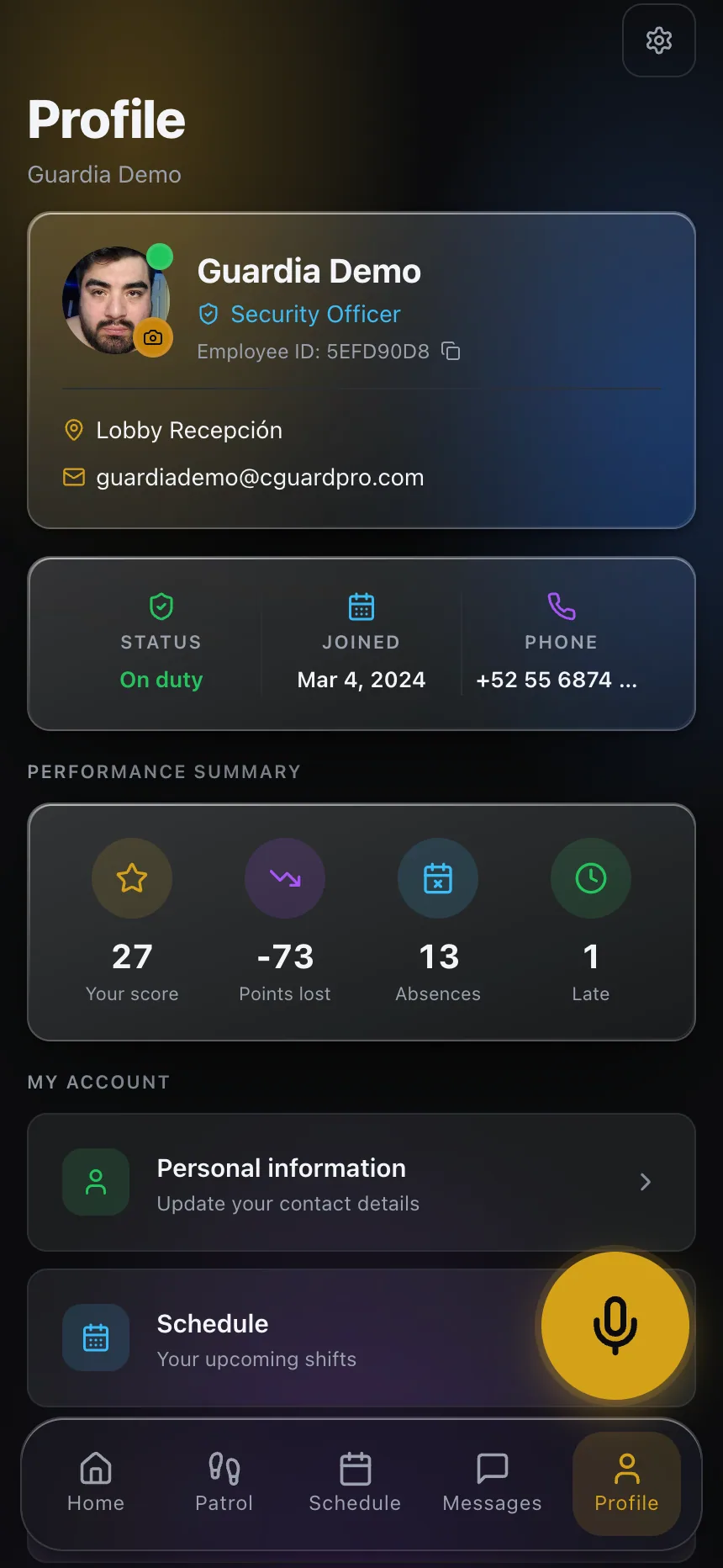
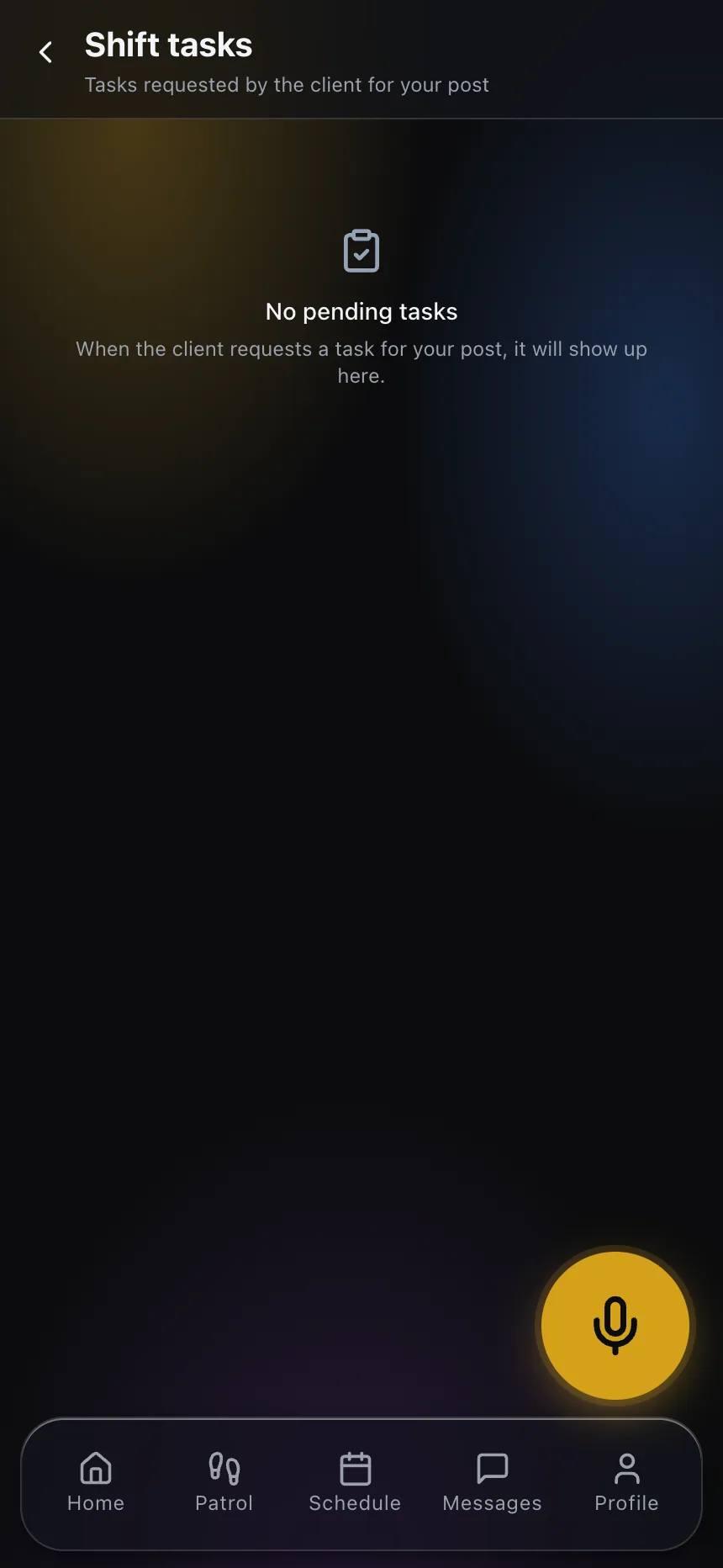
Naming a specific FTO for each new hire — not “whoever’s on shift” — and giving that mentor a defined set of tasks to actually check off during the shadow period turns training from a vague expectation into a trackable process. A checklist structure built into the guard app itself, tied to the new hire’s onboarding period and distinct from the generic new-hire paperwork, gives both the mentor and the company something concrete to point to when the sign-off happens — and something to review later if a question ever comes up about how a specific officer was trained.
The companies that get the most out of an FTO structure treat it as a retention tool as much as a readiness one — a new officer who felt genuinely mentored through their first weeks, rather than checked off a list and posted solo, is more likely to still be with the company a year later. If you want to see how training milestones and mentor sign-off can be tracked alongside scheduling, explore CGuardPro or get in touch.