Every vendor pitch for switching guard management platforms describes the destination — cleaner dashboards, better reporting, a happier client. Almost none of them describe the two-to-six-week stretch in the middle, where the old system and the new one both have to work at the same time, on the same sites, with the same officers who now have to learn a second app while the first one is still live. That stretch is where switching projects actually go wrong, and it’s where the real cost of switching guard tour system platforms actually lives — not on the invoice, which is the part nearly everyone underprices.
The real cost of switching guard tour system platforms is the overlap, not the license
Ask a company what it cost them to switch systems and most will quote the new subscription price, maybe the setup fee, maybe the hours somebody spent on training calls with the vendor. Almost nobody quotes the cost of running two systems in parallel — because that cost doesn’t show up on an invoice. It shows up as officers falling back to the old app out of habit on a chaotic night, as checkpoints that exist in the new system but haven’t been re-tagged with new NFC or QR codes yet so scans fail, as a field supervisor manually cross-checking two dashboards to make sure nothing fell through during the transition, and as the client asking why a report format changed mid-month with no warning.
None of that is a failure of the new platform. It’s the predictable cost of the transition itself, and it’s real labor and real risk regardless of which vendor you pick. Treating it as a footnote — “we’ll switch over the weekend” — is where the actual budgeting mistake happens, because a weekend cutover assumes the old system can simply be turned off once the new one is turned on, and checkpoint systems in particular don’t work that way.
Why checkpoints specifically make this harder than it looks
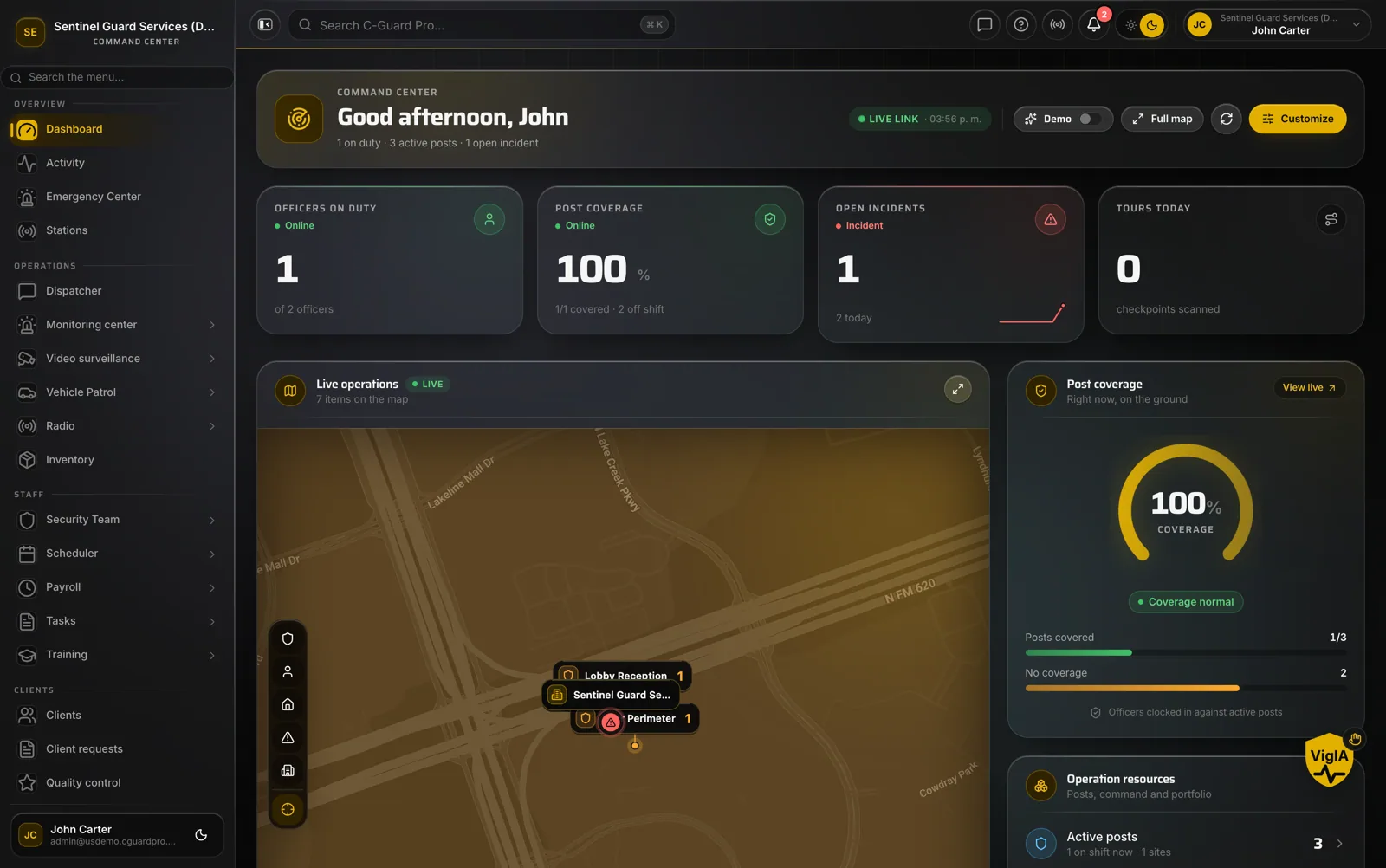
A guard tour system’s checkpoints are physical: NFC tags or QR codes mounted at specific locations across every site you staff. Switching platforms usually means every one of those tags needs to be replaced or re-registered, site by site, because the new system doesn’t necessarily read the old tags the same way. On a company with even a modest number of accounts, that’s a physical visit to every site to swap tags before the new route can be scanned correctly — and until every tag at a site is converted, that site is running a hybrid route where some checkpoints work in the new app and some don’t, which is confusing for an officer trying to follow one consistent route.
This is the piece that gets missed when a company plans the “cost of switching” around software fees alone. The tag conversion is a physical logistics project layered on top of a software migration, and it takes calendar time that can’t be compressed just because the contract with the new vendor started on a specific date.
Retraining officers without losing a shift
The other underpriced line item is retraining, and it’s underpriced because it looks simple from the office: show the officer the new app, they figure it out, done. In practice, officers are learning a new login, a new checkpoint scan flow, a new incident report screen, and a new radio or push-to-talk interface, often on an overnight shift with nobody from the office available to walk them through a problem in real time. An officer who can’t get the new app to accept a checkpoint scan at 2 a.m. doesn’t wait until morning to ask — they either skip the scan, fall back to a paper note, or open the old app if it’s still installed, and any of those three outcomes creates a gap in the record for that night.
The realistic way to handle this is to treat the parallel-run period as its own short project with its own owner, not as an assumed byproduct of the switch. That means deciding, explicitly, which system is authoritative during the overlap — usually the old one, until every site’s checkpoints are converted and every officer has completed at least one full shift on the new app with a supervisor available to troubleshoot — and being honest with the client that reports during that window may look slightly different or arrive from two sources rather than one.
What actually shortens the overlap
Sequencing sites rather than switching everything on the same day is the single biggest lever. Converting checkpoints and retraining officers at your busiest or most compliance-sensitive account first sounds appealing, but it puts the highest-stakes site through the roughest part of the transition. Starting with a smaller, lower-risk account, working out the sequence for tag replacement and training there, and then rolling that proven sequence out to the rest of the portfolio compresses the overlap for every account after the first, because the mistakes get made once on a site where they matter least.
Evaluating a platform before signing should include asking specifically how the vendor handles checkpoint conversion and whether officers can run a real shift on the new app before the old one is retired — a vendor with a clear answer to that question has done this migration with other companies before; one without a clear answer is asking you to figure out the parallel-run period yourself.
Budgeting the overlap as its own line item
Once the overlap is treated as a real project rather than an afterthought, it becomes something you can actually plan for: calendar time for site visits to swap or register checkpoints, a defined window where a supervisor is reachable for officers hitting friction on the new app, and an honest conversation with clients about what they’ll see change and when. None of that is expensive in the way a license fee is expensive, but all of it is real time that has to be scheduled deliberately, and skipping that scheduling is what turns a software switch into a rough few weeks for officers and a credibility hit with clients instead of a clean transition.
If your current checkpoint system is the thing prompting the switch in the first place, it’s worth weighing that against what a platform actually costs once the overlap period is included in the picture, not just the sticker price of the new subscription.
If you want to see how a transition like this gets planned around a real portfolio of sites, explore CGuardPro or get in touch.