When something goes wrong on your property — an officer is hurt, a visitor claims injury, property is damaged during an incident — the question everyone asks is: whose insurance pays? If your security provider is underinsured, the answer can end up being yours. That’s why understanding security guard company insurance requirements matters before you sign, not after a claim lands. You’re not just hiring coverage; you’re borrowing a provider’s risk profile, and thin coverage becomes your exposure.
Why the buyer carries hidden risk
A security company operates on your site, in your name, interacting with your tenants, staff, and visitors. If an officer’s action — or inaction — leads to a claim, plaintiffs often name everyone remotely connected, including you. Adequate insurance on the provider’s side is the buffer that keeps their incident from becoming your loss.
So treat insurance as a hard requirement in your contract, verified independently, not a box the provider checks by handing you a photocopy.
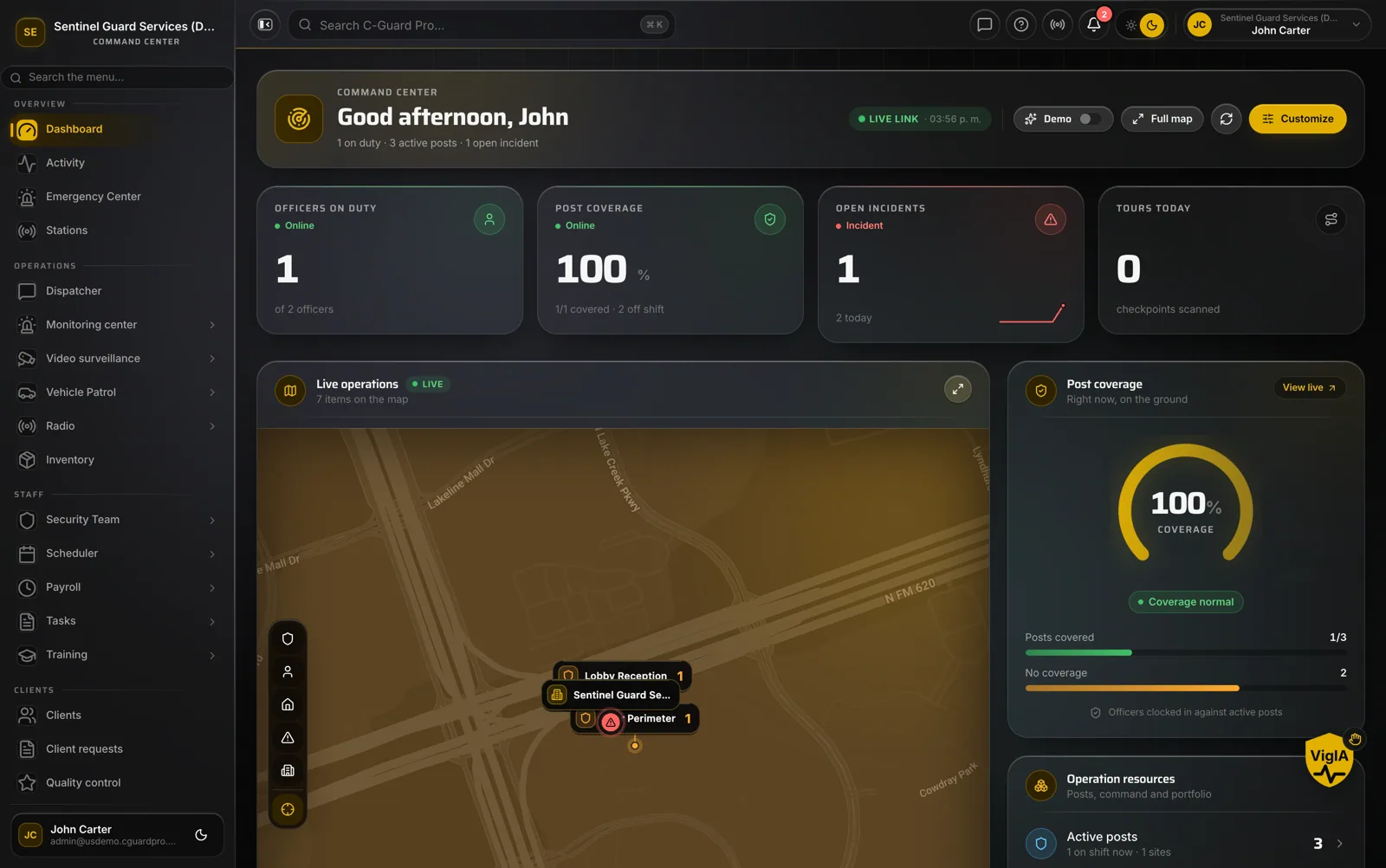 Good incident records and adequate insurance work together — one documents what happened, the other covers it.
The coverages to require
Requirements and limits vary by state, by property type, and by the nature of the work, and they change over time. What follows is a buyer’s checklist to raise with a qualified advisor and your own insurer — it is not legal or insurance advice, and you should confirm the specifics for your jurisdiction.
General liability
This covers third-party bodily injury and property damage — the visitor who claims they were hurt, the property damaged during a response. It’s the foundation of security guard company insurance requirements, and you’ll want to understand the limits and confirm they’re appropriate for your site’s risk. Ask about coverage for assault and battery specifically, since standard policies sometimes exclude or sublimit it and that’s exactly the exposure a guard service can create.
Workers’ compensation
If an officer is injured on your property, workers’ comp is what covers their medical costs and lost wages — and its absence can pull you into the claim. In most places, providers with employees are expected to carry it; requirements vary by state, so verify. A provider who classifies officers to avoid this coverage is shifting risk onto you.
Professional liability / errors and omissions
This addresses claims arising from the provider’s professional decisions — a failure to act, a negligent security allegation. For higher-risk sites, it’s worth asking whether they carry it and at what limit.
Bonding
A surety bond can protect against certain acts like theft by an officer. Whether and how much bonding matters depends on your site — a cash-handling or high-value environment weighs it more heavily than a low-risk lobby.
Auto liability
If officers drive on your site or between posts — patrol vehicles, golf carts — commercial auto coverage becomes relevant. Confirm it if driving is part of the job.
Verify it — don’t just collect a certificate
A certificate of insurance is a starting point, not proof. To actually protect yourself:
- Confirm coverage directly with the insurer or broker listed, not just the provider.
- Check the dates — coverage lapses, and a certificate from last year proves nothing today.
- Ask to be named as an additional insured where appropriate, so you have standing on the policy.
- Match limits to your risk with your advisor’s help — a limit that’s fine for a small office may be inadequate for a large mixed-use property.
Why documentation reduces your claims risk
Insurance covers the loss; good documentation reduces how often you’re in a losing position and strengthens you when a claim arises. A provider whose officers log incidents the moment they happen — with time, location, and detail — gives you and the insurers a clean factual record instead of a he-said-she-said.
Require that incidents are captured in the security guard app as they occur, and that you receive same-day daily activity reports. When a claim surfaces months later, that timestamped record is often what resolves it in your favor.
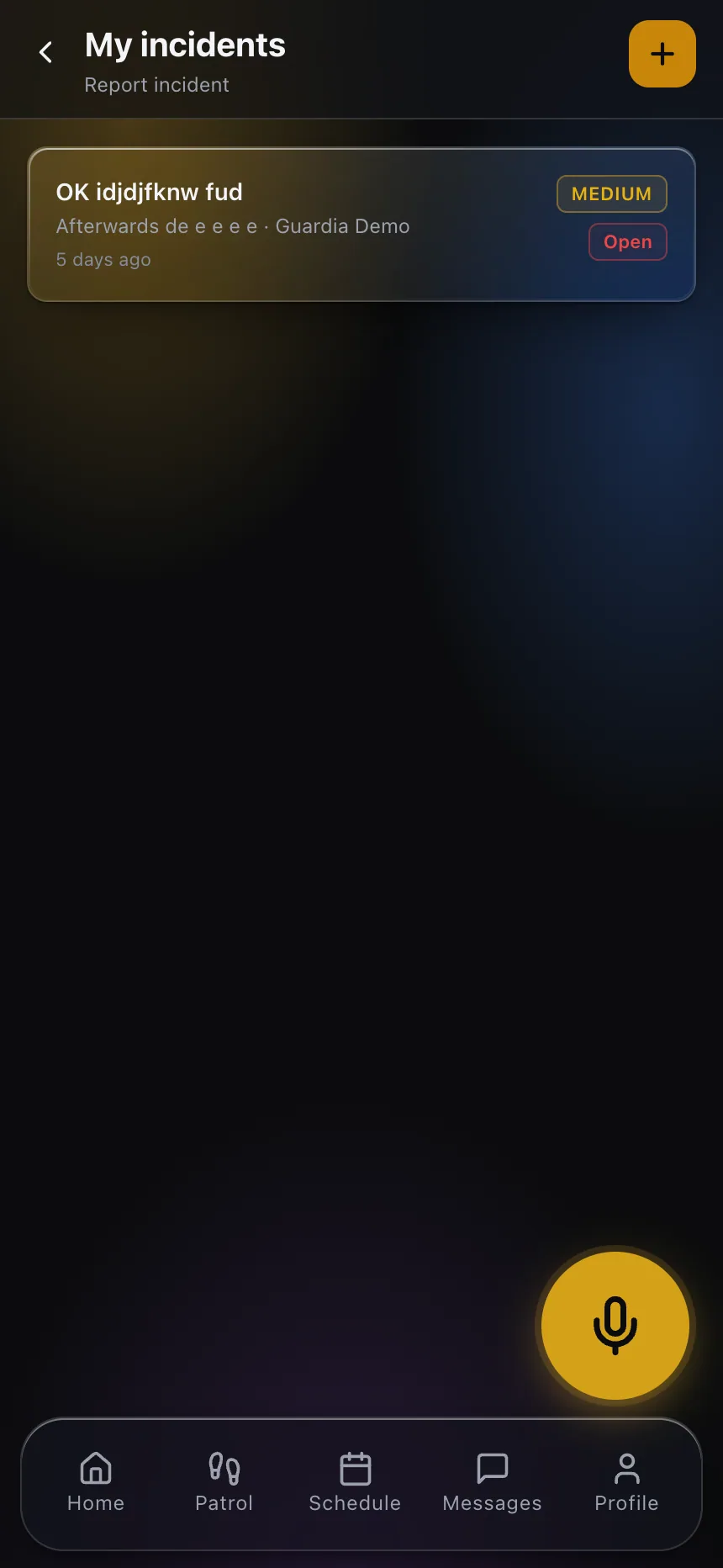 A timestamped incident log is the documentation that supports an insurance claim — and often prevents disputes.
Verified patrols via a QR/GPS guard tour system add another layer: if an incident hinges on whether an area was being covered, you can show it was. Insurance and evidence work together — coverage pays the claim, documentation keeps you from needing to.
Make coverage a condition, not a courtesy
Before you sign, get the insurance requirements into the contract as a condition of the relationship: the coverages, the minimum limits appropriate to your site, additional-insured status where relevant, and proof you can verify. Then keep verifying — coverage lapses quietly, and a lapsed policy is a gap you won’t notice until you need it.
The providers who carry proper coverage and document their work cleanly are the ones who cost you the least when something goes wrong. That’s the whole point of the checklist.
See how solid incident documentation supports your coverage in the client portal, and make both requirements before you sign.