Two proposals land on a property manager’s desk. Both are professionally formatted, both use the same reassuring language about “highly trained professionals” and “customized security solutions,” and both quote a bill rate within a few dollars of each other. Six months later, one vendor is running the account smoothly and the other has already had a post go uncovered twice. The difference wasn’t visible in the price. It was visible in the proposal itself, to anyone who knew how to read a security guard proposal for what it actually commits to rather than what it merely says.
Start with the scope of work — and ask what it doesn’t say
A scope-of-work section should read like an actual description of the job: which posts, what hours, what specific duties at each one, and what equipment or coverage type applies where. A scope section that instead reads like a general description of security services — vaguely covering “monitoring the premises” and “responding to incidents” without naming actual posts, actual hours, or actual duties — hasn’t described your site. It’s described security in the abstract, and it will fit whatever the vendor decides to staff after the contract is signed just as easily as it fits what you actually asked for. The test isn’t whether the language sounds thorough. It’s whether you could hand this section to someone who’s never seen your property and have them know exactly what’s being staffed and when.
The staffing plan needs names attached to roles, not just headcounts
A number of officers and a number of hours tells you almost nothing on its own. What actually matters is whether the proposal specifies a dedicated account manager, whether a field supervisor is assigned to your account specifically or shared across a dozen others with no defined visit cadence, and whether the plan addresses how a callout gets covered when a scheduled officer doesn’t show — because that scenario isn’t hypothetical, it’s a near-certainty over the life of any real contract. A staffing plan that only answers “how many officers, how many hours” and stops there hasn’t told you who’s accountable when something goes wrong at 2 a.m. and the on-duty officer needs backup or relief. That accountability structure, not the headcount, is usually the difference between a vendor who handles a callout in an hour and one who leaves a post empty overnight.
Reporting should specify a mechanism, not just a promise
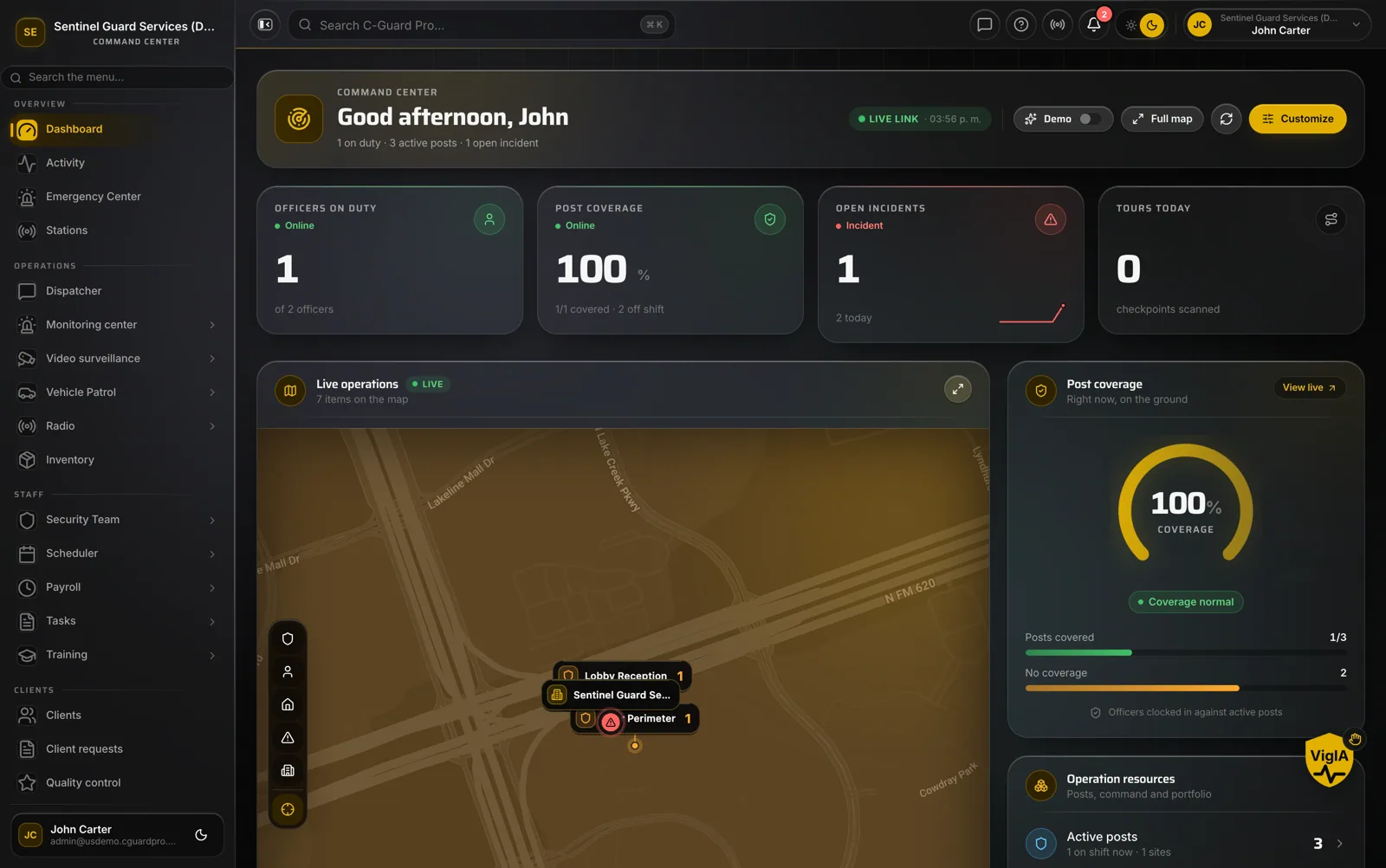
Almost every proposal promises “regular reporting” or “detailed activity logs.” Almost none of them specify how. Ask, specifically: will you receive daily activity reports, and can you actually see them, or only request them after the fact? How does an incident get escalated to you, and how fast? Is there a way to see what’s happening on-site without calling the account manager and waiting for a callback? A proposal that names an actual reporting mechanism — a client-facing view into daily logs and incidents, not just a promise that reports “are available upon request” — is telling you something concrete about how visible your account will actually be day to day. A proposal that just promises “transparency” without describing the mechanism is asking you to trust a word instead of evaluating a system.
Read the training section for what it actually requires, not what it claims
Every proposal claims trained officers. The section worth reading closely is what training is actually specific to a security role and to your site type, versus generic language that could apply to any vendor bidding on any account. Specific requirements — state licensing status confirmed before assignment, orientation to your site’s own post orders, any additional training tied to your particular property type — tell you something. “Our officers receive comprehensive training” tells you nothing you couldn’t have assumed already. This is also a section where hedged, honest language should be a green flag rather than a red one: a vendor who says training requirements vary and are confirmed per state and per role is describing reality, not being evasive.
The termination and performance clauses tell you how confident the vendor actually is
A vendor confident in its own performance generally doesn’t need an onerous termination clause to keep clients — the service itself does that work. Proposals with unusually long notice periods, steep early-termination penalties, or vague performance standards that give the vendor room to argue about whether they’ve met the contract are worth reading as a signal, not just a legal formality to skim past. This doesn’t mean every long-term contract is a trap; it means the balance of the clause is informative about how the vendor expects to earn your continued business.
The bill-rate breakdown matters more than the number itself
A single blended hourly rate on the last page tells you what you’ll pay. It doesn’t tell you what’s actually included — whether the rate covers a dedicated supervisor visit cadence, whether holiday or overtime coverage is built in or billed separately, whether equipment and reporting tools are part of the base rate or an add-on you’ll discover later. Two proposals with the same headline rate can represent very different actual commitments once you ask what’s bundled into that number and what isn’t. A vendor willing to walk through that breakdown in plain terms, rather than treating the rate as a single opaque figure, is usually the one who’s built their pricing on a real accounting of costs rather than backing into a number that looked competitive next to a rumor about a competitor’s bid.
How to read a security guard proposal once you’ve checked every section
None of this requires comparing five proposals side by side to spot. A strong proposal reads like it was written for your specific site, by someone who visited it or at least asked detailed questions about it, and each section commits to something you could actually hold the vendor to later — a named account manager, a specific reporting mechanism, a defined callout process — rather than describing security services in the abstract. A weak proposal reads the same regardless of whose desk it lands on, because very little in it was actually written for your site at all.
What to ask for if the proposal doesn’t already answer it
If any of these sections come back vague, ask directly for the missing specifics before signing rather than assuming they’ll get worked out later: name the field supervisor, describe the callout process, show a sample of what a daily report actually looks like. A vendor confident in their operation will have real answers ready. One who can only offer to “follow up on that” is telling you, indirectly, that the specifics don’t exist yet either.
If you’re evaluating vendors and want to understand what a well-run operation’s reporting and dispatch actually look like from the client side, see our guide on how to evaluate guard management software, explore what a client portal should give you visibility into, or how a transparent payroll and billing breakdown should read. Get in touch with questions about what to look for in your next proposal.