When you’re deciding where to put a limited security budget, the pitch you hear depends on who’s selling. A camera vendor says cameras. An alarm company says alarms. A guard firm says officers. But the real question in security guards vs cameras vs alarms isn’t which one wins — it’s which mix fits your site, because each layer does something the others can’t, and each has a failure mode the others cover.
What each layer actually does
Cameras: they see, they don’t act
Cameras are excellent at documentation and, when monitored, detection. They give you a record after the fact and a deterrent effect when they’re visible. What they don’t do is intervene. A camera watches a break-in happen and produces footage; it doesn’t stop it, redirect a lost visitor, or walk an employee to their car. Unmonitored cameras are essentially an after-the-fact evidence tool — useful, but passive.
Alarms: they alert, then they wait
Alarms are fast, cheap detection for specific events — a door forced, glass broken, a zone tripped. Their weakness is response. An alarm sounds, and then something or someone has to act on it. False alarms erode trust and response times, and by the time anyone arrives, the event is often over. Alarms tell you that something happened, rarely what or what to do about it.
Guards: they judge and they act
A live officer is the only layer that can assess a situation, make a decision, and physically respond in the moment. They deter by presence, handle the ambiguous cases no sensor understands, help the people on your site, and escalate real threats. The trade-off is cost and the oversight question: how do you know they’re actually doing the job?
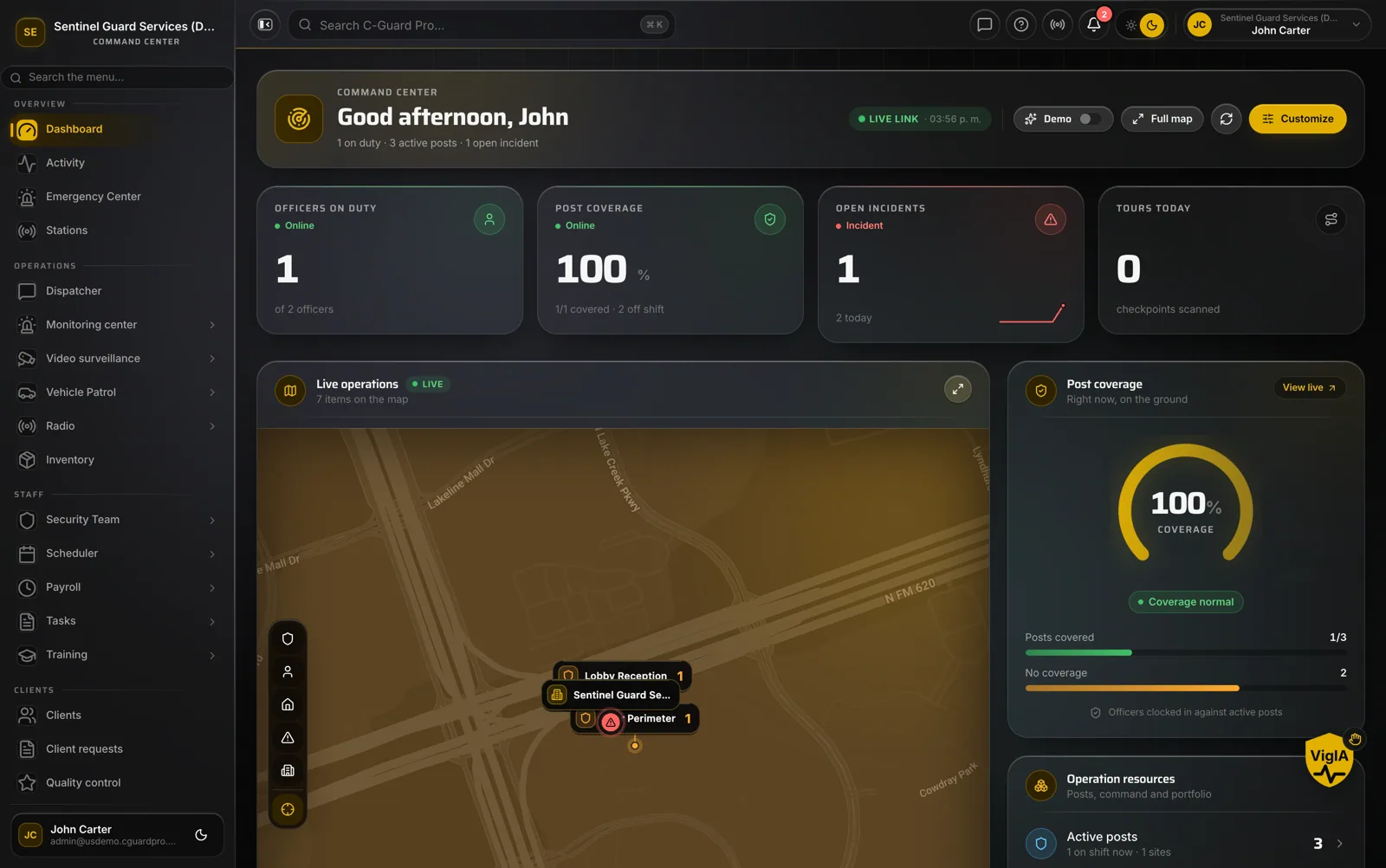 The layers work best when they feed one view — guard activity, patrols, and incidents in a single dashboard.
Where each earns its cost
In the security guards vs cameras vs alarms decision, think in terms of what a given site actually needs:
- A retail store during open hours needs presence and judgment — theft deterrence, de-escalation, customer safety. That’s a guard job, supported by cameras for documentation.
- A warehouse overnight may be well served by alarms and monitored cameras for the perimeter, with a patrol officer or roving supervisor for the events that need a human.
- A residential community usually wants a visible officer for access control and reassurance, plus cameras at entry points.
- A vacant property might lean on alarms and cameras with an on-call response, since there’s little need for a permanent human presence.
The mistake is treating them as competitors. A camera without anyone to act on what it sees is half a system. An alarm with no fast, verified response is a noise-maker. A guard with no cameras or sensors is working blind between patrols.
The layer that ties them together
Here’s what a modern guard service adds that cameras and alarms can’t: it connects the layers with proof. When an alarm trips, the officer who responds logs what they found. When a camera catches something, the officer investigates and documents the outcome. The result is a single, coherent record instead of three disconnected systems you have to reconcile yourself.
That only works if the guard service runs on the right tools. Demand that your provider prove patrols with a QR/GPS guard tour system, so “we check the perimeter” becomes a verifiable log. Require same-day daily activity reports that pull the guard’s actions, alarm responses, and camera-triggered investigations into one place you can actually read.
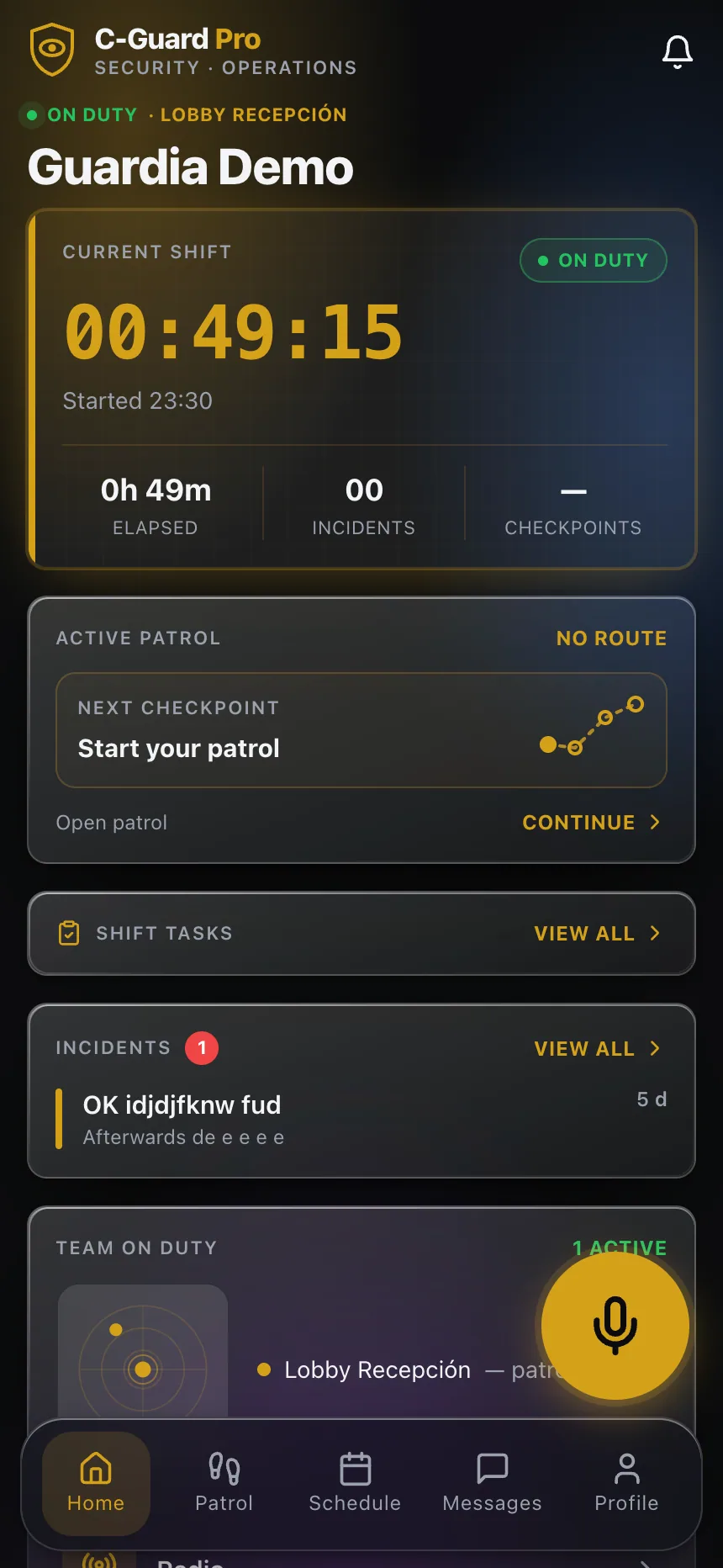 When the officer’s app captures every check and response, the human layer stops being the blind spot.
Spend the budget on coordination, not just hardware
The buyers who get the most from their budget don’t over-invest in any single layer — they buy the right amount of each and, crucially, insist that the human layer is verifiable. Cameras and alarms are cheap to add and easy to over-buy. The expensive, high-value layer is the officer, and its value collapses if you can’t see what they’re doing.
So when a provider pitches you, ask how the guard service integrates with your cameras and alarms in practice, and how you’ll see it all. A provider whose officers respond, document, and report through a live client portal is turning three separate tools into one accountable system. That coordination — not the hardware count — is what actually protects your site.
The right answer is “the right mix, verified”
There’s no universal winner in security guards vs cameras vs alarms. Cameras document, alarms detect, guards decide and act — and your job as the buyer is to match each layer to the risk it’s good at and refuse to let the human layer become the part you can’t see.
See how a modern guard service ties the layers together in the client portal, and make coordinated, verifiable coverage the standard you buy.