Somewhere in the buying process, a provider will ask whether you want armed or unarmed officers — and it’s easy to answer from the gut. Armed feels safer. But the armed vs unarmed security guards decision is really a risk, liability, and cost calculation, and getting it wrong in either direction is expensive. Over-arm a low-risk site and you’re paying a premium while adding liability you didn’t need. Under-arm a high-risk one and you’ve left a gap. The right answer comes from your actual threat profile, not from fear.
Start with your real risk, not the worst case
Before comparing armed vs unarmed security guards, describe what you’re actually protecting against. A quiet office lobby, a residential community, and a daytime retail store have very different threat profiles than a cash-handling facility, a late-night industrial site, or a location with a history of violent incidents.
Ask yourself honestly:
- What incidents have actually happened here, and how severe were they?
- Is there a credible threat of armed confrontation, or is the real risk theft, trespass, and disturbance?
- Is the guard’s role to observe, deter, and report — or to physically intervene?
Most sites are deterrence-and-documentation jobs. For those, a visible, well-supervised unarmed officer often does the work without adding the risk that a firearm introduces.
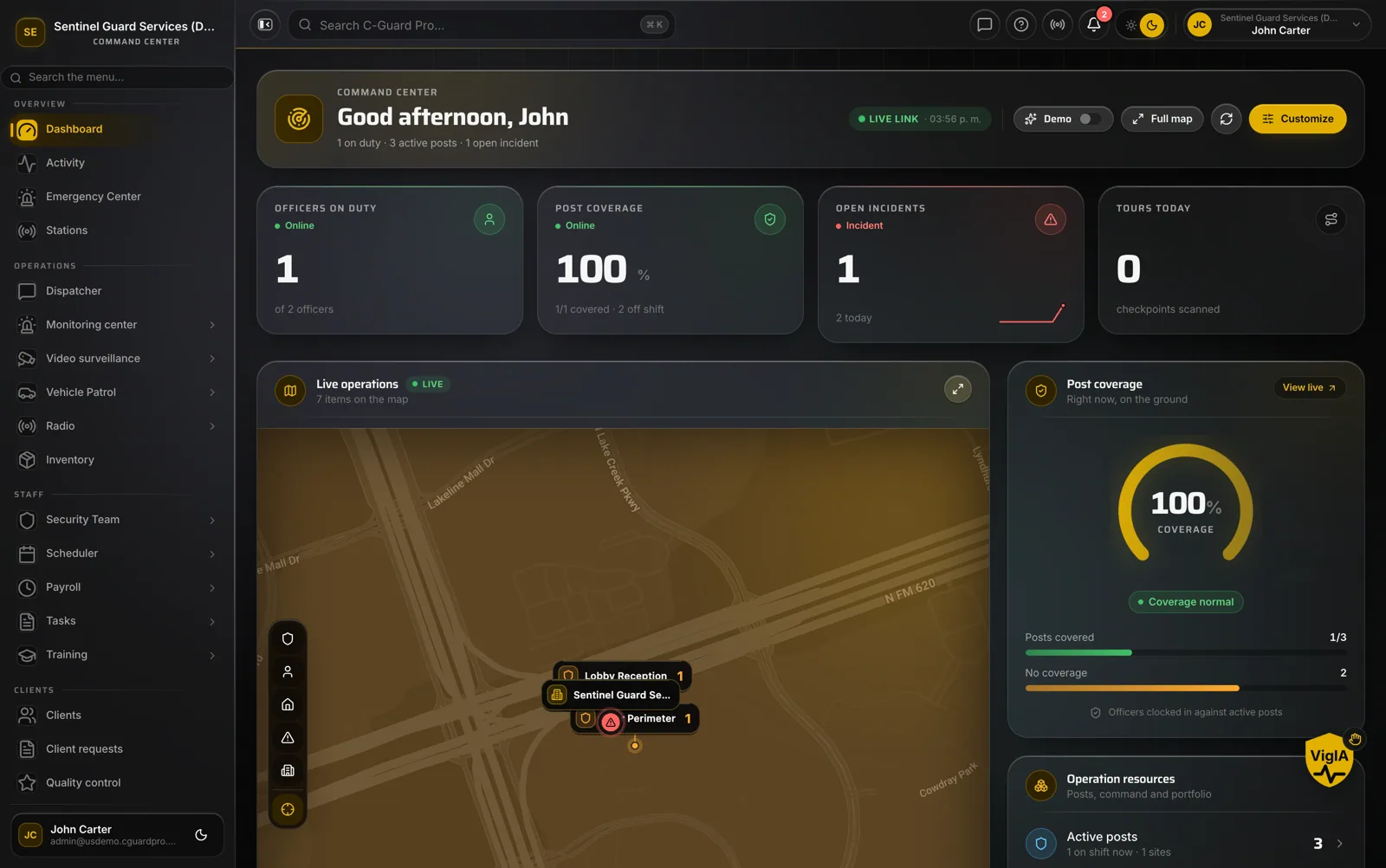 Your own incident history is the best guide to arming — review what’s actually happened before deciding.
The liability side buyers underestimate
An armed officer changes your risk exposure. If a firearm is ever used — or even drawn — the potential liability escalates sharply, and questions about training, judgment, and policy will follow. That’s not a reason to avoid armed officers where they’re genuinely warranted; it’s a reason to be deliberate.
If you do go armed, demand more from your provider: documented firearms training and qualification, a clear use-of-force policy, and tighter supervision. The bar for oversight should be higher precisely because the stakes are higher.
Licensing varies — verify it
Whether officers can be armed, what training and permits they need, and how they must be supervised varies significantly by state and is subject to change. Confirm current requirements with your state’s regulator, and don’t treat anything here as legal advice — run the specifics past a qualified advisor for your jurisdiction.
Cost is more than the hourly rate
Armed coverage typically costs more per hour, and that difference compounds across a 24/7 post. But the hourly rate isn’t the whole picture — factor in the added supervision and insurance considerations that come with arming. For many buyers, the money is better spent on better-supervised, better-equipped unarmed officers than on arming officers whose real job is to watch and report.
The question isn’t “which is cheaper” — it’s “which mix of coverage, arming, and supervision gives me the most protection per dollar for the risk I face.”
Visibility matters regardless of arming
Here’s the point buyers often miss: armed or not, what determines the value you get is how well you can see and verify the officer’s work. An unarmed officer with strong supervision, verified patrols, and instant duress escalation is worth more than an armed officer nobody’s checking on.
Regardless of the arming decision, demand:
- Duress escalation — a panic button that reaches help in seconds, which matters most in exactly the high-risk scenarios where arming is debated.
- Verified patrols — checkpoint proof so you know officers are actually covering the ground.
- Fast incident reporting — so any confrontation, armed or not, is documented immediately.
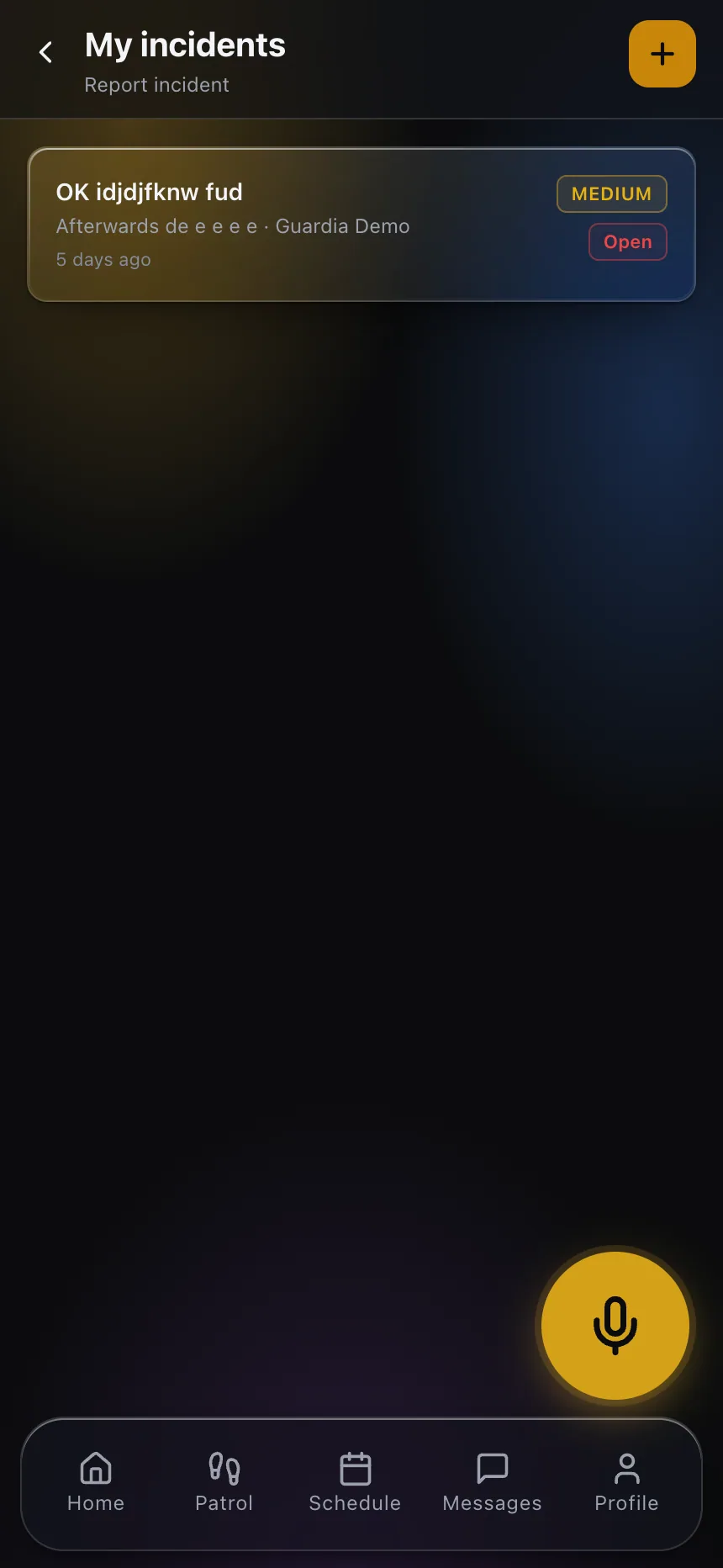 Whether armed or unarmed, the officer’s ability to log and escalate an incident in seconds is what protects you.
Make sure incidents are captured in the security guard app as they happen, not written up hours later from memory. In any confrontation, the timestamped record is what protects both your officer and your organization.
Questions to put to your provider before you decide
The arming conversation exposes how seriously a provider takes risk. Ask these before you commit either way, and watch whether the answers come with proof or just assurances:
- “Show me the training and qualification records for the officers you’d assign here.” For armed posts this isn’t optional. Current firearms qualification — not a certificate from years ago — is the baseline. If they can’t produce it quickly, that’s your answer.
- “What’s your use-of-force policy, and how do you supervise adherence to it?” A serious provider has a written policy and a way to check it’s followed. Vague answers are a red flag on any site, armed or not.
- “How is duress handled, and how fast does a supervisor respond?” This matters most on the exact high-risk sites where arming gets debated. Tie it to a panic button flow with a logged response time you can review.
- “Can I see verified patrol and incident records from a comparable site?” Armed or not, the value you get is proof of presence and fast documentation. If they can’t show it for another account, they won’t show it for yours.
A provider who answers with specifics — records on hand, a written policy, a logged response time — is demonstrating the oversight that makes either choice safe. One who leans on “our people are professionals” is asking you to take the highest-stakes decision on your site purely on trust.
Arming also isn’t one switch for a whole contract. A single site can warrant different profiles at different times: an unarmed officer for daytime reception, an armed presence for a late-night cash pickup, a roving supervisor across several posts. Rather than arm the whole account “to be safe,” map the decision to the window and task where the credible threat actually lives — keeping cost and liability where the risk is, and nowhere it isn’t.
Decide deliberately, then hold the standard
The armed vs unarmed security guards choice deserves a real analysis: your incident history, the credible threat, the liability you’re willing to carry, and the cost of each option. For a lot of sites, well-supervised unarmed officers are the right call. For genuinely high-risk posts, arming may be justified — but only with the training and oversight it demands.
Whatever you choose, the deciding factor is visibility. Armed or not, an officer you can see, verify, and reach instantly is the one keeping you safe.
Explore how live oversight works from the buyer’s side in the client portal, and make it a requirement whichever way you decide.