Something happened on your property overnight, and the first you hear of it is a vague mention at next month’s meeting, or a single scrawled line you can barely read. That’s not an incident report; that’s an afterthought. A proper security guard incident report is one of the most important things you buy when you hire guards, because it’s your record of what occurred, your basis for acting, and your protection if the event ever comes back to matter. Knowing what a good one looks like lets you hold your provider to a real standard instead of accepting whatever shows up.
The difference between a strong report and a weak one isn’t length. It’s whether it captures the facts clearly, reaches you fast, and gives you enough to decide what to do next.
What every incident report must contain
Strip away the formatting and every useful report answers the same core questions. If any of these are routinely missing, the reporting discipline has broken down.
- Who: the guard who observed and reported it, and anyone else involved, described factually.
- What: exactly what happened, in plain, specific language, what the guard saw and did, not opinion or speculation.
- When: the precise date and time, ideally captured automatically rather than written from memory later.
- Where: the specific location on your property, not just “the building.”
- Photos: visual evidence where relevant and appropriate, a damaged gate, a blocked exit, the scene as found.
- Actions taken: what the guard did in response, and who was notified.
- Follow-up: what still needs doing, and by whom.
Notice what’s not on that list: guesswork, blame, and dramatics. A good report sticks to observable facts, because the moment it drifts into opinion, its value as a record drops.
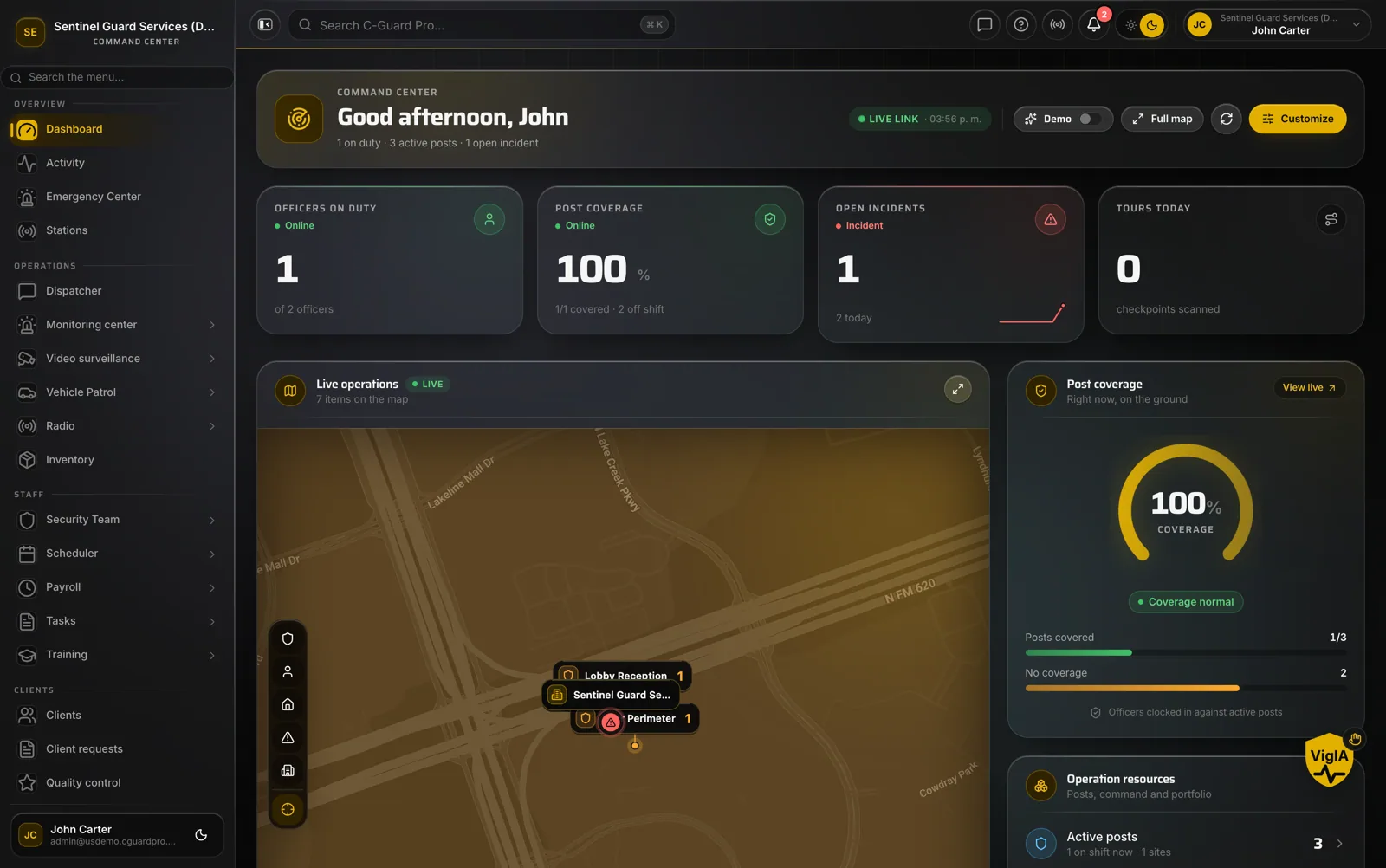 A good report captures who, what, when, where, and follow-up, and lands where you can actually see it.
Why “instantly” matters as much as “accurately”
A perfect report that reaches you three days late is a poor report. Timing is part of quality, for two reasons.
First, some incidents need you to act fast, a safety hazard, a break-in, a recurring trespasser escalating. You can’t respond to what you don’t know about. Second, details decay. A report written the moment something happens is far more accurate than one reconstructed from memory at the end of a shift or, worse, at the end of the month.
This is exactly where the tools your provider uses make a concrete difference to you. With digital incident reporting, a guard files the report from the app while standing at the scene, with the time, location, and photos captured automatically. It reaches you promptly instead of sitting in a notebook until someone types it up days later. Paper reporting can’t match that, not because paper guards are worse, but because the process guarantees delay.
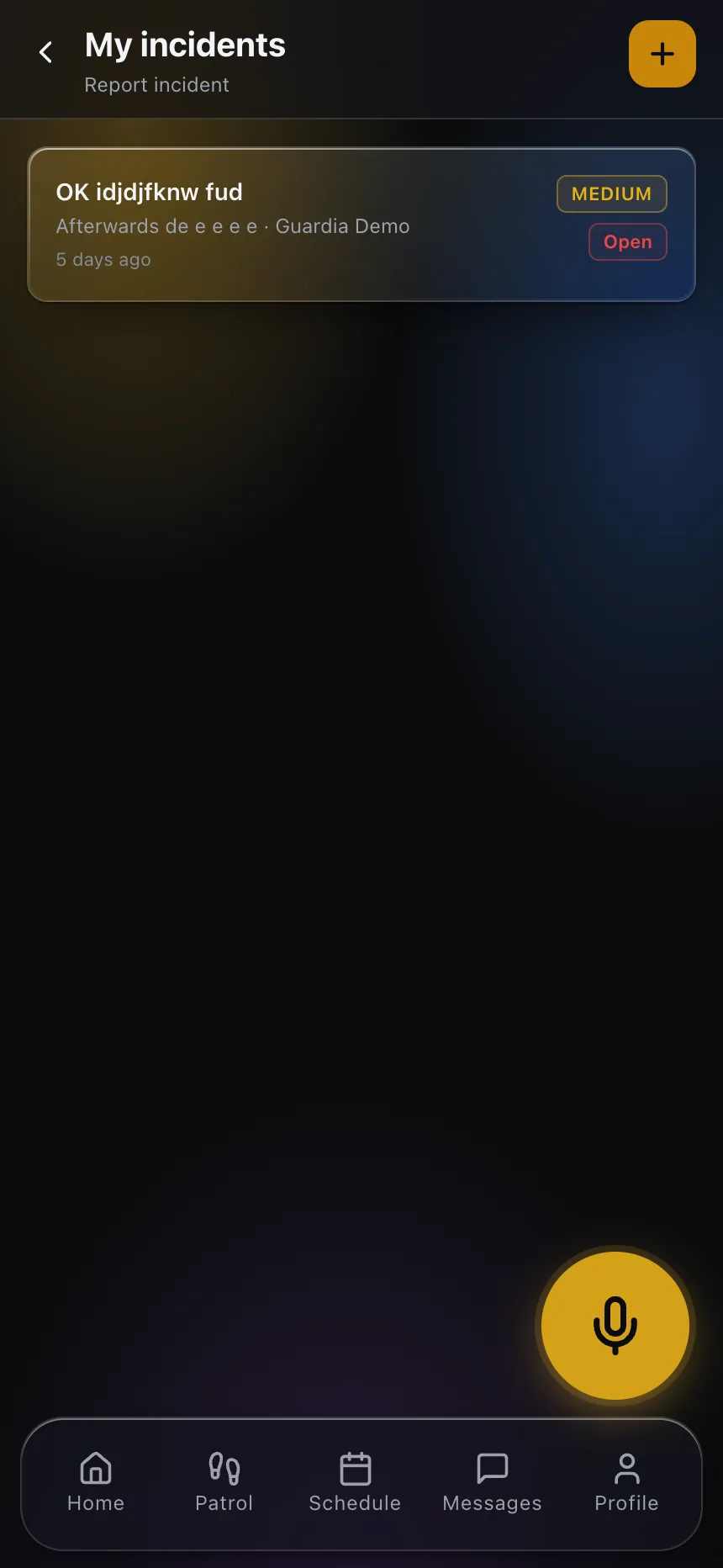 Filed from the scene with time, location, and photos captured automatically, so nothing depends on memory.
How to hold your provider to a standard
You don’t have to accept whatever reporting habits a provider brings. Set the expectation clearly and check it.
- Ask to see a sample report before you sign, anonymized. Is it specific and factual, or thin and vague?
- Define what an incident is on your property, so guards know what rises to a report versus a routine log entry. What matters on a retail floor differs from a residential lobby or a warehouse dock.
- Set a turnaround expectation. Serious incidents should reach you promptly, not at the next review.
- Confirm you get access, ideally live through a client portal, so reports come to you directly rather than through a supervisor who might forget to pass them on.
Then watch the pattern at your monthly review. Reports that are consistently detailed, timely, and complete tell you the provider’s discipline is real. Reports that are chronically late, thin, or absent until you ask are an early warning that other parts of the service are probably slipping too.
The protection angle
There’s a reason careful clients take reports seriously beyond just staying informed: a clear, contemporaneous record protects you. If an incident ever leads to a dispute, an insurance question, or a follow-up you didn’t anticipate, a well-documented report with times, facts, and photos is worth far more than a hazy recollection. Weak reporting doesn’t just leave you uninformed; it can leave you exposed.
A note on handling these records: incident reports often contain personal information and images, and how they’re stored, retained, and shared can carry obligations that vary by jurisdiction. Agree with your provider on what’s kept, for how long, and who can access it, and confirm the specifics with your own advisor. This isn’t legal advice, just a reminder that the record itself needs handling with care.
A security guard incident report should never be a formality you skim once a month. It’s the written memory of what happened on your property, and its quality is a direct reflection of how seriously your provider takes the job. Insist on the facts, the timing, and the access, and you’ll always know what’s happening on your site, not just hope you would if it mattered.
Want reports to reach you the moment they’re filed? Explore the client portal and set instant, complete reporting as the standard for your provider.