The morning after a break-in is when you find out what your security provider is really made of. The loss has happened; you can’t undo it. What you can do is get the full picture, hold the right people accountable, and make sure it doesn’t happen the same way twice. Knowing the right questions after a break-in — and what evidence to demand — turns a bad night into a fixed vulnerability instead of a recurring one.
Here’s the conversation to have, in order.
First: reconstruct the timeline
Before anyone gets defensive or vague, pin down what happened and when. Ask your provider to walk you through a precise timeline:
- When was the last patrol before the break-in, and what area did it cover?
- Where was the guard at the estimated time of entry?
- When was the break-in first noticed, and by whom?
- What was the response — who was called, and when?
If your provider can answer these with specifics — times, locations, names — you’re dealing with a real operation. If the answers are fuzzy (“someone did a round that night,” “around midnight, I think”), that vagueness is the finding. You can’t secure a site you can’t reconstruct.
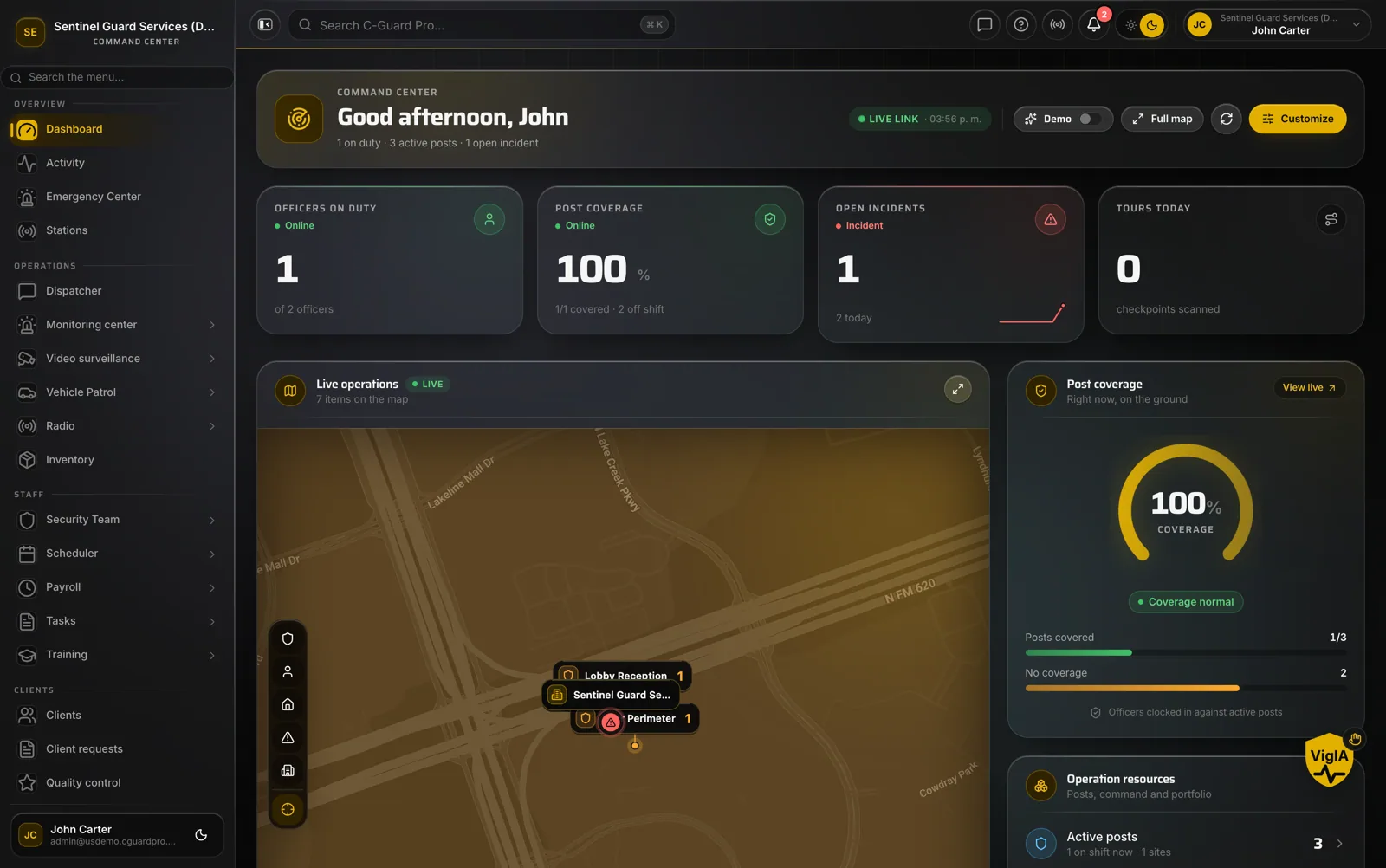 A break-in review starts here: exactly when rounds happened and where the guard was — not a best guess.
Demand the report and the proof
Ask for the incident report and the supporting evidence, and don’t accept a verbal summary. The right questions after a break-in include: Show me the report. Show me the patrol log for that night. Show me the footage.
A professional provider produces a written incident report promptly — with time, location, what was found, what actions were taken, and photos of the scene. They can also show you the patrol record proving where the guard actually was, ideally with GPS-verified rounds rather than a signature on a clipboard.
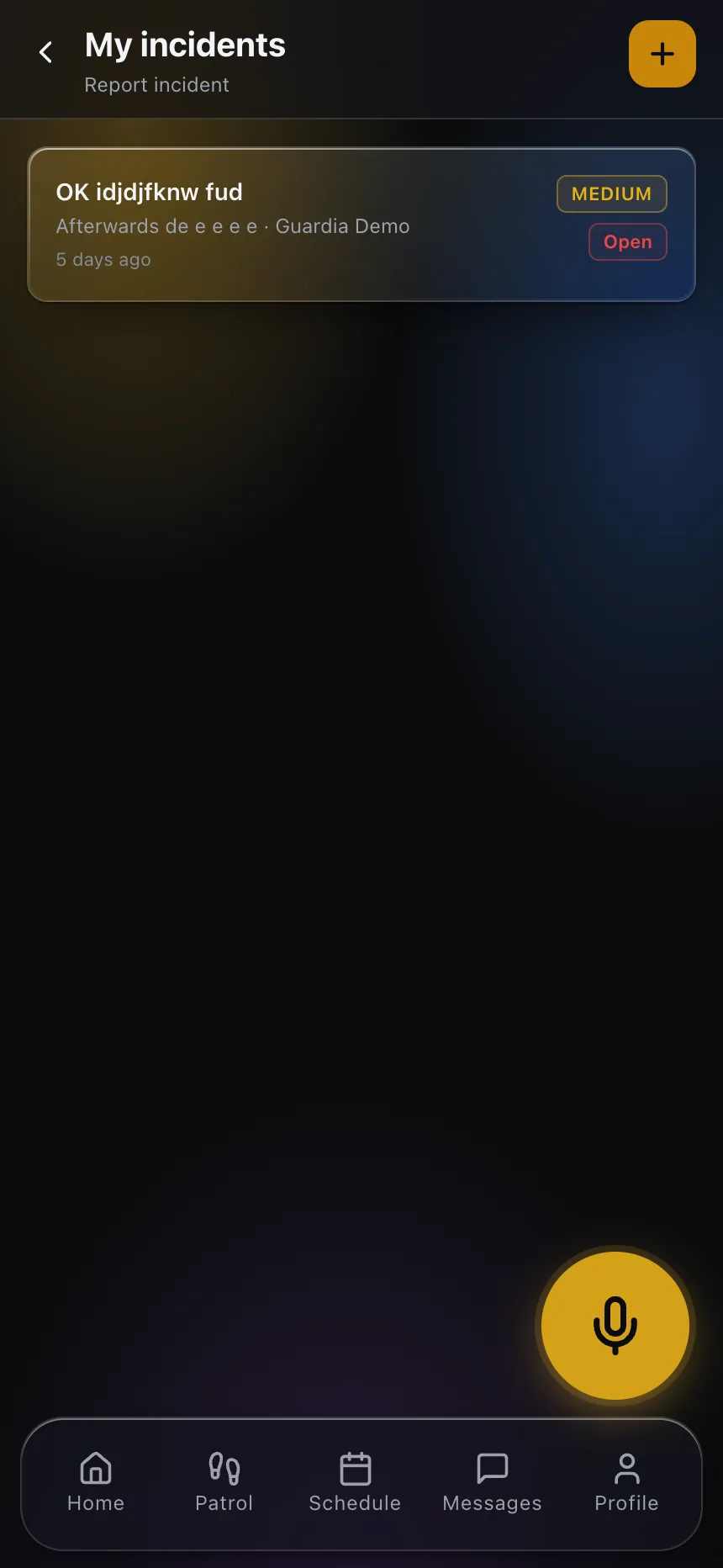 The report you should be handed: time-stamped, photo-backed, and specific — the record your insurer and your own review both need.
This documentation isn’t just for your own understanding. Your insurer will want it. Law enforcement will want it. And if the break-in exposes a failure on the provider’s part, that record is what the conversation about responsibility hinges on. A daily activity report with proper incident logging is exactly the evidence that either backs up your provider’s account or reveals the gap.
Find the gap honestly
Once you have the timeline and the report, the real work is diagnosis. Break-ins usually exploit one of a few things:
- A coverage gap — a predictable window between patrols, or an area that wasn’t on the route.
- A physical weakness — an unmonitored entry, a fence gap, a dead camera zone.
- A procedure that wasn’t followed — a door that should have been checked and wasn’t.
- A blind spot in the plan — a risk nobody had accounted for.
Ask your provider which one it was, and expect an honest answer. A provider who blames bad luck and offers nothing to change is telling you it’ll happen again. A good one comes back with a specific fix: a revised patrol route, randomized timing, an added checkpoint, an escalation change.
Close the gap and prove it’s closed
Agreeing on a fix is only half of it. The other half is verifying it actually happens on every shift going forward. If the answer to your break-in is “we’ll patrol that area more,” require the proof: a checkpoint at that spot, scanned on every round, with a record you can see. Randomized patrol timing so the next intruder can’t wait out the gap. Post orders updated so every guard — not just the one you spoke to — knows the new routine.
This is where the tools matter for you, not just the provider. When rounds are logged with checkpoints and GPS, and post orders live in the system, you can confirm the fix is being followed weeks later instead of taking it on trust. Ask your provider to show you that ongoing proof.
A note on the aftermath
Depending on your situation, there may be reporting obligations, insurance requirements, and evidence-handling considerations that vary by jurisdiction. Treat those as things to confirm with your insurer, the authorities, and your own advisor — this isn’t legal advice. Your job in the moment is to preserve the record and get the facts straight.
The questions to have ready
- Walk me through the exact timeline, with times and locations.
- Show me the written incident report, with photos.
- Show me the patrol record for that night.
- Which gap did this exploit — coverage, physical, procedure, or plan?
- What specifically changes, and how will I be able to see that it’s followed?
A break-in is a test of your provider and an opportunity to fix a weakness for good. Ask hard, demand proof, and insist the fix is verifiable — not just promised.
To see the kind of documentation and patrol proof that makes this conversation possible, take a look at the client portal built for security companies.