If the only paperwork your guard company sends you is an invoice and a monthly “all clear,” you’re underinformed about a service you’re paying real money for. Reporting is how a provider proves they did the work, and how you catch problems before they become incidents. So the fair question every buyer should ask is: what reports should my security company give me — and, just as important, do I have to beg for them or can I see them any time I want?
The short version: you should receive four core reports, and the best providers don’t email them to you on request. They put them in a portal you can open whenever you like. Let’s break down what each one is for and how the visibility model should work.
The four reports you should receive
Daily activity reports (DARs)
The DAR is the shift-by-shift narrative of what happened on your property: when guards came on and off post, what they observed, deliveries and visitors handled, anything unusual. A good DAR is specific — real times, real detail — not “uneventful shift, all normal” pasted every day. It’s your baseline record of the service actually being delivered. Ask your provider how their daily activity reports are captured and delivered.
Incident reports
When something happens — a trespasser, a medical event, a broken lock, an altercation — you need a clear, time-stamped account: what occurred, where, when, who was involved, what the guard did, and how it was resolved. Incident reports matter most exactly when the stakes are highest, including if an event later becomes an insurance claim or a dispute. Vague incident reporting is a liability; specific reporting is protection.
Patrol reports
These show that the rounds you’re paying for actually happened. Not a signed sheet — proof. Each checkpoint reached, with a time-stamp, so a skipped or shortened patrol is visible rather than hidden. This is the difference between paying for active security and paying for someone to sit at a desk.
Attendance and coverage
Who was scheduled, who actually showed up, on time, for the full shift. Coverage gaps are where risk concentrates, so you want to see them plainly — especially at shift changes and overnight.
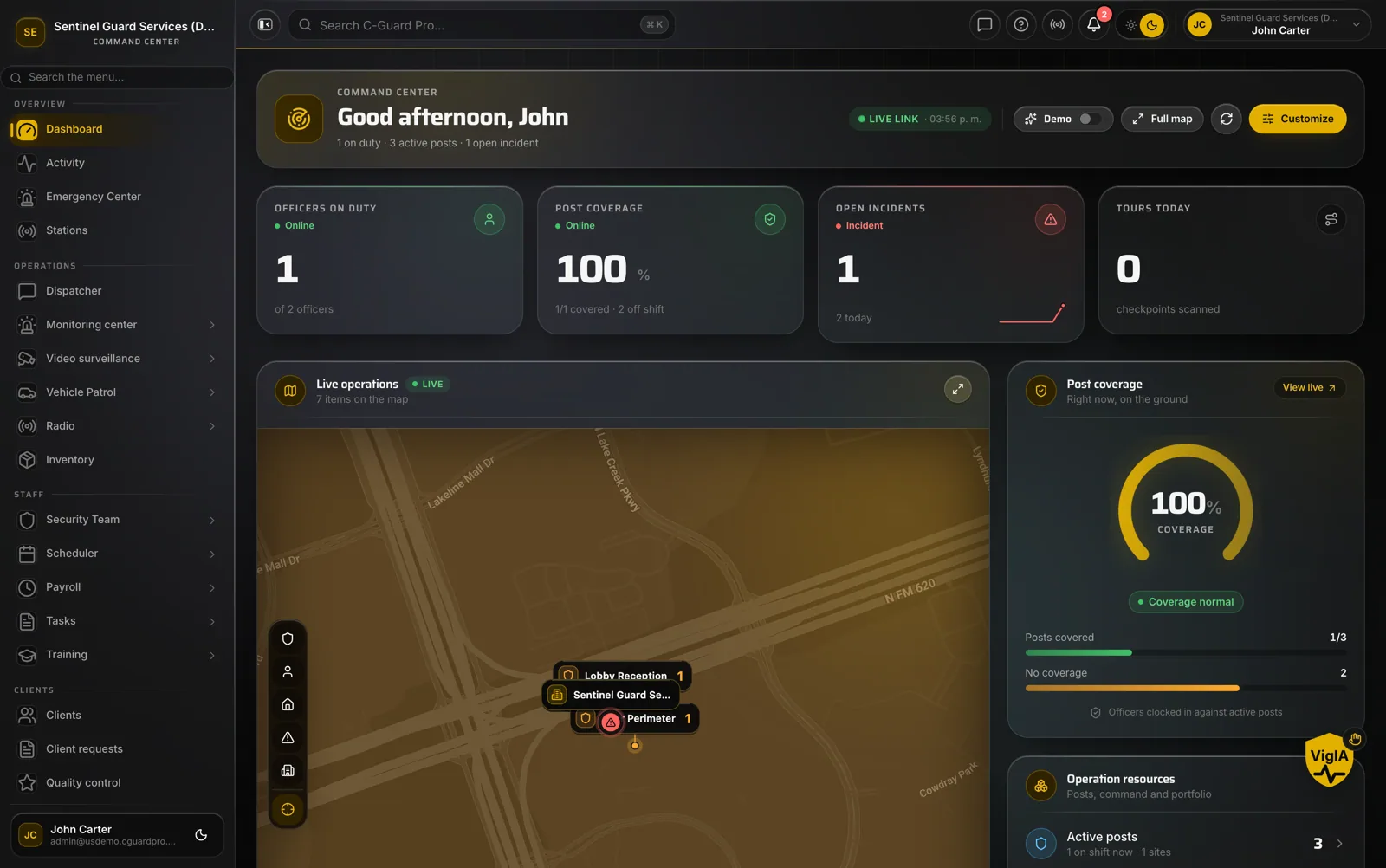 The four core reports on one screen — activity, incidents, patrols and attendance — so nothing depends on the provider choosing to send it.
On demand, not on request
Here’s the shift that separates a modern provider from a dated one. With the old model, reports are something you ask for and wait to receive. The provider controls what you see and when, which means the inconvenient details are slow to arrive and the summaries are easy to smooth over.
A modern provider inverts that. The reports live in a client portal, generated automatically from what guards do on the ground, and you open them whenever you want — no email, no wait, no curated version. Want to check last night’s patrols over your morning coffee? Log in. Wondering how an incident from Tuesday was handled? It’s already there.
This matters for two reasons. Speed: you catch a problem while you can still act on it, not weeks later. And integrity: because you and the provider are looking at the same live records, there’s no gap between what happened and what gets reported to you. The report and the reality are the same thing.
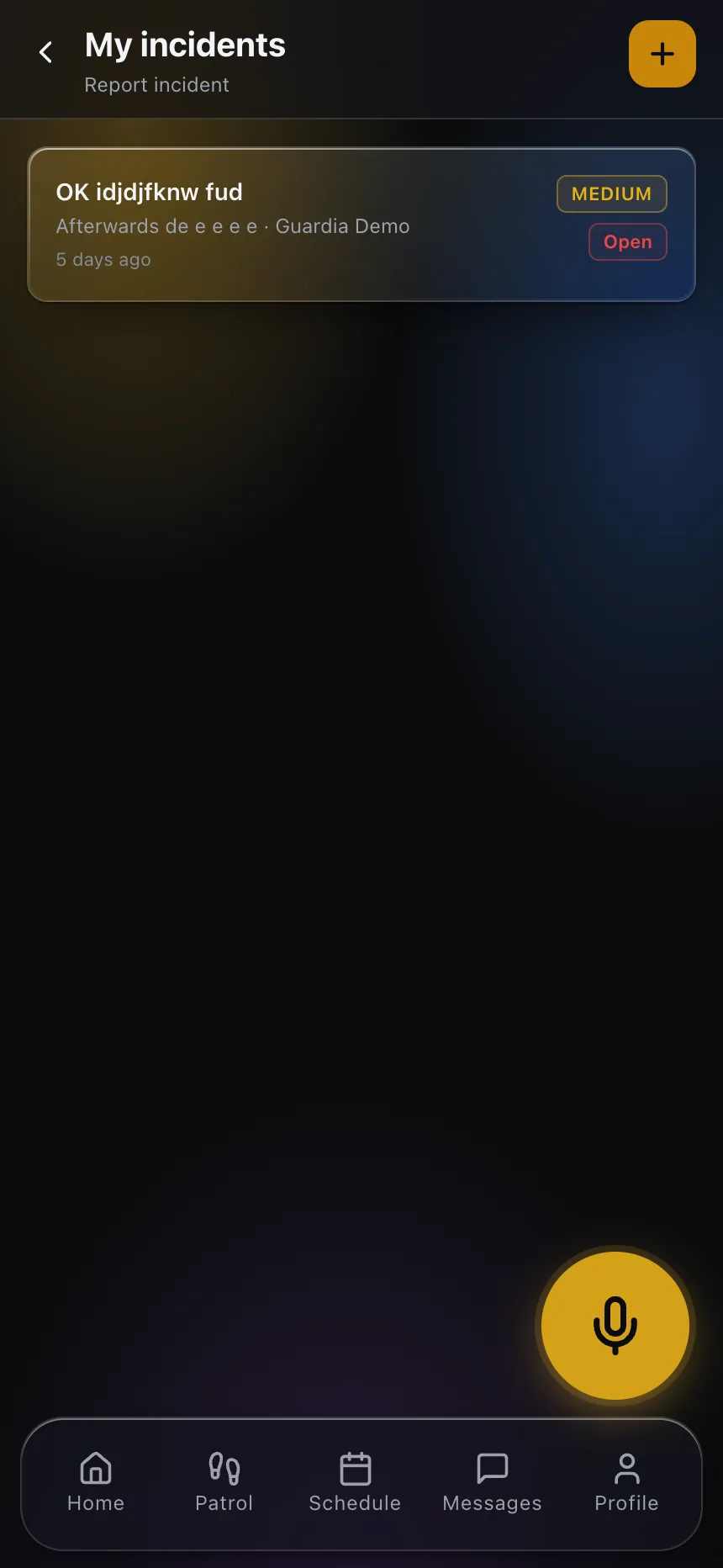 Incidents captured at the moment they happen — the raw record that flows straight into your on-demand reporting.
How to tell if the reporting is real
When you evaluate a provider, or press your current one, test the reporting directly:
- Ask for real examples. “Show me an actual DAR and an actual incident report.” Redacted is fine. Vague or refusal is a red flag.
- Check for specifics. Do the reports contain real times, locations and detail, or interchangeable boilerplate?
- Ask about proof behind patrols. Time-stamped checkpoint records via a QR guard tour, or just a signature?
- Test the visibility model. “Can I see all of this myself, live, or only when you send it?” The answer tells you whether you’ll be informed or managed.
What good reporting does for you
Beyond peace of mind, solid reporting earns its keep in practical ways. It gives you a defensible record if an incident is ever questioned. It surfaces the maintenance and safety issues your guards notice, so small problems get fixed before they grow. It lets you see trends — the recurring 2 a.m. disturbance, the loading dock that keeps getting propped — and adjust coverage where it’s actually needed. And it turns your relationship with the provider from trust-based to evidence-based, which is healthier for both sides.
Insist on all four, on demand
So, what reports should my security company give me? Daily activity reports, incident reports, patrol proof, and attendance — the four that together tell the truth about your service. And they should be available on demand through a live portal, not doled out on request in a form the provider gets to shape.
If you want to see what on-demand reporting looks like from the buyer’s chair, take a look at the client portal a modern provider should be able to give you today.