The mobile surveillance trailer vs security guard cost comparison usually gets framed as a straight swap: the trailer costs less per month, cameras don’t take breaks or call in sick, and a property manager comparing two line items on a budget can talk themselves into believing the trailer replaces the guard rather than supplements one. It doesn’t, and the honest case for a trailer has nothing to do with pretending otherwise.
What a trailer actually does well
A surveillance trailer is a genuinely useful deterrent and documentation tool. It sits somewhere visible, records continuously, and gives a property a credible camera presence in a spot that doesn’t have permanent infrastructure — a vacant lot, a construction laydown yard, a parking area between other coverage. Against opportunistic issues like trespassing or dumping, a visible trailer changes behavior simply by being there, and if something does happen, it produces footage a client can hand to police without waiting on an officer’s account. None of that is in dispute, and it’s a fair reason for a trailer to exist on a property.
What it can’t do, no matter how good the camera is
A trailer has no judgment. It records a person cutting a fence; it cannot decide whether that person is a legitimate late-arriving contractor or a real threat, and it cannot act on that distinction either way. It has no de-escalation function — if two people get into a dispute in frame, the trailer produces excellent footage of an incident it did nothing to prevent or resolve. And it has no liaison function: when police, EMS or the client’s own facilities team show up, there’s no one at the trailer to brief them on what happened, point out where something occurred, or answer the questions a first responder actually needs answered on arrival. A camera can document a bad outcome in detail. It cannot represent the client, exercise judgment, or intervene, and treating it as a guard substitute assumes documentation is the whole job when it’s actually the smallest part of it.
The mobile surveillance trailer vs security guard cost comparison, done honestly
Comparing the two on a pure monthly cost basis treats them as substitutes competing for the same budget line, which is the framing that leads a property manager to pick the cheaper option and assume they’ve bought equivalent coverage. They haven’t bought equivalent coverage — they’ve bought a different kind of coverage that happens to be cheaper because it does less. The honest comparison isn’t trailer versus guard; it’s trailer versus guard versus the actual cost of an incident the trailer only documented instead of preventing, with no one present to liaise with the right people on scene. A property that’s had a genuine incident on video, with no one there to intervene or brief responders, usually understands the gap immediately — it’s the property that hasn’t had one yet that’s still comparing the two options as interchangeable.
The honest framing: trailer-plus-guard, not trailer-instead-of-guard
The version of this that actually serves the client is trailer-plus-guard: deterrence and documentation across a larger footprint than a guard can personally watch at all times, with the guard still providing the judgment, de-escalation and liaison function the trailer structurally cannot. A single officer covering a larger property gains real value from a trailer watching a section they can’t be standing in front of constantly — it extends coverage rather than replacing the part of the job that requires a person. Positioned this way, the trailer earns its cost as a force multiplier instead of being sold, or bought, as cheaper security.
That pairing only works if the trailer’s alert actually reaches the officer in a form they can act on quickly. A trailer that emails a clip an hour later is a documentation tool and nothing more. A trailer wired to notify the officer or dispatch in something closer to real time turns the camera into an extension of the patrol itself — the officer gets pointed toward the section of the property that just triggered an alert instead of walking a fixed route and hoping to be in the right place. That difference in how the alert reaches a person is a bigger factor in whether the trailer actually helps than any spec on the camera itself.
What to actually tell a client comparing the two
When a client brings up a trailer as a cost-saving alternative, the useful response isn’t defensiveness about the guard’s value — it’s a specific question back: what do you want to happen when the camera sees something? If the honest answer involves someone showing up, making a judgment call, and being able to brief whoever responds, that’s a guard’s job, and the trailer is a tool that supports it rather than a stand-in for it. If the honest answer is genuinely just “we want a video record after the fact and nothing more,” a trailer alone may actually fit that property, and it’s worth saying so rather than overselling a guard post the client doesn’t need.
Positioning it in the proposal
A proposal that includes both, priced and explained separately, does more for a client relationship than one that quietly assumes the client understands why they need to pay for a guard when a trailer looks cheaper on its own. Lay out what the trailer covers, what the guard covers, and where they overlap versus where they don’t — a large property with the two working together, one extending the other’s reach, is a more honest and ultimately more defensible pitch than pretending they compete for the same job.
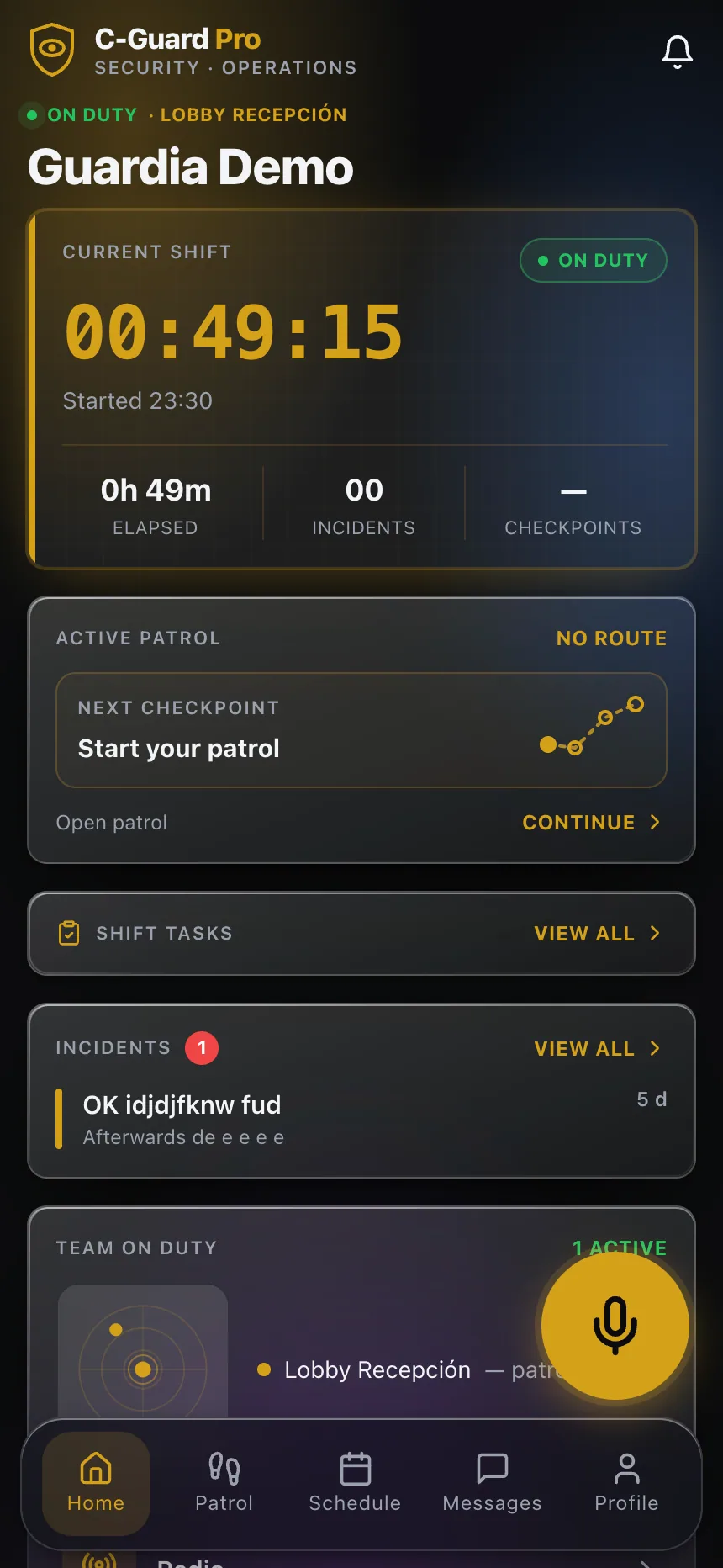
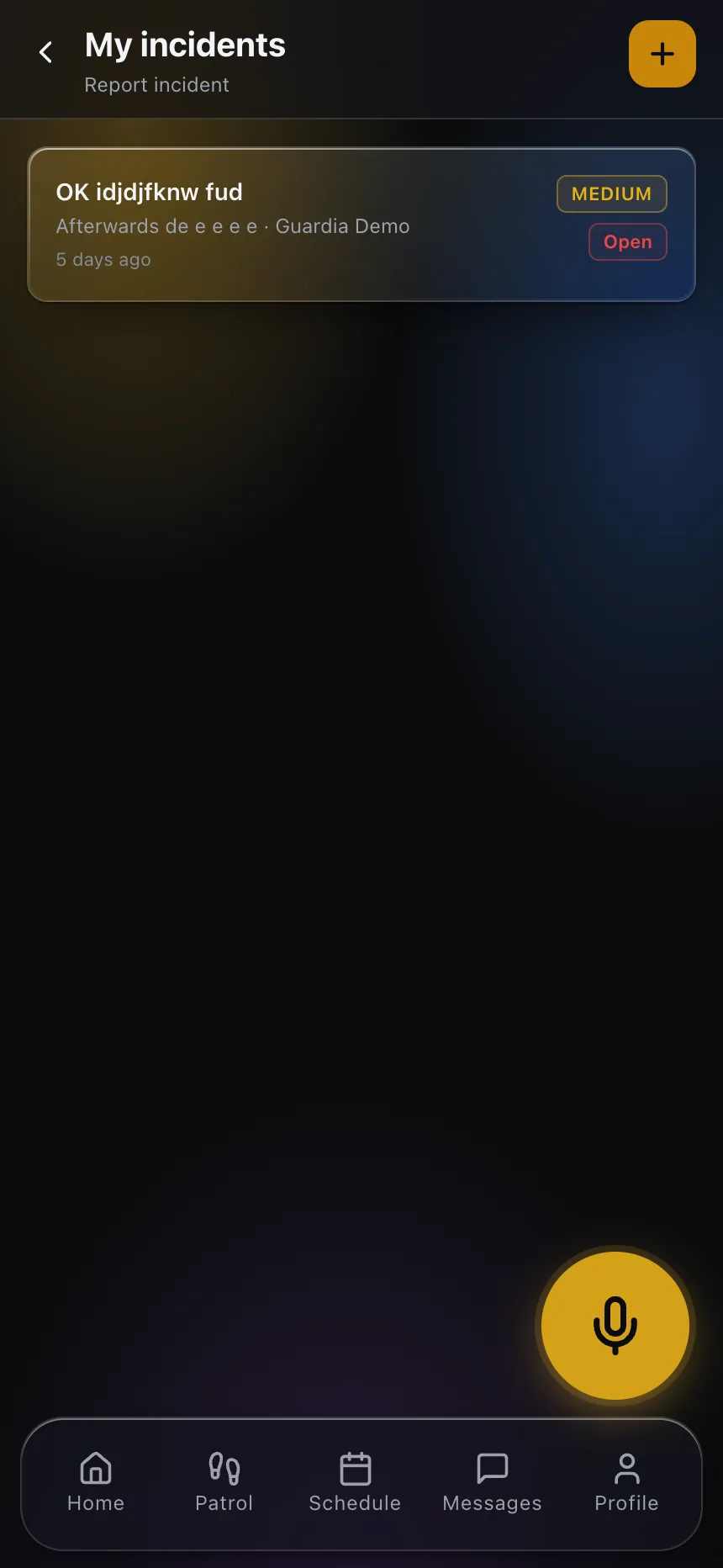
It also helps to give the client a way to see both halves of that coverage in one place rather than two disconnected reports — camera alerts on one side, guard activity on the other, reviewed separately by whoever manages the account. A client portal that shows patrol activity and flagged camera events together makes the trailer-plus-guard case concretely, instead of asking the client to trust that the two are actually working as a system.
Revisit the mix periodically rather than setting it once at the start of a contract. A property that installs a trailer to cover a construction phase, for instance, has a different exposure once that phase ends and the site reopens to regular traffic — the right balance of camera coverage and guard presence shifts as the property itself changes, and a proposal that gets revisited at renewal instead of left on autopilot tends to catch that shift before the client has to point it out.
If you want to see how patrol coverage and incident documentation work together across a property, explore CGuardPro or get in touch.