Search for ai gun detection false positive rate camera weapons detection and most of what comes back is vendor marketing rather than operational guidance. Vendor pitches for camera-based weapons detection tend to use one phrase a lot: “AI gun detection.” It’s a phrase that implies more than the technology actually does. What’s really being sold is AI suggestion — a system that flags a shape or an object in a camera frame as resembling a firearm, at a confidence level the software has computed for itself. Whether that flag corresponds to an actual weapon is a separate question the software cannot answer on its own, and any guard company deploying this technology needs to build the process around that gap, not around the marketing language.
What the system is actually doing
Camera-based detection tools run object-recognition models against live or recorded video, looking for shapes and movement patterns that match what the model has been trained to associate with a firearm. That’s a genuinely useful capability — it can flag something in a crowded frame that a human monitoring dozens of camera feeds might miss entirely, especially over a long, uneventful shift where attention naturally drifts.
What it isn’t is a confirmed identification. The model is pattern-matching against visual features — shape, color, the way an object is held or carried — in conditions that vary constantly: lighting, camera angle, partial obstruction, motion blur, distance from the lens. A dark phone held a certain way, a tool, a toy, an umbrella folded a particular way — any of these can produce a shape the model associates with a weapon at a given confidence threshold. That’s not a flaw unique to one vendor’s product; it’s inherent to the task of recognizing an object from a 2D camera image under real-world conditions.
AI gun detection false positive rate camera weapons detection claims: the wrong question to fixate on
Ask a vendor for their AI gun detection false positive rate for camera weapons detection and you’ll usually get a number that sounds reassuring in a sales conversation. Treat that number carefully. Detection performance varies enormously with camera placement, lighting, crowd density, and the specific environment it’s deployed in — a number generated in a controlled test environment tells you very little about how the system will perform at your actual site, with your actual cameras, in your actual lighting conditions. Rather than anchoring a purchase decision on a claimed accuracy figure, the more useful question is operational: what happens at your site, specifically, in the seconds after a flag fires, whether it turns out to be real or not.
That’s the question with an actual answer a guard company can control, regardless of how good or limited the underlying detection model is.
The process that has to exist around the alert
The workable model is AI suggestion plus mandatory human verification, built into dispatch as a real step, not an afterthought. A flag from the system should route immediately to a person — a dispatcher or a monitoring supervisor — who looks at the actual camera footage before anything downstream happens. That person is making a judgment call a model can’t: does this actually look like a weapon in context, is the person’s behavior consistent with a threat, is there anything about the scene that explains the flag as something else entirely.
Only after that human step confirms the flag as credible should it escalate further — to an officer being dispatched to the area, to a panic button or duress protocol being activated, or to a call to law enforcement. Skipping the verification step and routing every flag straight into an armed response protocol is how a folded umbrella turns into a genuine emergency response for a threat that never existed — which carries its own real cost, both to whoever gets treated as a suspect over a misread shape and to the credibility of the alert system the next time it fires.
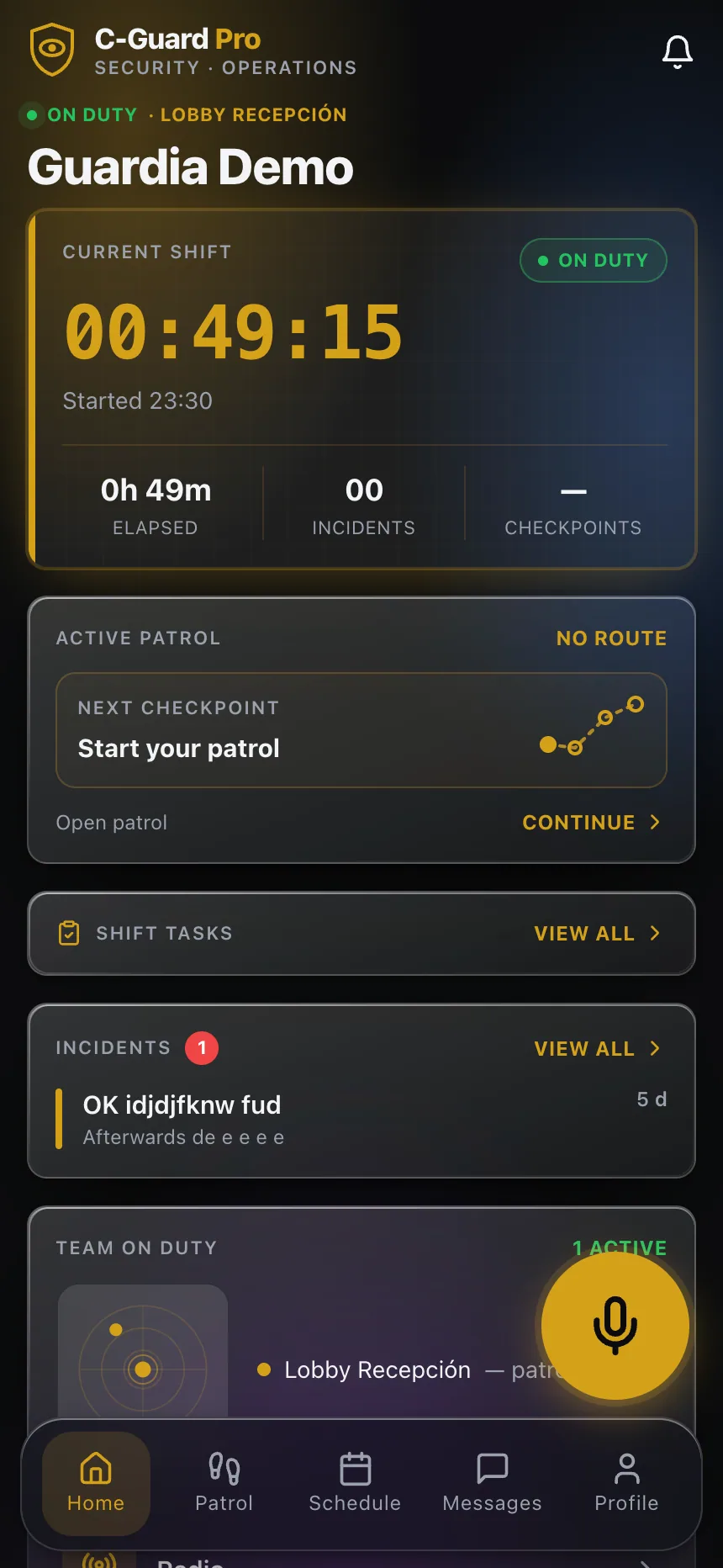
Building verification into dispatch, not around it
The verification step only works if it’s fast and it’s someone’s actual job in that moment, not a hope that whoever happens to be near a monitor notices in time. That means a real dispatch workflow where an incoming detection alert is treated with the same urgency and the same clear ownership as any other high-priority alert — routed to a specific person, with a clear expectation of how quickly they confirm or dismiss it, and a clear next step once they do.
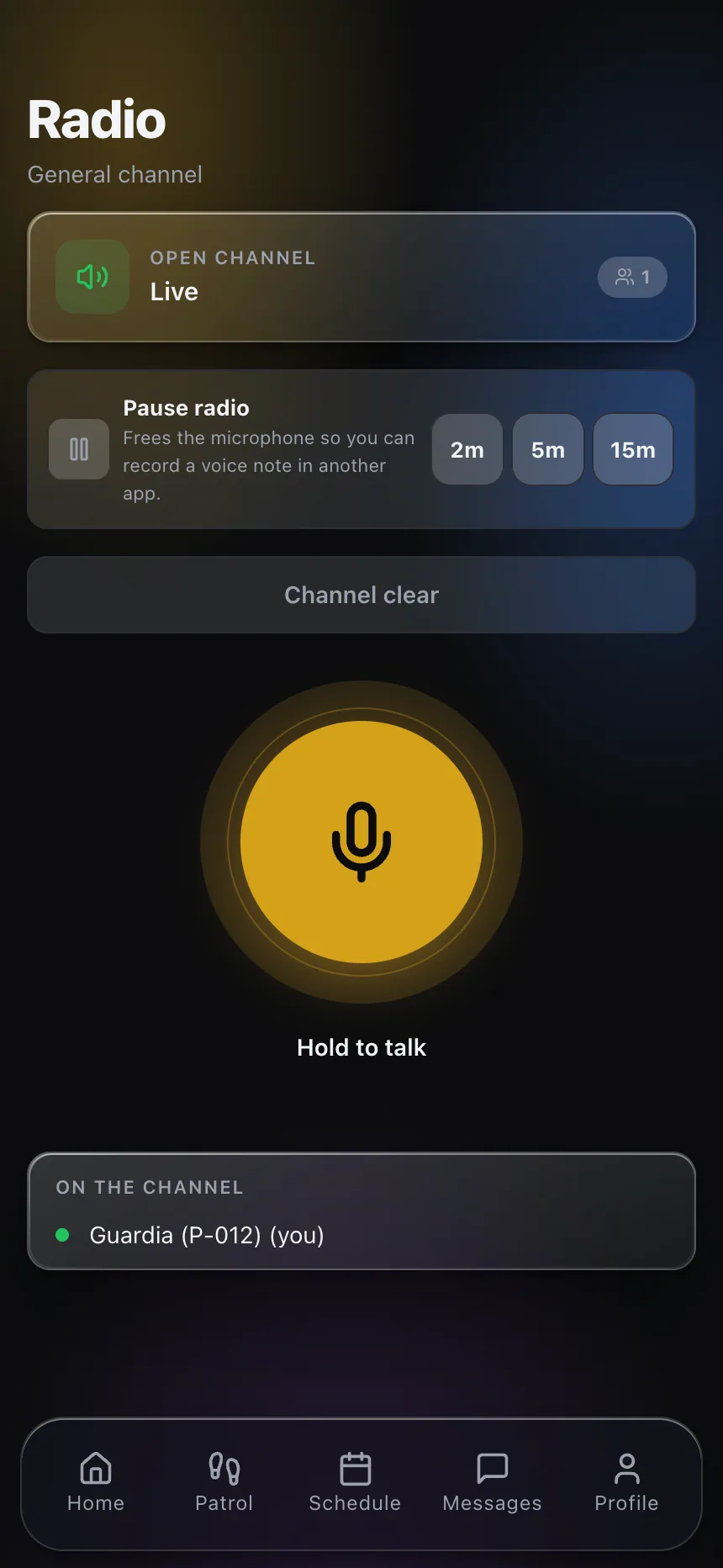
It also means the officer being dispatched needs a fast, reliable way to communicate back what they’re actually seeing once they arrive — confirming the threat, calling it a false alarm, or asking for backup — rather than the loop closing only when someone eventually files a report after the fact. Push-to-talk radio in the officer’s hand during that response is what makes the verification loop actually close in real time instead of after the incident is already over.
What to actually ask a vendor instead of the accuracy number
A more useful line of questioning during a sales conversation: what does the interface look like for the person doing verification, and how much time do they realistically have to make a call before the system (or a policy) forces escalation. Ask to see the actual review screen an operator would use, not a marketing slide describing it. Ask whether the system logs every flag, including the ones a human dismissed as false, so you can look back later at how the tool is actually performing at your site over time — which tells you far more than a vendor’s lab-tested number ever will. And ask what happens if the verifying operator is away from their screen for a minute, because a verification step that only works when someone happens to be watching isn’t a real safeguard, it’s a hope.
Where this technology genuinely helps, without overselling it
None of this means camera-based detection isn’t worth deploying — it means it should be deployed with realistic expectations about what it does and doesn’t do. It’s a tool for surfacing something a human monitoring many feeds might otherwise miss, not a system that identifies threats on its own or replaces a trained officer’s judgment. The same principle applies to any AI layered into daily operations: it’s useful for surfacing information faster and reducing the noise a person has to sift through, and it still needs a person to make the final call on anything that actually matters.
The honest pitch for this category of technology is narrower than the marketing usually suggests, and it’s a better pitch for it: augmentation for the people already doing the watching, not a replacement for the judgment only a person can apply once the camera has done its job of pointing at something worth a second look.
If you want to see how alert routing and human verification work together in a dispatch workflow, explore CGuardPro or get in touch.