The pitch that circulates at every security trade show is some version of “add a drone and cut your patrol headcount” — a single unit sweeping a warehouse yard or a construction site overnight, watching everything at once, no officer needed. It’s a compelling picture, and it’s also not what commercial drone operation for property surveillance actually looks like under current federal rules. Anyone evaluating drone security patrol FAA Part 107 rules private property owners are subject to needs to start from what that framework actually requires, not from the marketing image, because the gap between the two determines whether drone patrol saves labor or just adds a new line item.
FAA Part 107 governs most commercial drone operations, and two of its baseline requirements matter most for security use: the aircraft generally has to be flown by a certified remote pilot, and it generally has to be operated within that pilot’s visual line of sight. Waivers exist for some operations that fall outside these baseline rules, but waiver availability, scope, and process are specific and change, and this is exactly the kind of detail that shouldn’t be assumed from a vendor’s pitch deck — confirm current requirements and any waiver process directly with the FAA before planning an operation around anything beyond the baseline rule.
What drone security patrol FAA Part 107 rules private property owners face actually mean
Read literally, those two requirements dismantle the “one drone replaces several officers” pitch almost entirely for a typical property. A visual-line-of-sight requirement means the pilot has to be able to see the aircraft, which puts a real limit on how far the drone can range from wherever the pilot is standing — it isn’t flying autonomous laps around a large facility perimeter while the pilot does something else. And a certified-pilot requirement means someone still has to be present, trained, and actively flying or monitoring the operation. That’s a person on-site with a specific credential and a specific job, not a reduction in headcount — it’s a different headcount, doing a different task.
This doesn’t mean drone patrol has no value. It means the value is narrower and more specific than the pitch suggests: extending visibility over an area a walking patrol would take longer to physically cover — a large open yard, a construction site perimeter, a stretch of warehouse property between fixed cameras — during the window the drone is actually in the air with a qualified pilot present. It’s a tool that can supplement a patrol route, cover ground faster within line of sight, or provide an aerial view during a specific response. It is not a way to eliminate the officer who currently walks that route, because the pilot requirement means a person is still there.
The privacy layer sits on top of the federal rules, not instead of them
Part 107 addresses aviation safety — where and how a drone can legally fly. It says essentially nothing about what a drone can legally record, over whom, or what a property owner or security company can do with that footage. States and, in some cases, localities have their own rules around image capture, surveillance, and privacy that apply independently of the FAA’s airspace rules, and those rules vary and change in ways that are genuinely specific to jurisdiction. A drone patrol operation that’s fully compliant with Part 107 in terms of how it flies can still create legal exposure through what it records and how that footage is stored, shared, or used — particularly on residential and mixed-use properties where the aircraft’s camera may capture more than the client site itself, including neighboring units or adjacent public space.
None of that is something to guess at from general industry practice. Confirm applicable state and local rules on image capture and drone surveillance with counsel before deploying drone patrol on any client site, especially residential or mixed-use properties where the privacy exposure is highest — this is general background, not legal advice, and nothing here should be read as a summary of any specific jurisdiction’s rules.
Weather, battery limits and other constraints the pitch leaves out
Beyond the regulatory framework, drone patrol carries operational constraints that rarely make it into a sales conversation but matter just as much to whether a deployment is realistic for a given site. Flight time on a single charge is limited, which means any meaningful coverage window requires either battery swaps or multiple aircraft in rotation, both of which mean more equipment and more of the pilot’s active attention, not less. Weather is a bigger constraint than it is for a ground officer — wind, rain, and cold all affect flight safety and battery performance in ways that can ground a drone on exactly the kind of night a client most wants extra coverage. A patrol plan that leans on drone coverage without a fallback for the nights it can’t fly isn’t actually a plan; it’s a hope that the weather cooperates.
Where drone patrol actually earns its place
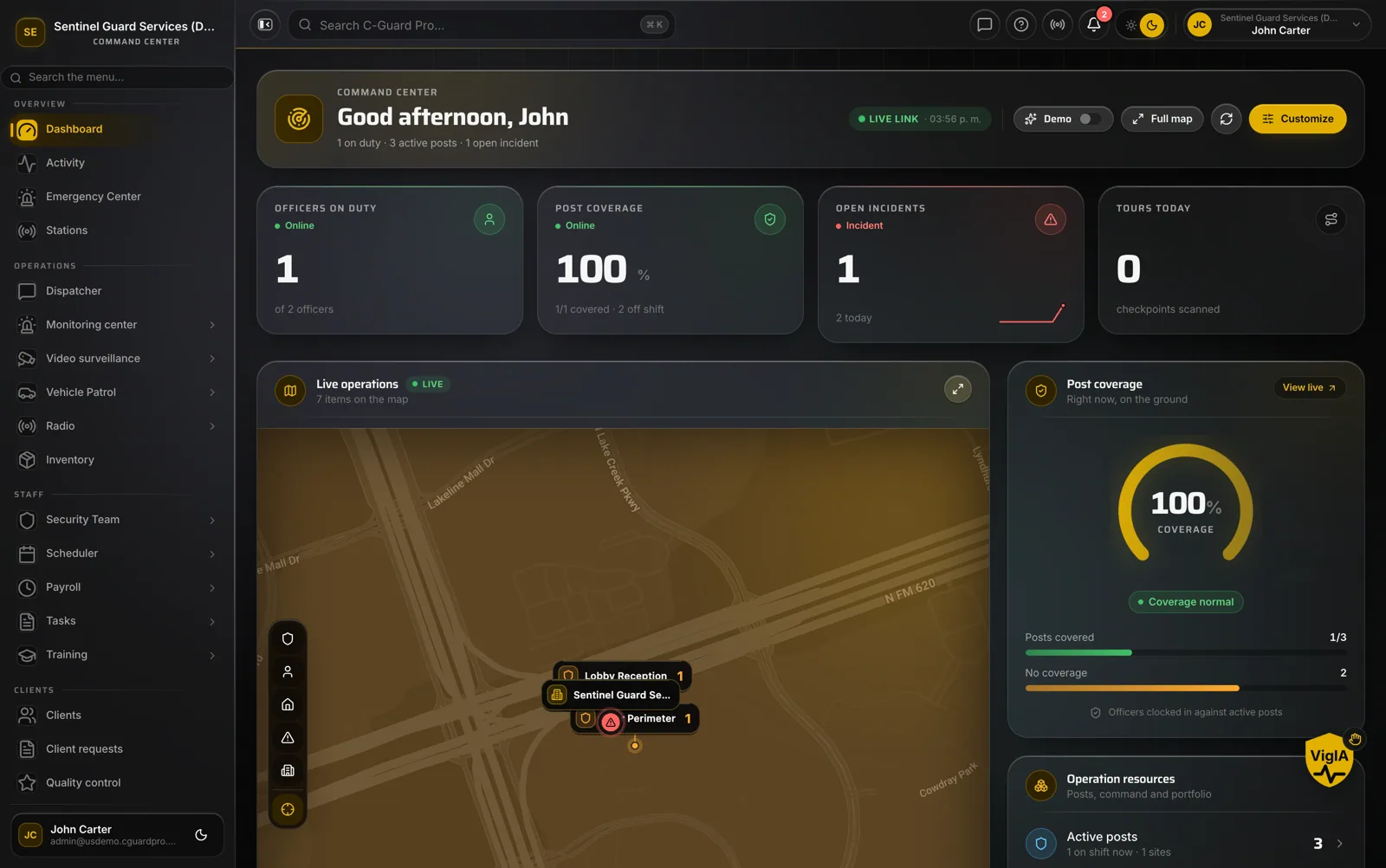
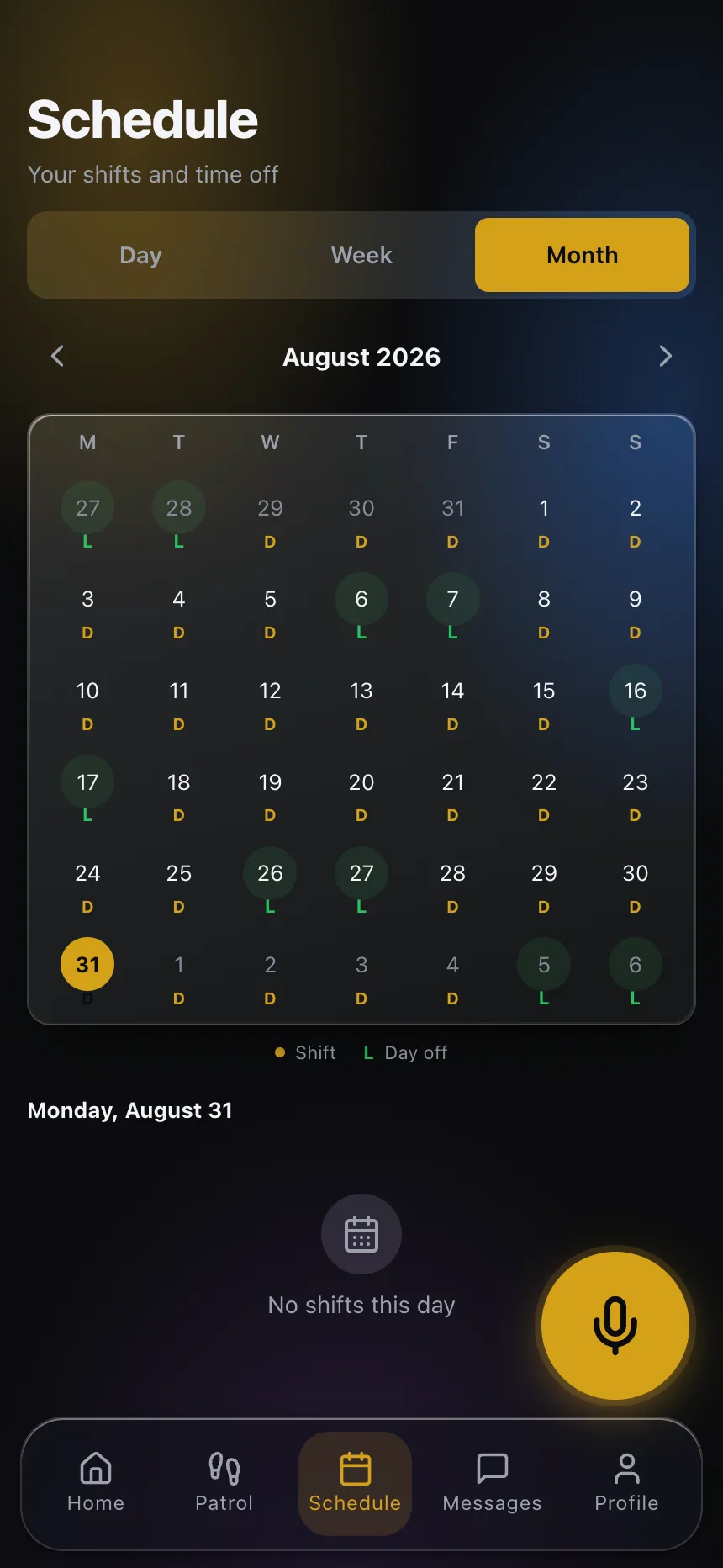
The operations getting real value out of drone patrol treat it as a scheduled supplement to a documented patrol plan, not a replacement for one. A drone flight logged as part of the same patrol record as a ground officer’s route — same shift, same site, same reporting structure — gives a client a coherent picture of coverage rather than two disconnected activities that happen to occur on the same property. And because a certified pilot has to be present and actively flying within line of sight, that flight is itself a scheduled task that belongs on the same scheduling board as everything else happening on that shift, not an ad hoc extra a supervisor remembers to arrange when the mood strikes.
Be honest with clients about what drone patrol adds and what it doesn’t. It extends the reach and speed of a patrol during the specific window a certified pilot is flying it within visual range — it doesn’t replace the officer, and selling it as a headcount reduction sets an expectation the FAA’s own baseline rules won’t let you meet. A client who signs a contract expecting drone patrol to shrink their guard count, only to learn later that a certified pilot is a separate cost sitting alongside the officer they still need, is a client who feels misled regardless of how the sales conversation was actually worded. Set the expectation correctly at the proposal stage, not after the first invoice arrives with a line item the client didn’t expect.
Confirm current Part 107 requirements and any applicable state privacy rules before committing a client proposal to specifics.
If you want to see how a drone flight fits into the same patrol and scheduling record as your ground officers, explore CGuardPro or get in touch.