Every few months, someone on a guard company’s leadership team puts together a shortlist for a software evaluation and includes Silvertrac, TrackTik, and GuardTek as three separate options — because that’s how they showed up in a comparison spreadsheet three years ago, or because an old RFP template still lists them that way. Is Silvertrac still independent? No. Silvertrac, TrackTik, and GuardTek are now brands operating under Trackforce, following its acquisitions of those companies, and the domain that used to be silvertracsoftware.com now serves Trackforce’s own content. That’s the whole factual answer, and it’s worth stating plainly because a lot of buyers are still operating on outdated information.
Is Silvertrac still independent? Why the confusion sticks around
Corporate consolidation in this space doesn’t automatically update the documents that buyers actually use. An RFP template built two or three procurement cycles ago still lists the old names as separate line items, because whoever built it copied a list of vendors that was accurate at the time and nobody has gone back to revise it since. A signed contract from before the acquisition still references the original entity by its original name, because contracts don’t rename themselves just because the parent company changed. And plenty of search results, review sites, and old comparison articles — including some still floating around from before the consolidation — were written when these were genuinely separate companies and haven’t been corrected.
None of that is unusual. Software categories consolidate all the time, and buyers who aren’t actively watching the vendor landscape are, reasonably, the last to know. The problem isn’t that anyone did anything wrong — it’s that a shortlist built on stale information wastes a buyer’s own time evaluating what looks like three choices when it’s actually one.
What this means if you’re mid-evaluation right now
If your current shortlist has Silvertrac, TrackTik, or GuardTek listed as separate rows, collapse them into one entry before you go further. Comparing “three vendors” that resolve to a single corporate structure isn’t really a comparison — it’s the same evaluation done three times under different names, which burns time your team could spend actually evaluating distinct alternatives.
This article isn’t the place to assess what Trackforce’s products do, price, or lack — that’s a conversation to have directly with the vendor, and any fair evaluation should be based on a live demo and a current quote, not on what any of these brands looked like before the acquisitions. What’s worth flagging instead is a broader pattern worth watching for in any software category that consolidates: when a vendor is absorbed into a larger company, it’s fair to ask directly, in the sales conversation, whether the product you’re evaluating is being actively maintained under its own roadmap or gradually folded into a different platform. Neither answer is automatically disqualifying — but you want to know which one you’re buying into before you sign, not after.
Questions worth asking any vendor after an acquisition
A few questions apply regardless of which consolidated vendor you’re talking to, and they’re worth asking directly rather than assuming the answer:
- Is the product I’m demoing the one I’ll be using in two years, or is it slated to be merged into a different platform under the parent company? Ask this plainly; a vendor with a clear answer will give you one.
- Who do I actually call for support, and has that changed since the acquisition? Support structures sometimes consolidate faster than product lines, and it’s worth knowing whether your point of contact is stable.
- What happens to my existing contract terms if you’re already a customer of one of the acquired brands? Pricing, renewal terms, and service levels don’t always carry over automatically, and it’s worth confirming in writing rather than assuming continuity.
- Is there a migration path being planned, and on what timeline, if the brand you signed with is being consolidated into a shared platform?
None of these questions are specific to Trackforce — they’re the standard due-diligence list for evaluating any vendor in a category that’s gone through consolidation, and they apply the same way whether the vendor tells you the answers upfront or you have to ask.
Verifying vendor identity yourself, not just taking a rep’s word for it
This is also a good moment to build a habit worth keeping for any future vendor relationship, not just this one: verify a vendor’s actual corporate structure yourself before you sign, rather than relying entirely on what a sales rep tells you in a call. Check whose name is actually on the contract you’d be signing — the operating entity, not just the brand name on the product. If a company has gone through an acquisition, ask for that in writing as part of the sales process, and confirm it against the vendor’s own public materials rather than a secondhand summary. None of this is unique to guard-management software; it’s the same due diligence worth applying to any vendor relationship where continuity of support and product direction matters to your operation.
It’s a small amount of extra effort during an evaluation that’s already time-consuming, but it protects you from the exact situation this article opened with — building a shortlist, or eventually signing a contract, based on a brand name that no longer maps cleanly to a single, stable company.
How to actually run the comparison from here
Once the shortlist is corrected, evaluate on the same basis you’d use for any vendor: a live walkthrough of the actual screens your officers and supervisors will use every shift, a real quote for your specific site count and feature needs, and a clear answer on what’s included versus what’s an add-on. Our own guide on how to evaluate guard management software walks through the criteria worth applying to any vendor on a shortlist, not just the one you happen to be reading this on.
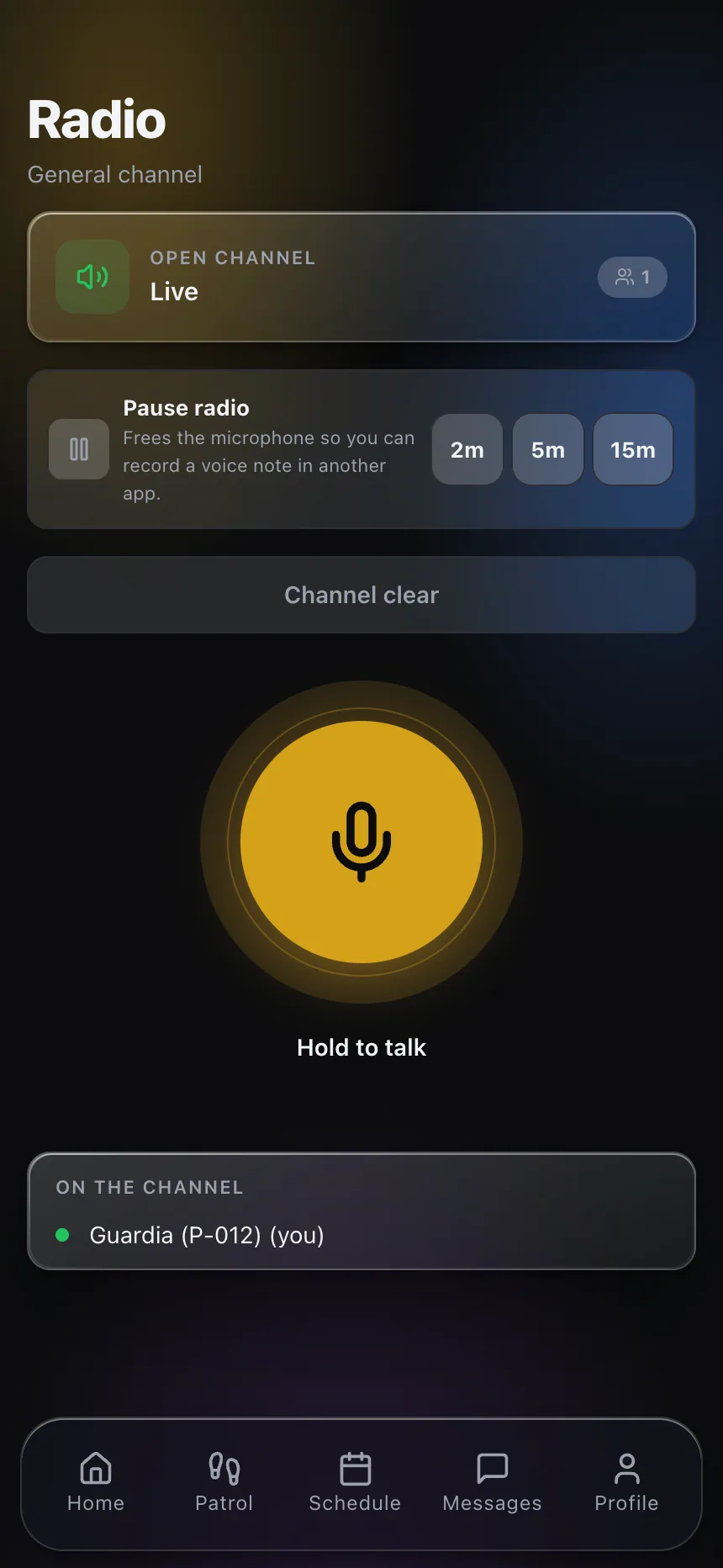
It’s also worth checking whether the tool you’re evaluating covers what your operation actually uses day to day — checkpoint tours, GPS visibility on active officers, scheduling, and two-way communication in the field. Our own features page lays out what we mean by each of those, which is a reasonable template for the list of capabilities to ask any vendor about, rather than judging a platform on its marketing page alone. If part of your evaluation criteria is real-time coordination with officers on post, push-to-talk radio built into the same app the officer already carries is one detail worth confirming any vendor actually has, rather than assuming it.
The takeaway
Silvertrac, TrackTik, and GuardTek are not three vendors to compare against each other — they’re three brand names now under one corporate parent, Trackforce, following its acquisitions. Correct your shortlist accordingly, ask any vendor going through consolidation the same due-diligence questions you’d ask about roadmap and support continuity, and base your actual decision on a current demo and quote rather than outdated brand distinctions from before the acquisitions happened.
If you’re building out a shortlist and want to see a system built specifically for contract guard operations, explore CGuardPro or check current pricing.