A demo and a trial answer two different questions, and most buying processes only ever ask one of them. A demo answers “does this do what the salesperson says it does.” A trial answers “does this hold up when my officer is standing outside a loading dock at midnight with one bar of signal and cold hands.” A security guard software free trial no credit card required to start is the cheapest way to get that second answer before signing anything. Companies that only sit through a demo find out the answer to the second question after the contract is signed, usually from a field supervisor complaining that the app is slow, or a client asking why a checkpoint scan didn’t register.
What a demo actually shows you
A demo is a guided call. Someone from the vendor drives the screen, on a fast office connection, using data built to look good — a full roster, a clean map, a sample incident report with no missing fields. It’s a legitimate way to see the shape of a product and ask questions about it, and it’s genuinely useful for understanding what a tool is supposed to do. But it can’t show you what happens when the tool meets your actual conditions, because the person driving it controls every variable that would expose a weakness.
Nobody demos a dropped connection. Nobody demos an officer who’s never used a smartphone app before trying to find the clock-in button on their own, unprompted. Nobody demos what happens to a geofenced check-in when the site is a parking structure with poor GPS reception. Those are exactly the conditions a guard app has to survive, and a demo, by design, is the one context where they don’t come up.
What a security guard software free trial no credit card offer actually tests
A trial — particularly a security guard software free trial no credit card required to start — hands over the real application and lets you run it against your own reality instead of the vendor’s. That’s the entire value of it, and it’s also why trials get skipped: they take more effort than sitting through a call, and they surface problems a demo never would.
Put one real post through a trial for a real shift, not a simulated one. Have the officer clock in from the actual site using geofenced time and attendance, not from the office. Have them run an actual checkpoint round on the property, not a walkthrough of the lobby. Have them file one incident report the way they’d file it if something minor actually happened — misspellings, interruptions, and all. What breaks in that process is what would have broken on day one of a live contract, and you found it before a client did.
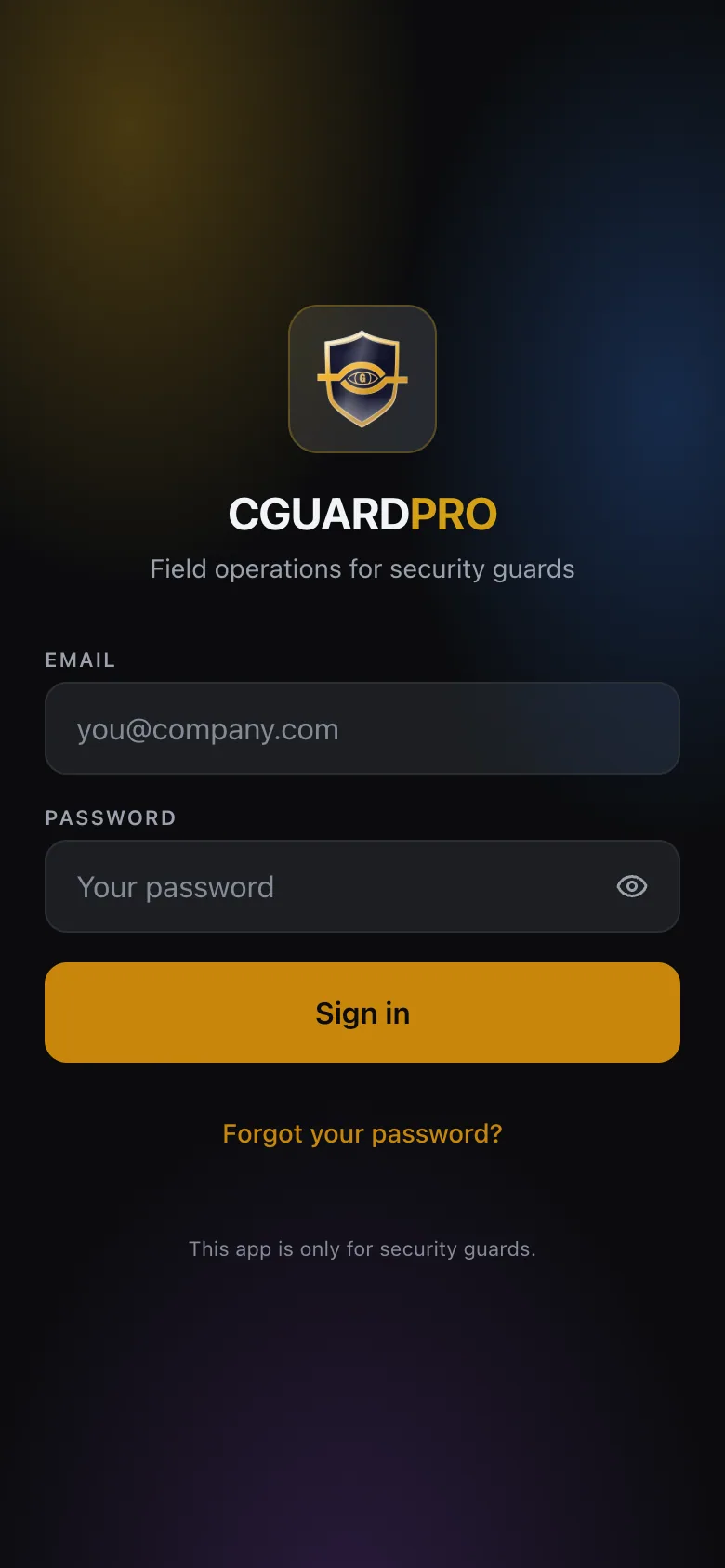
None of this needs to happen across the whole roster to be useful. One officer, one post, one full shift, run without warning them to be on their best behavior with the app, tells you more than a week of a manager clicking through a demo account ever will. The officers least comfortable with a smartphone are the ones whose experience actually matters here, because they represent the floor the whole crew will eventually work at, not the ceiling.
The question a demo can’t answer: does the officer actually use it
The hardest problem in guard technology isn’t the feature list — it’s adoption by officers who didn’t choose the tool and don’t get paid more for using it well. A demo tests whether the feature exists. A trial tests whether an actual officer, with actual patience for learning new software, will use it without a supervisor standing over their shoulder every shift. That gap — between a feature existing and an officer using it correctly under normal working conditions — is where most guard technology rollouts actually fail, and it’s invisible in a sales call.
Reading a trial honestly
A trial only tells you something if you run it against a real condition, not a favorable one. Running it in the office on Wi-Fi with a supervisor logged in tests almost nothing you didn’t already know from the demo. Running it on the worst-covered post in the portfolio, with the officer who’s least comfortable with a smartphone, tells you what the tool does at its actual floor rather than its best case.
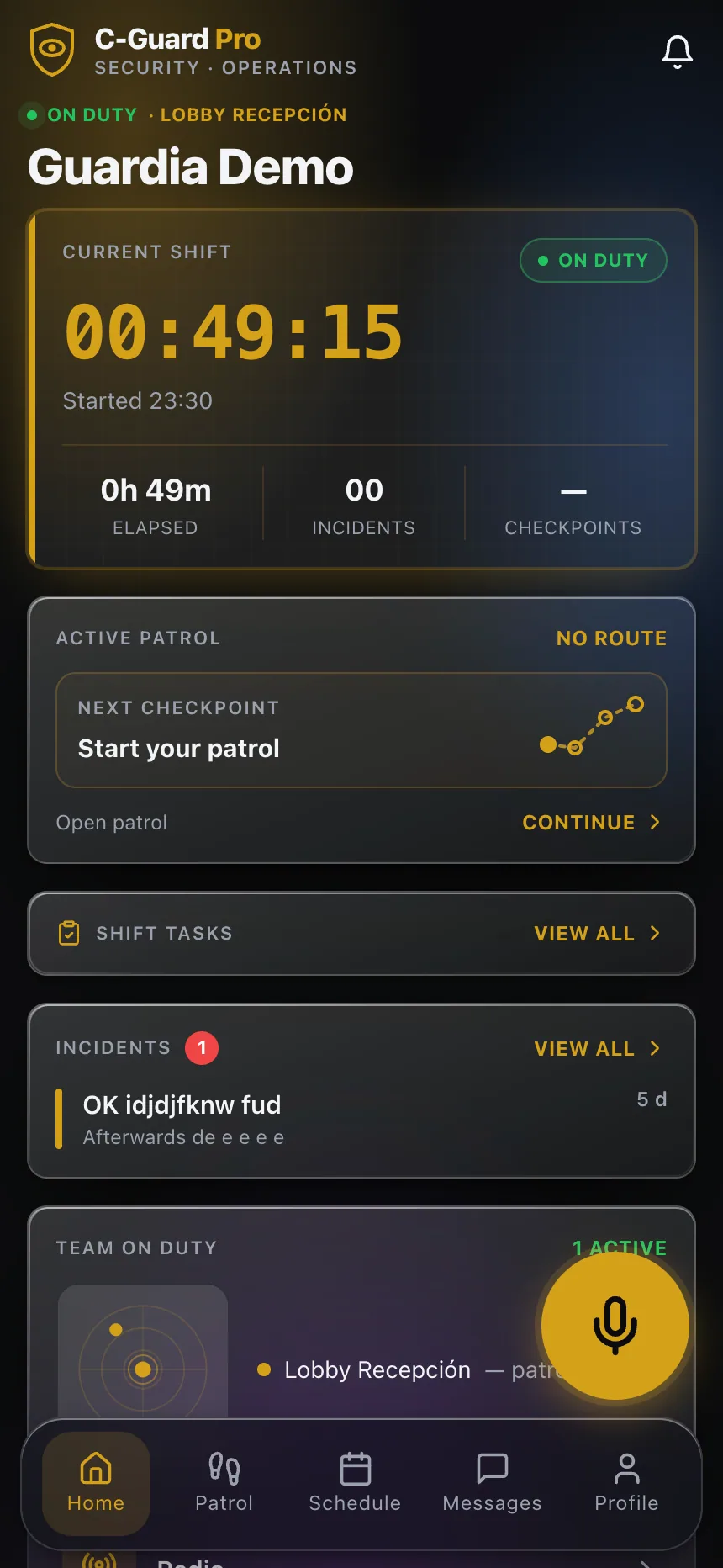
It’s also worth watching what happens after the trial ends, not just during it. Does the officer’s app still show clean records once the demo data is gone and it’s just your own messy real-world entries? Does an incident report filed from a site with genuinely bad signal actually sync, or does it sit unsent until the officer happens to walk somewhere with better coverage? Those questions only get answered by using the product, not by watching someone else use it.
When a demo is still the right first step
None of this makes the demo useless — it’s still the fastest way to understand what a product claims to do and to rule out anything that’s obviously the wrong shape for your operation before investing time in a trial. Comparing the feature set against your actual list of requirements — scheduling, reporting, dispatch, payroll integration — is a demo-stage question, because it doesn’t require your own field conditions to answer.
The trial is where you confirm the demo was honest. If a vendor is reluctant to offer a real trial, or only offers one with restrictions that keep you from testing an actual post under actual conditions, that reluctance is itself information worth weighing before you sign anything, alongside the total cost and how the pricing structure holds up against your headcount.
Do both, in the right order
The sequence matters: demo first, to understand the shape of the product and ask the questions a salesperson can actually answer; trial second, on a real post with a real officer, to find out what the demo couldn’t show you. Skipping the trial because the demo looked convincing is how a company ends up discovering, three weeks into a live contract, that the app they bought works fine in an office and struggles at the one site where it actually needed to work.
If you want to see how CGuardPro holds up on your own posts rather than in a guided call, check pricing or get in touch to start a trial on real conditions.