It’s 5:58 a.m. at a distribution warehouse. The overnight officer’s shift ends at 6:00, and the day-shift replacement hasn’t shown up. There’s no text, no call, nothing on the radio. The officer has been awake for eleven hours, the warehouse opens for receiving at 6:30, and technically their shift is over in two minutes. Relief of post why a guard should never leave before being relieved is the exact question this officer is now facing alone, and what happens next depends entirely on whether anyone ever wrote down an answer — because “obviously you don’t just leave a post uncovered” turns out to be a rule almost nobody puts in writing, right up until the morning it gets broken.
The rule everyone assumes and nobody documents
Ask any field supervisor whether an officer should leave a post before being relieved, and the answer is immediate: of course not. It feels too obvious to need a policy. That’s exactly the problem. Post orders are written to cover the situations that aren’t obvious — where to direct visitors, what to log at each checkpoint, how to handle a specific access point — and the genuinely obvious rules get skipped precisely because everyone assumes everyone already knows them. Relief of post why a guard should never leave before being relieved sounds like a question with an answer so obvious it doesn’t need writing down, and that’s exactly why it keeps getting broken.
But “everyone knows” doesn’t survive an 11-hour night, an unreliable phone, and a new hire three weeks into the job who has never actually been told what to do when relief doesn’t show. Without an explicit instruction, that officer is left to guess in the moment, tired, with a client’s opening procedures bearing down on them and no one on the line to ask.
Relief of post has to move from assumed common sense to a written instruction, because the failure mode isn’t a bad officer making a bad choice — it’s a reasonable officer making a reasonable-sounding choice with no guidance, at the exact hour when judgment is weakest.
What actually goes wrong when relief is late
The obvious risk is a gap in coverage: nobody watching an access point, an alarm that goes unanswered, a delivery driver waved through by whoever happens to be standing there. That risk is real, but it’s not the only one, and often not even the most common one.
The subtler failure is what happens to the officer who does leave. Walking off a post without authorization — even for a genuinely understandable reason, even after waiting past shift end — can look, from the client’s side, like abandonment. It damages the account relationship in a way that’s disproportionate to the actual minutes of coverage lost, because the property manager doesn’t see the reasoning, they see an empty guard shack. And it puts the officer in a position where they made a judgment call the company never actually authorized them to make, which is a bad place for both the officer and the company if anything happens during that gap.
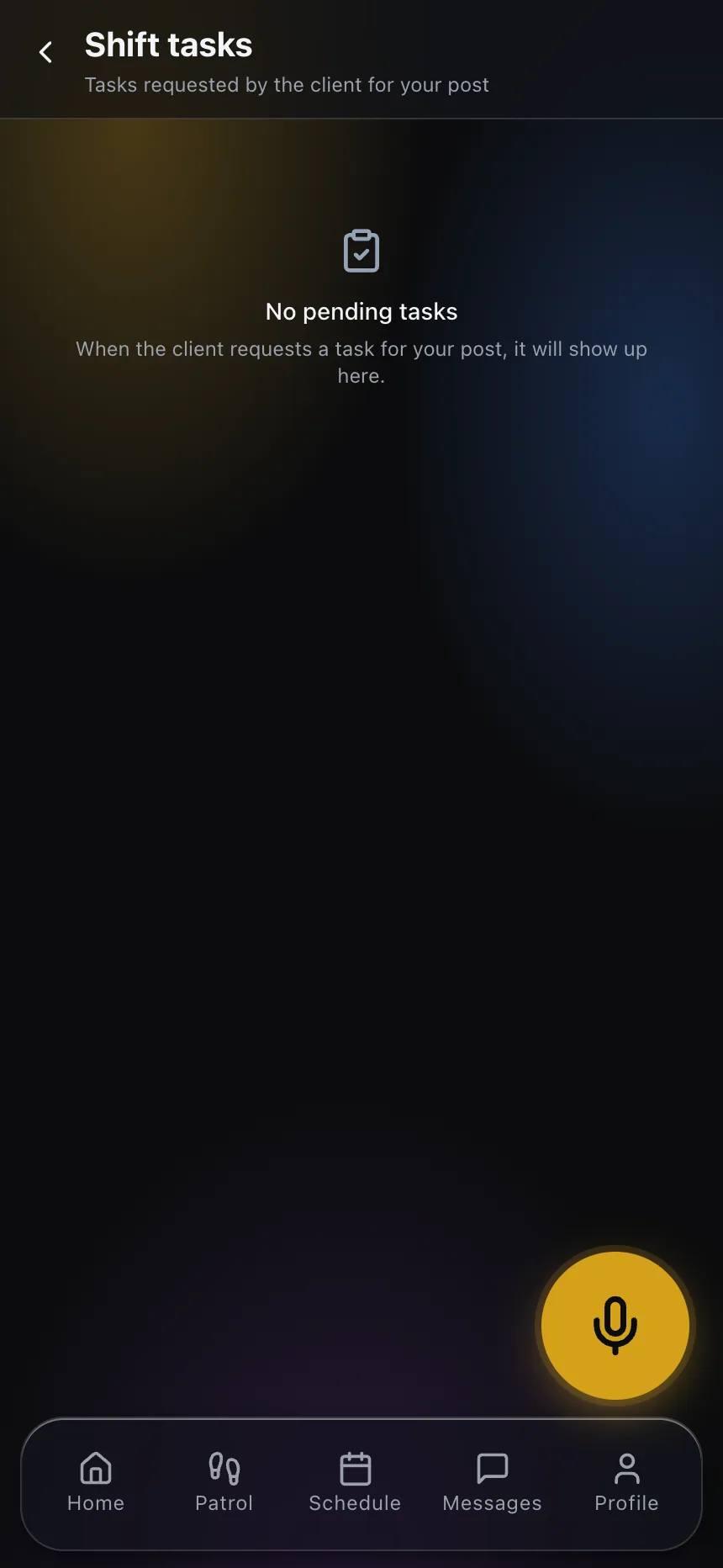
The other quiet failure is what it does to scheduling discipline. If officers know that walking off after shift end “usually works out fine,” a late relief stops being an emergency that gets escalated and starts being routine drift — a ten-minute overrun that becomes a twenty-minute overrun that becomes a pattern nobody flags until a client complains.
What the post order actually needs to say
A post order that handles this properly doesn’t just say “wait for relief.” It answers the questions an exhausted officer at the end of a long night shouldn’t have to improvise:
- Who do they call, in order, if relief hasn’t arrived by shift end — a field supervisor first, then a named backup, then dispatch, with actual numbers, not “call the office.”
- How long they hold the post while waiting for a response, and what “holding” means specifically at that site — staying at the guard shack, continuing rounds, or something else.
- What authority they have to make decisions during the overrun — can they let a delivery through on their own judgment, or does everything wait for a supervisor’s call.
- When the escalation goes further — at what point an unanswered relief call becomes a call up the chain rather than a repeat call to the same unanswered number.
- What gets logged, and by whom, once the situation resolves — the time relief was due, the time it actually arrived, and who was contacted in between.
Writing this down accomplishes two things at once. It gives the officer a script to follow instead of a judgment call to make alone at 6 a.m., and it gives the company a documented standard to point to afterward — both to the client, and to the officer, if the situation ever needs to be reviewed.
Teaching the rule, not just writing it
A written post order only works if the officer has actually internalized it before the night it matters. New hires are the highest-risk group here, not because they’re careless, but because they haven’t yet built the instinct that a tenured officer has from having lived through a late relief once already. Walking a new officer through this scenario during onboarding — not just handing them a document to sign — is what turns a paragraph in a post order into something they actually remember at 6 a.m. on a bad night.
That onboarding conversation should include the uncomfortable part most companies skip: what to do if the person who’s supposed to relieve them, or the supervisor they’re told to call, simply doesn’t answer at all. An officer who’s only ever been told “call your supervisor” and never told what comes after that call goes unanswered is still stuck improvising at the exact moment the post order was supposed to prevent that. Naming a second and third contact, in order, closes that gap before it becomes a real problem on a real night.
The supervisor’s side of a late relief
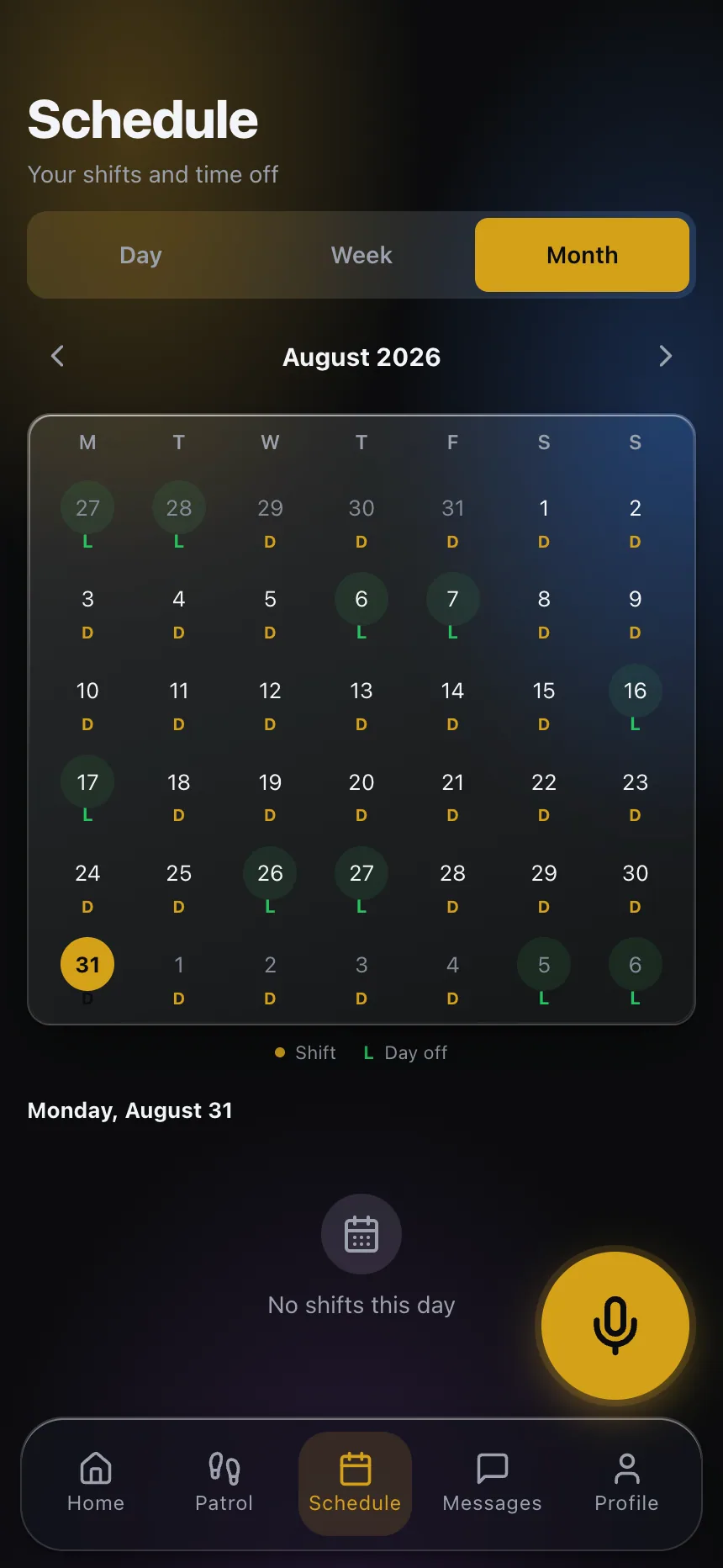
The post order fixes what the officer on post does. It doesn’t fix why relief was late in the first place, and that’s a scheduling and dispatch problem, not a post-order problem. A no-show or a late arrival needs to surface to a field supervisor immediately, not get discovered after the fact when the outgoing officer finally reaches someone. A dispatch process that flags a shift as unconfirmed the moment it should have started — rather than relying on the outgoing officer to be the one who raises the alarm — catches the problem before the officer on post has been standing there for twenty extra minutes wondering what to do.
Building shift assignments with enough visibility that a field supervisor can see a gap forming before the current officer’s shift even ends is the other half of solving this. Clear, current scheduling that a supervisor actually watches, combined with post orders that tell the officer exactly what to do in the meantime, closes both ends of the problem instead of just one. A ready-made post orders template is a reasonable starting point if this rule and its escalation steps aren’t written down anywhere yet.
If you want to see how scheduling and dispatch visibility can catch a late relief before it becomes a post-order problem, explore CGuardPro or get in touch.