Most lone-worker check-in schedules were designed around a single mental model: something bad happens to the officer because someone else does it to them. An intruder, a confrontation, a medical event triggered by violence. Build the check-in interval around how fast help could reach a roaming patrol officer, and you’ve covered the scenario the industry usually plans for. But a guard standing at a fixed gate post in August heat, or a static checkpoint through a January night, faces a risk that model doesn’t account for at all — which is exactly why extreme heat and cold protocols for outdoor security posts need to look different from a general lone-worker policy: the environment itself, acting slowly, with no adversary involved and no reason for the officer to move.
That distinction matters more than it looks. A patrol officer who starts feeling off during a round has options — they can walk toward the vehicle, radio in while moving, cut the round short and head to a warmer or cooler space. A stationary post officer standing at a fixed gate, a construction entrance, or a lot booth has none of that built in. Their entire safety plan, if there is one, is “someone will notice.” At 3 a.m. in a heat wave, or during a cold snap where wind chill drops fast after midnight, “someone will notice” is not a plan — it’s an assumption that the next scheduled check-in interval, built for a different risk, happens to arrive in time.
Why the standard interval is the wrong interval here
A check-in cadence built for personal-safety risk is usually spaced to catch a fast-developing, discrete event — an assault, a fall, an altercation — where the concern is “did something just happen.” Heat and cold stress don’t work that way. They build gradually, they’re easy for the officer themselves to underestimate or downplay (“I’m fine, just hot”), and by the time symptoms are severe enough to be obvious over a radio call, the officer may already be past the point of being able to self-report clearly. A cadence adequate for catching a violent incident within a reasonable window can be badly inadequate for catching heat exhaustion progressing into heat stroke, or cold exposure progressing into hypothermia, because the whole failure mode is slow and self-masking.
The fix isn’t a uniformly shorter check-in interval for every post, every day — that just trains supervisors and officers to tune out frequent, low-value check-ins. It’s a cadence that shortens specifically when conditions warrant it: temperature thresholds, heat index or wind chill, time of day, and how exposed the specific post actually is. A shaded, ventilated guard booth and an unshaded gate with no structure at all are not the same post on the same 95-degree afternoon, even if they’re both technically “outdoor.”
What extreme heat and cold protocols for outdoor security posts actually look like
Set a baseline check-in interval for normal conditions, then define specific triggers that shorten it — a heat index above a threshold your operation sets based on the climate you actually work in, a wind chill below one, or any officer self-reporting symptoms, however mild-sounding. When a trigger is active, the interval tightens, and it should be short enough that a supervisor genuinely would notice a missed check-in before the situation escalates from “not feeling great” to “unresponsive.” This is a judgment your operation has to calibrate to its own posts and climate — a fixed post in Phoenix and one in coastal Oregon are not solving the same problem, and specifying a universal number here would be exactly the kind of generic advice that doesn’t hold up on the ground.
Just as important as the interval is who owns the response when a check-in is missed. A missed check-in on a normal day might mean “call again in a few minutes.” A missed check-in during an active heat or cold trigger should mean something closer to “send someone to physically check the post now” — because the interval was set short precisely because a delay is what turns a recoverable situation into an emergency.
Building this into how you schedule and supervise
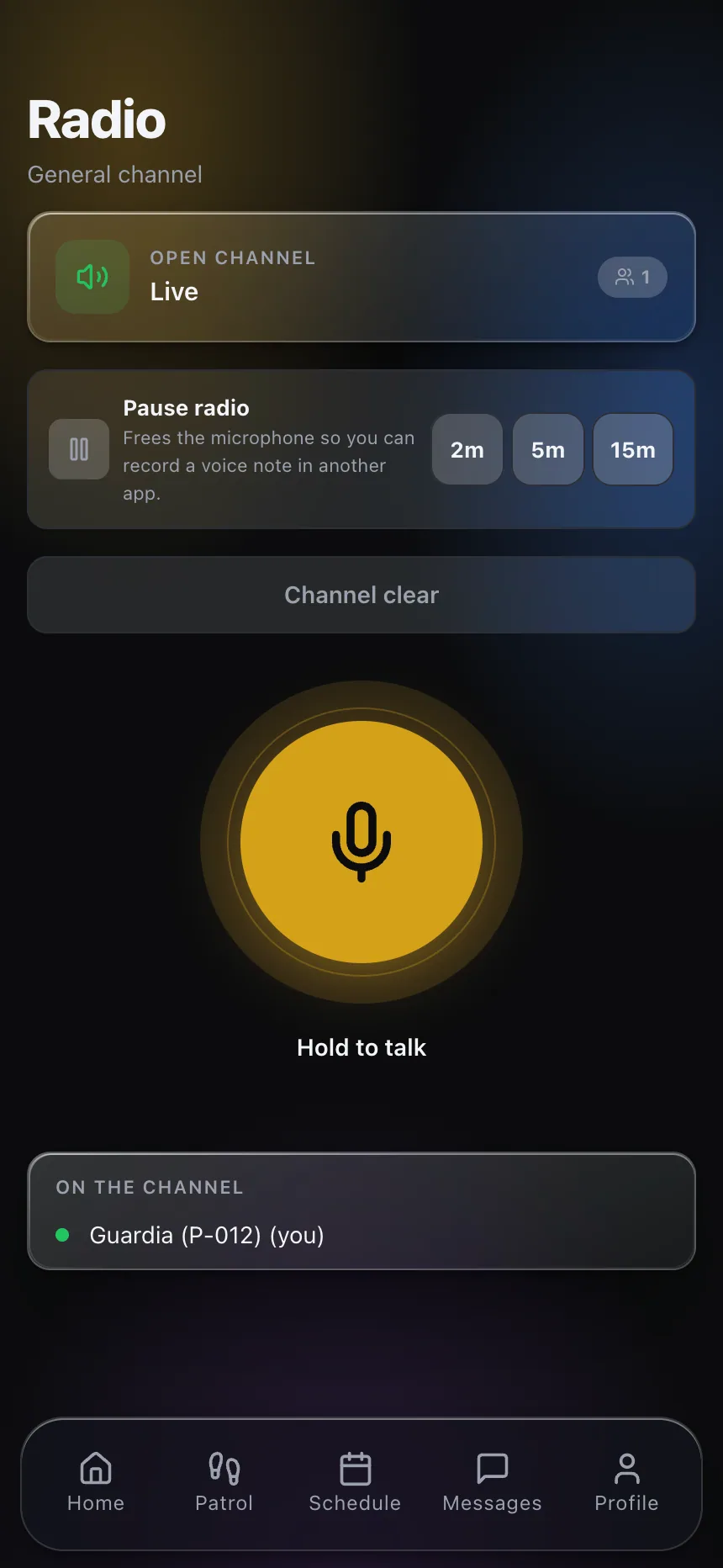
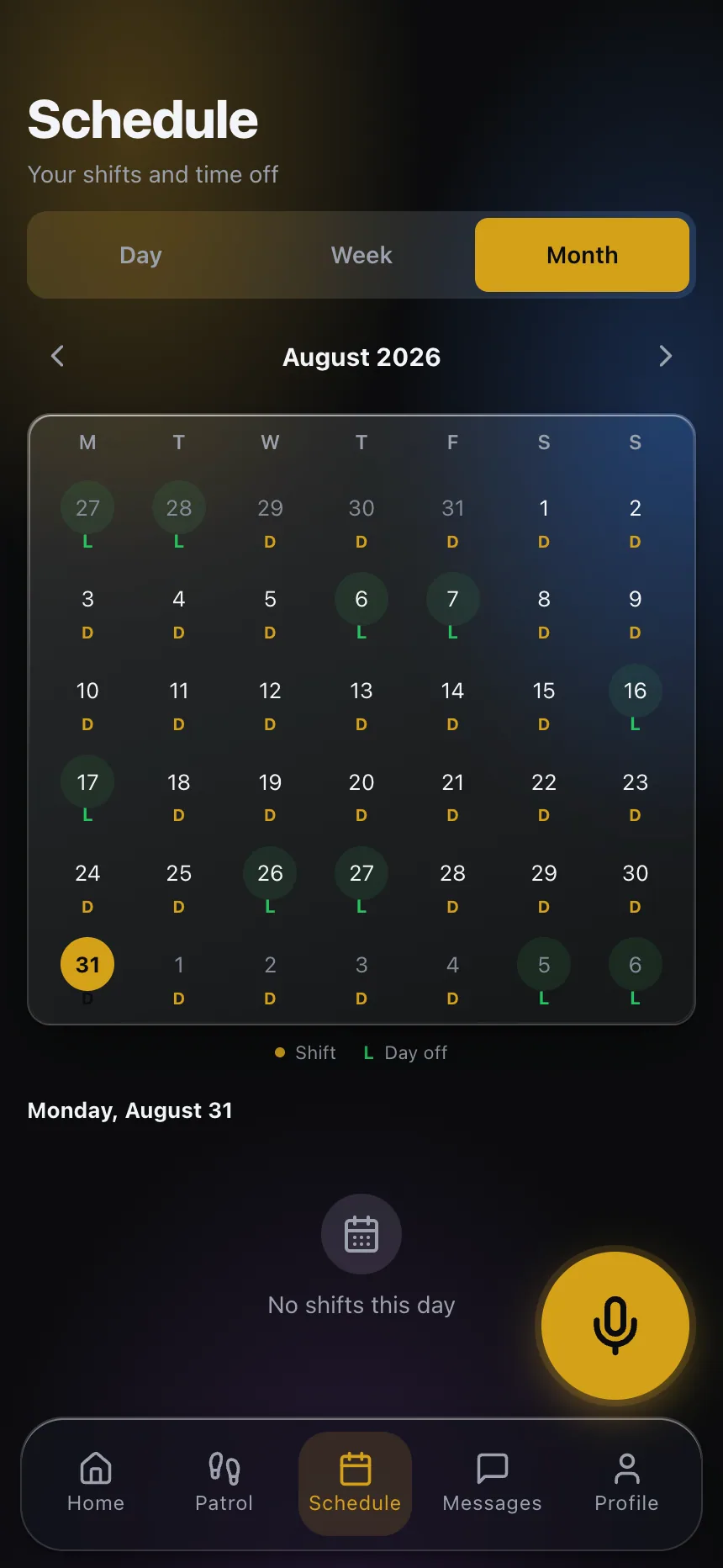
None of this works as a policy sitting in a binder. It has to be built into how shifts are actually scheduled and supervised day to day — a scheduling system that flags which posts are stationary and outdoor-exposed, so a supervisor isn’t relying on memory to know which sites need a tighter watch on a extreme-weather day. It also needs a communication channel that makes a check-in fast and low-friction for the officer — a quick radio call or app check-in is something an officer will actually do every twenty minutes; a phone call to a supervisor’s cell that might go to voicemail is not.
Why self-reporting alone isn’t a safeguard
A policy that simply tells officers to “radio in if you’re not feeling well” puts the entire safeguard on the judgment of someone who is, by definition, the person least equipped to judge their own condition accurately as heat or cold stress progresses. Officers also have every incentive not to call it in early — nobody wants to be the guard who asked to be relieved from a fixed post over what might turn out to be nothing, especially on a crew where toughing it out is treated as part of the job. That’s exactly why the check-in has to be initiated from the supervisor’s side on a schedule, rather than left to the officer to flag proactively. A missed or delayed response to a scheduled check-in is a far more reliable signal than waiting for an officer to self-diagnose and call for help.
Training officers to recognize the other person’s symptoms too
Because heat and cold stress build gradually and can dull a person’s own judgment as they worsen, the more reliable early warning often comes from someone else noticing a change — a supervisor doing a site visit, a relief officer arriving for shift change, or even a client contact who happens to interact with the officer that day. Basic recognition training — knowing what early heat exhaustion or early hypothermia actually looks like from the outside, not just what the textbook symptom list says — is worth building into onboarding for any account with meaningful outdoor exposure. An officer who knows what to watch for in a colleague, and feels empowered to flag it without waiting for a scheduled check-in, closes a gap that a fixed check-in interval alone can’t.
Documenting exposure conditions, not just the check-in itself
Beyond the check-in schedule, there’s value in the officer or supervisor logging the actual conditions during an extreme-weather shift — not for compliance theater, but because a documented record of what the temperature and exposure actually were on a given shift is exactly what you’d want on hand if an officer’s condition did deteriorate and questions come later about what protocol was in place and whether it was followed. A daily activity report that captures conditions alongside the routine shift log turns what would otherwise be an undocumented judgment call into a record the company can actually stand behind.
Treat heat and cold at a fixed post as its own hazard category, not a subset of general lone-worker safety, and build a check-in cadence that actually matches how that hazard develops — slowly, quietly, and without an intruder anywhere in the picture. If you want to see how scheduling and check-in workflows can flag exposed posts automatically, explore CGuardPro or get in touch.