Every HOA board eventually has the same argument: a resident wants a guard at the gate because that’s what a “real” gated community has, and the board’s finance committee wants to know why they’re paying for someone to sit in a booth when a roving patrol could cover three neighboring communities for less. Both sides are arguing from instinct instead of from the thing that should actually decide it — the traffic pattern at that specific entrance. HOA gate house security staffing is the right call in some communities and the wrong one in others, and the difference isn’t prestige. It’s volume, timing, and how much verification the board actually wants happening at the point of entry.
HOA gate house security staffing: what it’s actually buying
A gatehouse earns its cost when the entrance itself is doing real work: checking every vehicle against a resident list, logging visitors by name and destination, calling ahead to confirm a guest is expected, or physically controlling a barrier arm that would otherwise sit open. That’s a real-time verification function, and it only exists if there’s a person there continuously to perform it. A camera at the gate records who came through; it doesn’t stop someone who isn’t on the list, and it doesn’t call a resident to confirm a delivery is expected before waving a car in.
This function matters most in communities with meaningful through-traffic — enough vehicles per hour that unmonitored access control genuinely means unmonitored access, and enough deliveries, contractors, and guests that a verification step actually screens something out rather than just adding friction. A community with a single entrance and a steady stream of vehicles all day is buying something real when it staffs that gate continuously.
Where mobile patrol covers the same ground for less redundancy
Mobile patrol is the better fit when the entrance itself isn’t the risk — when the actual exposure is inside the community, at the pool, the clubhouse, the common areas after dark, or the streets where package theft and car break-ins happen away from any single chokepoint. A community with low through-traffic, an open or lightly used entrance, or multiple entrances that make a single gatehouse pointless anyway is often paying for presence at the wrong location if it insists on a staffed gate. A patrol that actually moves through the property — checking the pool area, the mail kiosk, the visitor parking, varying its route and timing — covers more of the community’s actual risk surface than one person parked at a booth all night.
The tradeoff nobody likes to say out loud in the board meeting: a roving patrol covering multiple communities is genuinely thinner coverage at any single moment than a dedicated gatehouse. If the board picks patrol because it’s cheaper without being honest that a specific entrance stays completely unmonitored between passes, that’s a real gap, not a wash. The right conversation is “what are we trading away,” not “which one sounds more secure.”
The traffic pattern the board never actually measured
The mistake most communities make is deciding this once, at build-out, based on what the developer marketed the community as, and never revisiting it as traffic patterns change. A community that added a second entrance for a new phase of construction may no longer need — or may desperately need more of — the staffing model it started with. A gatehouse built for a 200-home community doesn’t automatically scale to 600 homes without the queue backing up at peak hours, and a patrol contract sized for a sleepy cul-de-sac layout doesn’t automatically cover a community that added a commercial-adjacent entrance with steady non-resident traffic.
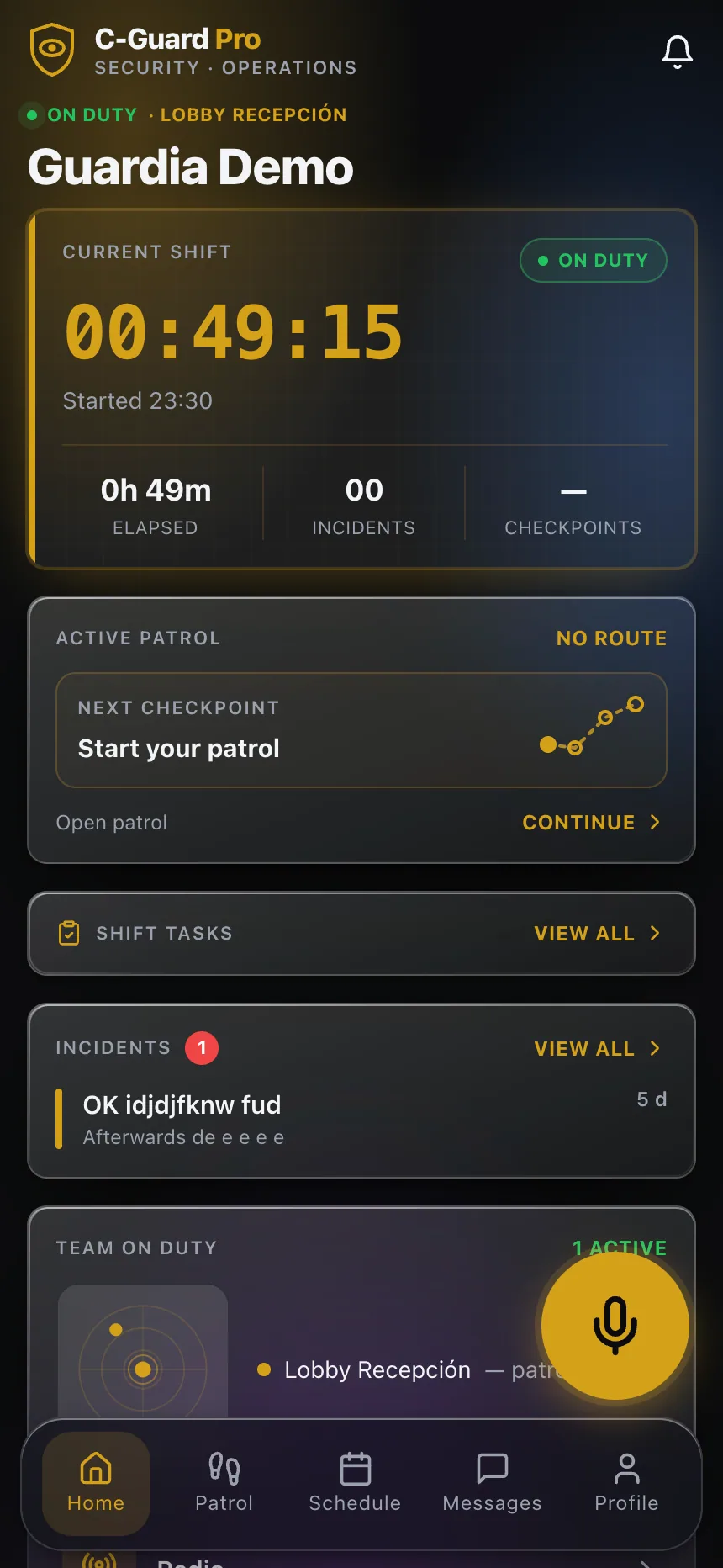
Boards rarely have this data in a form they can act on, because the honest volume count — cars per hour at peak, visitor-to-resident ratio, how often the gate arm actually needs a manual override — usually lives nowhere except a guard’s memory. That’s a solvable problem independent of which staffing model gets chosen: whichever model runs, the visitor logs and shift activity should be producing the traffic picture the board needs for the next contract renewal, not requiring a special study to generate it.
The documentation discipline that has to exist either way
Whichever model an HOA runs, the actual security value collapses if visitor verification and resident confirmation aren’t consistently recorded. A gatehouse that waves cars through without logging who came in defeats the entire point of staffing it — the board is paying for a checkpoint that isn’t actually checking anything, just occupying the booth. A mobile patrol that doesn’t log what it found on each pass — gate propped open, a suspicious vehicle in visitor parking, a broken pool gate latch — is providing presence without producing anything the board can use to make decisions later.
This is where the two models converge on the same requirement even though they look completely different day to day: every visitor contact, every gate override, every irregularity found on a round needs to be logged consistently and be visible to the board or property manager without someone having to ask for it. A gatehouse with sloppy logs and a patrol with sloppy logs fail the same way — the community can’t tell, months later, whether the coverage it’s paying for is actually working.
The hybrid option boards rarely consider seriously
Between a fully staffed gate and a purely mobile patrol sits a third option that gets less attention than it deserves: a gate that runs staffed during peak hours — school drop-off, evening arrivals, weekend guest traffic — and reverts to camera-and-callbox access with mobile patrol coverage during low-traffic windows. This isn’t a compromise for boards that can’t decide; it’s often the actual right answer for a community whose traffic genuinely concentrates in predictable windows rather than spreading evenly across the day. The same officer who staffs the gate at 6 p.m. can be the one running the community’s patrol route at 2 a.m., instead of the board paying for a fully staffed entrance around the clock or leaving it unmonitored the whole time patrol coverage isn’t physically present.
The reason boards rarely land here isn’t that the model doesn’t work — it’s that nobody presented the community’s actual hour-by-hour traffic pattern clearly enough to justify it. Without that data, the debate stays stuck between two extremes, staffed or not staffed, when the honest answer for a lot of communities is a schedule that matches staffing to when the entrance is actually doing work.
If your board or management company is trying to decide between a staffed entrance and a patrol route — or trying to prove the current model is or isn’t working — start with the visitor and patrol records you already have. Explore how visitor management and residential HOA security fit your community’s actual traffic, or get in touch to talk through the tradeoff.