An operations manager preparing a government bid pulls up the RFP looking for the word “software” and doesn’t find it anywhere. What they find instead is three paragraphs buried in the scope of work about how patrol activity must be independently verified, how records must be retained and produced on request, and how incidents above a certain severity must be escalated within a defined window. None of that reads like a technology requirement on first pass. It is one — this is what security guard software features required for government contracts actually look like on the page.
This is the pattern worth understanding before you respond to a government contract: RFPs almost never name a product or even a category of tool. They describe outcomes — verifiable, auditable, time-stamped outcomes — and it’s on the bidder to recognize which of those outcomes require a system to actually deliver, versus which ones a paper log could technically satisfy but would never survive an audit.
The Security Guard Software Features Required for Government Contracts Are Hidden in Plain Language
The security guard software features required for government contracts are almost always described through functional language rather than a product spec. Look for phrases like “tamper-evident record of patrol activity,” “chain of custody for incident documentation,” “real-time notification of critical events,” or “auditable log retained for [some period].” Every one of those phrases is describing a capability that a manual, paper-based process struggles to deliver credibly, even when the guard force doing the work is disciplined and honest.
The reason this language shows up so consistently in government work is that the agency issuing the RFP has usually been burned before — by a vendor whose patrol logs turned out to be filled in after the fact, or by an incident report that couldn’t establish exactly when something happened relative to when it was reported. The specific clauses in a current RFP are often a direct response to a specific failure in a past contract, even if the RFP never says so explicitly.
Reading the Scope of Work Like a Checklist
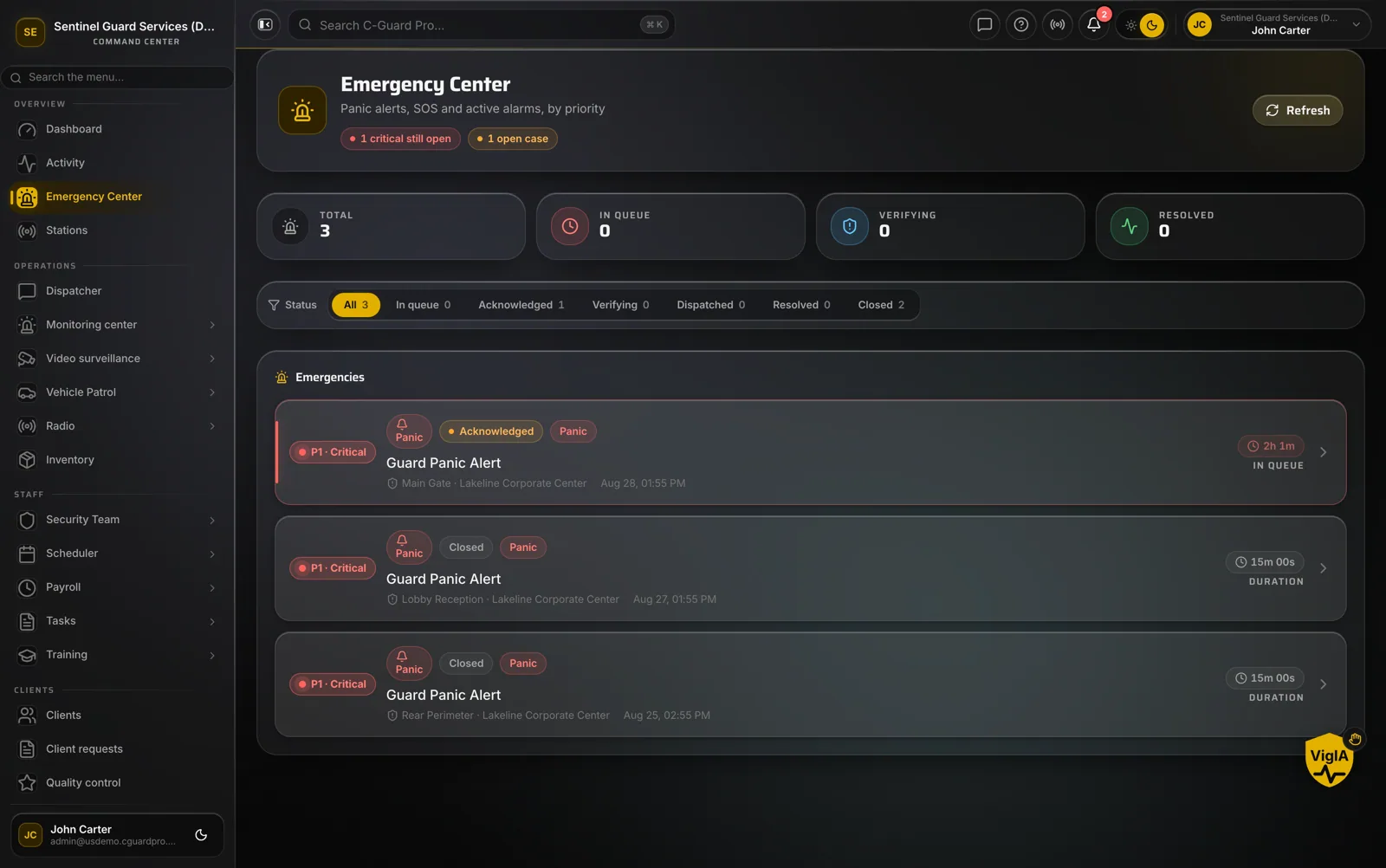
The practical exercise, once you have the RFP in hand, is to go through the scope of work line by line and flag anything that implies verification, timing, or an audit trail — then match each flag against what your actual operation can produce, not what you assume it can produce. “Officer must complete rounds at specified intervals” implies some mechanism for proving the rounds happened at those intervals, not just that someone says they did. A guard tour system built on checkpoint scans produces exactly that kind of unbroken, time-stamped record, because each scan is tied to a specific location and a specific moment rather than a supervisor’s memory of a walkthrough.
“All incidents must be reported to the contracting officer within [a defined window]” implies a workflow that gets information from the officer on the ground to whoever needs to see it fast enough to matter, with a record of when it actually happened, not just when someone wrote it down later. A security incident reporting process that timestamps the report at the moment it’s created, attaches photos, and tracks escalation status gives you something concrete to point to when a contracting officer asks how that requirement gets met — a paper form filed at the end of a shift does not.
The Dispatch Trail Matters as Much as the Patrol Trail
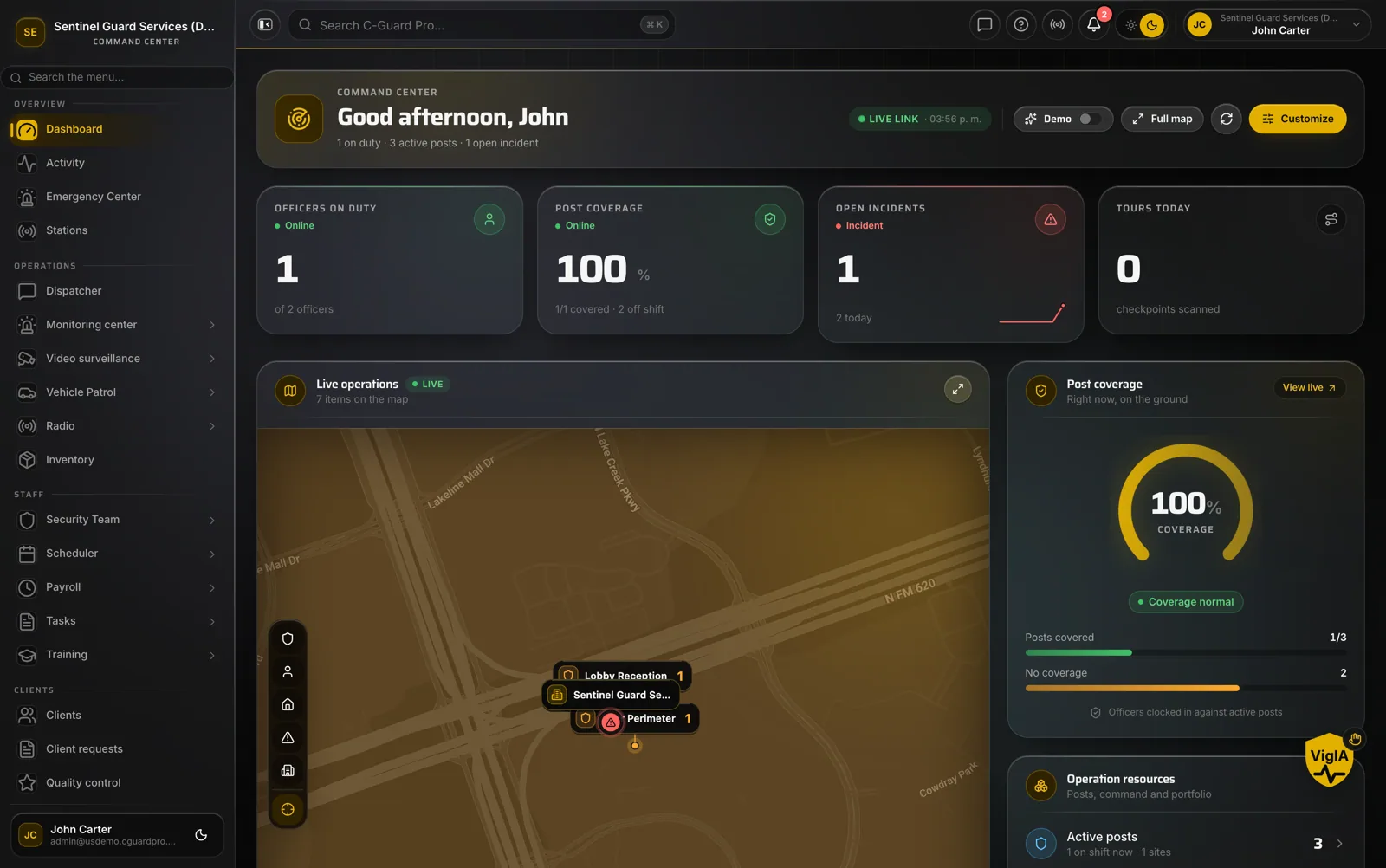
RFP language about incident response often assumes a defined chain from the moment something happens to the moment the right person is notified and acting on it, and that chain shows up in the document as requirements around response coordination and call logging even when the word “dispatch” never appears. A contracting officer evaluating this part of the scope of work is really asking whether an incident on a covered site reaches the right responder — an on-site supervisor, a client point of contact, sometimes local law enforcement — without depending on one person’s phone being on and answered.
A dispatch process that logs who was notified, when, and what happened next gives a bidder something concrete to describe against this part of the RFP, rather than a paragraph asserting that the company “responds quickly” without any way to demonstrate it after the fact. The daily routine of logging activity matters here too, since a consistent shift log gives an agency the baseline record it can compare against when it’s checking whether the contracted level of coverage actually happened on a given day, not just when something went wrong.
Where Bidders Get Caught Out
The mistake a lot of companies make is responding to the RFP language generically — writing a paragraph that says “we use industry-standard technology to ensure compliance” without ever mapping that sentence to the specific clause it’s supposed to satisfy. A contracting officer reviewing dozens of proposals notices the difference between a vague assurance and a bidder who quotes the actual RFP language back and explains, specifically, how their process satisfies it. The second kind of response reads as though the bidder actually read the document; the first reads as boilerplate recycled from the last proposal.
The other common mistake is discovering a gap after the contract is awarded rather than before the bid goes out. If the RFP requires a defined escalation window for critical incidents and your current process routes everything through a single supervisor’s phone, that’s a capability gap worth knowing about while you’re still deciding whether and how to bid — not three months into a contract when the agency asks for a report your system was never built to produce.
Building the Response Around the Actual Clauses
A stronger approach to the technical portion of a government proposal starts from the RFP’s own language rather than from a generic capabilities list. Pull every clause that touches verification, documentation, timing, or audit, and answer each one specifically: here is how a round gets verified, here is how an incident gets escalated and by when, here is how a record gets retained and how it would be produced if requested. That structure does two things at once — it makes the proposal easier for the evaluator to score against the RFP’s own criteria, and it forces the bidder to actually confirm, in advance, that their operation can deliver what they’re about to promise in writing.
It’s also worth treating this exercise as useful beyond the bid itself. The same mapping — RFP clause to operational capability — is a reasonable way to stress-test any contract, government or commercial, before signing it. If you’re not sure whether your current process holds up against that kind of scrutiny, a broader evaluation framework for guard management tools is worth working through independent of any specific bid, so the gaps get found on your own timeline rather than a contracting officer’s.
Government RFPs reward bidders who read the actual language closely enough to answer it directly, not the ones with the longest features list. Match the clauses to the capability, be honest about anything you can’t yet deliver, and the technical section of the proposal writes itself instead of reading like filler.
If you want to see how this works in your own operation, get in touch.