A scheduling gap at one site is only a crisis if nobody else on the roster is qualified to stand it. Most companies treat that as a staffing problem — hire more, or eat the overtime — when it’s really a coverage-design problem. Cross-training security officers multiple client sites doesn’t get talked about as scheduling infrastructure, but that’s what it is. Framed as a training initiative, it competes for budget against everything else on the training calendar and usually loses. Framed as the thing that turns a callout into a fifteen-minute radio call instead of a scramble, it earns its place.
Cross-Training Security Officers Multiple Client Sites: The Real Distinction
Training an officer on a second site’s post orders so they can technically work there is not the same as cross-training them for coverage. The second version means an officer already knows the access procedure, the client contacts, the site-specific escalation rules, and where the checkpoints are on that site’s route — well enough to walk in on short notice and run the post without a supervisor standing next to them for the first two hours. That level of readiness needs the officer to have actually worked the site before, not just read the post orders once.
This is why cross-training has to be planned as ongoing exposure — a periodic shift or two at the secondary site, kept current — rather than a one-time onboarding event. An officer who cross-trained on a site eight months ago and hasn’t been back has probably lost the specifics that matter: which stairwell door sticks, which tenant calls dispatch directly instead of going through the front desk, what “quiet” actually looks like there versus what would be unusual.
Pick the volatile sites, not the easy ones
The instinct is to cross-train on the simplest post — the one with the fewest post orders to memorize, the lowest-traffic lobby, the site that’s easiest to teach fast. That’s exactly backward. The sites worth the investment are the ones with the most volatile coverage needs: high callout rates, a client with unpredictable extra-coverage requests, a post that’s hard to fill on short notice because of location or shift time. A cross-trained bench at an easy, stable site solves a problem you were never going to have. A cross-trained bench at your least predictable site is the one that keeps a 2 a.m. callout from becoming an uncovered post.
That means the first step isn’t a training plan — it’s a look at which sites actually generate coverage gaps. Callout frequency, how often a site needs same-day fill-ins, how many single-officer posts you’re running with no natural backup nearby. Once that list exists, cross-training targets follow from it instead of from convenience.
What the exposure actually looks like
The mechanics matter more than the intent. A useful cross-training rotation usually means scheduling a shadow shift first — the officer works the secondary site alongside someone already qualified there, watching how access works, meeting the site contact, walking the actual route rather than reading about it. After that, a solo shift or two at the site while it’s still relatively low-stakes — a weekday day shift rather than a high-traffic weekend night — lets the officer build real familiarity before they’re the one covering an unplanned gap under pressure.
The mistake to avoid is treating a single shadow shift as sufficient qualification. One exposure gets an officer through the motions once; it doesn’t build the kind of pattern recognition that lets them notice something’s off at 2 a.m. because it doesn’t match what “normal” looks like there. That only comes from having actually worked the site more than once, which is the argument for treating cross-training as a recurring, scheduled exposure rather than a one-time checkbox next to an officer’s name.
What it actually buys you on the roster
The payoff of cross-training shows up in how a guard scheduling plan gets built, not in a training completion report. A roster where three officers are qualified across two adjacent sites can absorb one person calling out without touching anyone’s day off or pushing another post into overtime. A roster where every officer is single-site qualified has exactly one lever when someone calls out: mandate overtime on whoever’s already scheduled, or leave the post short. Neither is a real answer at 2 a.m.
Cross-training also changes what a callout costs in relationship terms. A client who gets a familiar face — someone who’s covered their site before, knows their building, knows their contacts — reads a callout very differently than a client who gets a stranger reading post orders for the first time in the parking lot. The second version is the kind of callout that shows up in the next contract renewal conversation.
The scheduling data that makes it work
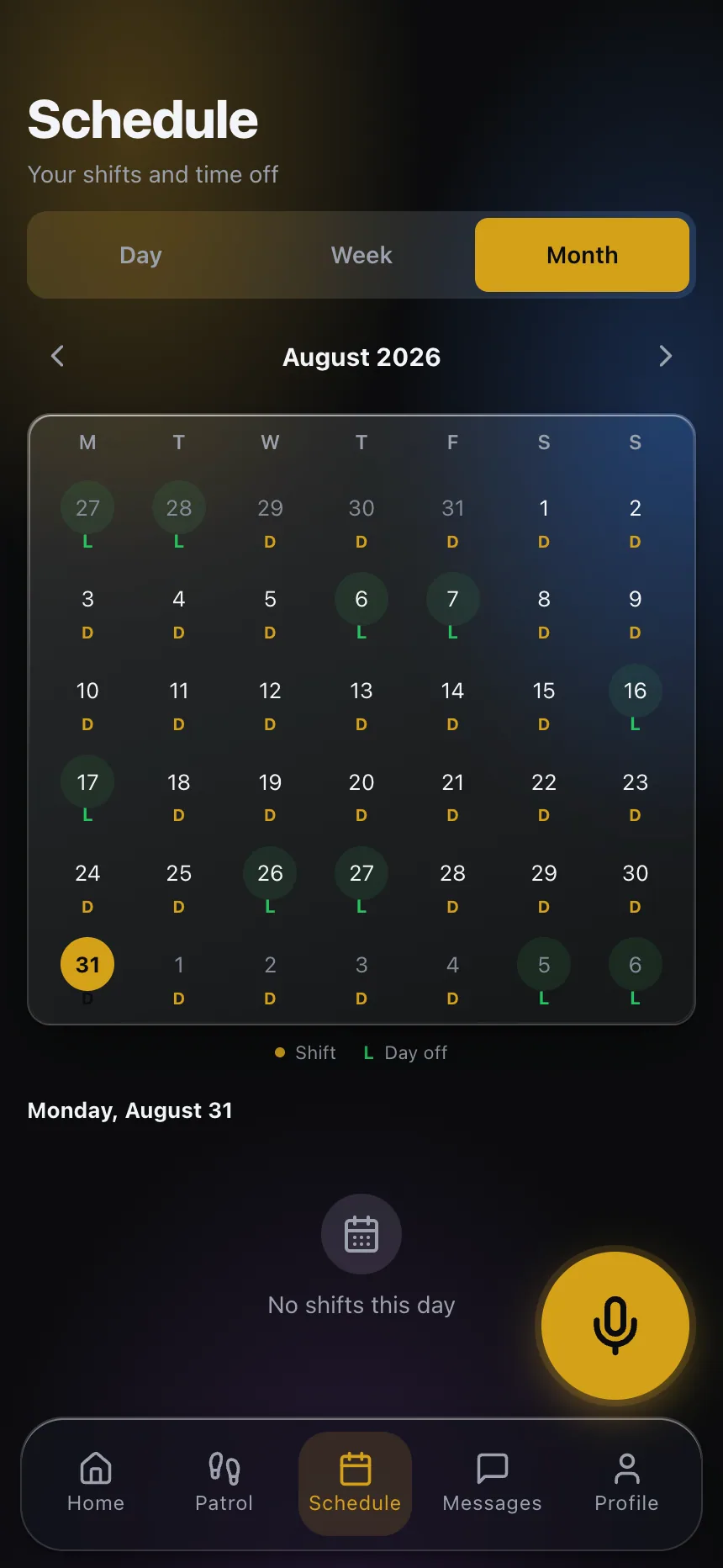
None of this holds up without a way to actually see which officers are qualified where. A roster that only tracks who’s scheduled, not who’s cross-trained and current on which sites, forces a scheduler to remember it — or worse, to call around and ask. Tracking site qualifications alongside availability in the scheduling system means a scheduler filling a same-day gap can filter to “qualified for this site” instead of guessing who might still remember the layout from a shift six months back.
The same visibility matters for the officer side. An app that shows an officer their current post for the day, along with any secondary sites they’re qualified for, makes it easier to pick up an open shift at a site they already know rather than turning down coverage because they’re not sure they remember the procedures.
What cross-training doesn’t fix
It’s worth being honest about the limit here. Cross-training solves for planned volatility — the sites you already know generate gaps. It doesn’t solve for a genuinely unqualified bench, and it’s not a substitute for having enough total headcount to run the contract. A company chronically short-staffed will not cross-train its way out of that; it will just spread the shortage across more sites instead of concentrating it at one. Cross-training is a multiplier on a roster that’s already adequately staffed, not a replacement for adequate staffing.
It also has a maintenance cost that’s easy to underestimate. A qualification that isn’t refreshed periodically decays, and a scheduler who trusts a stale qualification is worse off than one who knew to ask. Treat the cross-trained list as something that needs periodic review, the same way certifications or licenses get reviewed, rather than a box checked once and forgotten.
If you want to see how site qualifications, availability and same-day coverage come together in one schedule, explore CGuardPro or get in touch.