Security software for refineries
and oil & gas sites
A refinery gate can see hundreds of trucks a day, and during a turnaround it can badge thousands of contractors in a few weeks. Behind the gate are miles of fence, tank farms, a flare area and often a marine dock — and beyond the plant, well pads and pump stations nobody staffs. CGuardPro keeps the gate log searchable, proves the patrols were walked, and alerts dispatch when a remote post goes quiet. Trusted by 600+ security companies worldwide.
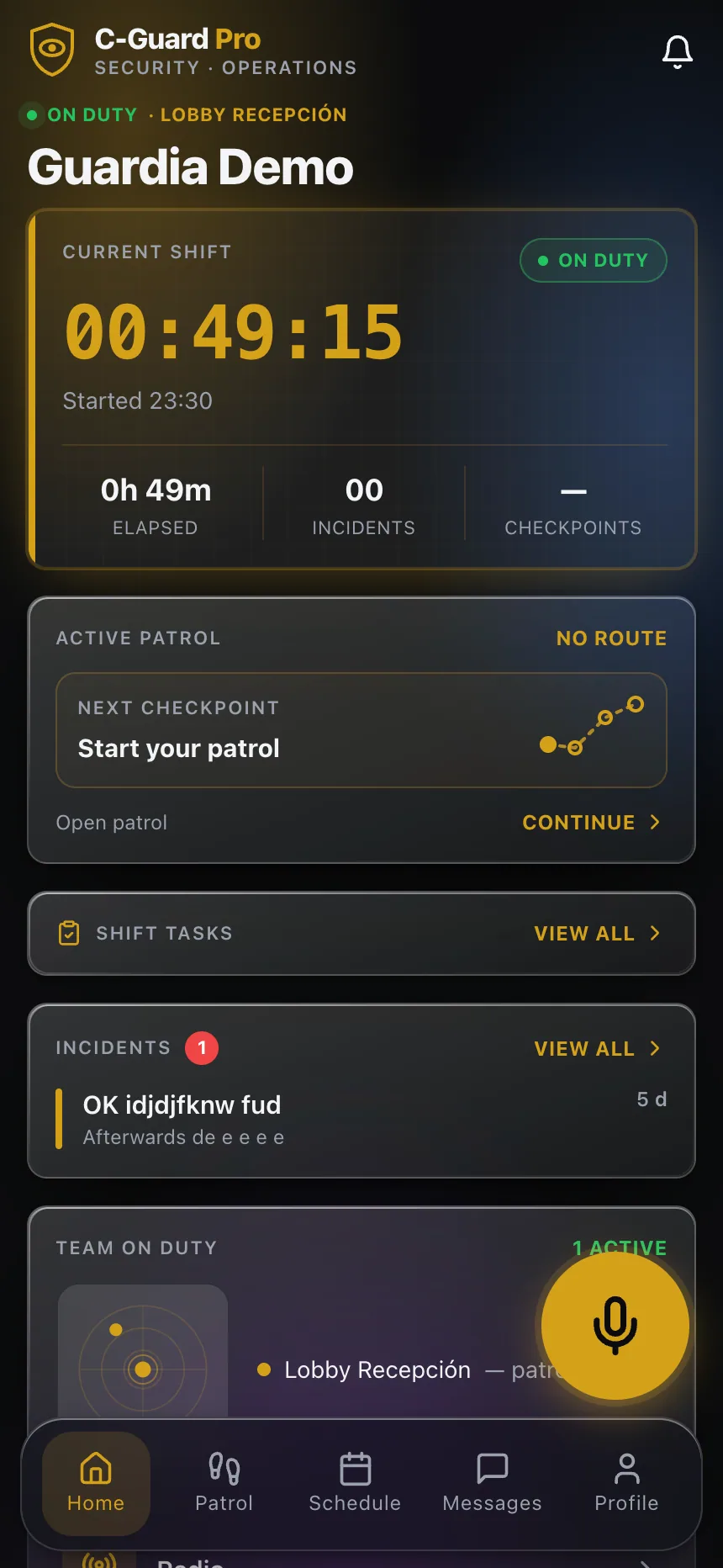
Real product screenshots
Short answer
Refinery and oil & gas security software has to handle three jobs at once: a main gate with heavy truck and contractor traffic, long patrols of fence lines and tank farms, and remote, unmanned sites. CGuardPro logs vehicles and visitors with the plate read from a photo, verifies QR or NFC checkpoint scans with time and position, runs timed fire watch tours with missed-tour alerts, and puts geofences on remote posts. It does not certify regulatory compliance.
At a glance
- Typical posts
- Main gate, contractor badging, perimeter and tank-farm patrol, marine dock, remote well pads
- Key records
- Vehicle and visitor log, verified patrols, fire watch tour history, incident reports
- Federal context
- CFATS authority expired July 28, 2023 (CISA); marine docks fall under MTSA and TWIC
- Alerts
- Missed tours, uncovered posts, geofence exits, officer panic button
- Compliance
- CGuardPro does not certify CFATS, MTSA, OSHA or any other compliance
What makes energy sites hard to guard
The gate log is a liability when it is paper
Tanker drivers, contractors, vendors and visitors all come through one gate. When the plant asks who was on site during an incident, a handwritten sheet is slow to search and easy to dispute.
Long patrols nobody can verify
Fence lines, tank farms, pipe racks and laydown yards can take an hour to walk. Without verified checkpoints, a patrol that cut across the middle looks exactly like one that covered the perimeter.
Remote sites go quiet without anyone noticing
Well pads, compressor stations and pump stations are often covered by one mobile officer. If that officer stops checking in, the first sign should be an alert, not a missed theft report the next day.
How an energy site runs on CGuardPro
A gate log that can be searched
Each vehicle entry records the driver, company, who authorized it and the plate, read from a photo on the officer's phone, with entry and exit times. Banned plates on the post's list raise an alert at the gate.
Checkpoints on the perimeter, not just the lobby
QR codes or NFC tags along the fence line, at tank-farm entrances, the dock and each laydown yard. Each scan is verified server-side with time and position, and a checkpoint can ask for a photo or a note.
Fire watch as timed tours
When hot work or an impaired fire system needs a fire watch, run it as a timed tour over checkpoints. Every scan is time-stamped and located, a missed round raises an alert, and the tour history is the log you hand over when asked.
Geofences on remote posts
Each remote site can carry a radius or polygon geofence. Dispatch sees when the officer leaves the area, when a clock-in is missing, and when someone presses the panic button.
What the operator gets
- Searchable vehicle and visitor log with plates read from a photo
- Verified patrols of fence lines, tank farms and yards
- Timed fire watch tours with missed-tour alerts
- Geofences and uncovered-post alerts on remote sites
- Panic button and push-to-talk radio on officers' phones
- Incident reports with photos, category and severity
Frequently asked questions
Do CFATS rules still apply to refinery security? +
Not at the moment. CISA states that Congress allowed the statutory authority for the Chemical Facility Anti-Terrorism Standards (6 CFR Part 27) to expire on July 28, 2023, and that CISA cannot enforce compliance with CFATS at this time (cisa.gov, checked October 2026). Facilities regulated under the Maritime Transportation Security Act were excluded from CFATS in any case. Many operators keep their security plans in force voluntarily; CGuardPro does not certify compliance with any of them.
Our refinery has a marine dock. What changes there? +
Waterfront facilities regulated under the Maritime Transportation Security Act operate under a Coast Guard-approved facility security plan (33 CFR Part 105), and workers need a Transportation Worker Identification Credential (TWIC) for unescorted access to secure areas (tsa.gov). CGuardPro does not read TWIC cards; officers log visitors and the escort who authorized them, and the dock carries its own post orders.
Can CGuardPro run hot-work fire watch? +
Yes, as timed tours over QR or NFC checkpoints with missed-tour alerts. OSHA's welding rule requires a fire watch to be kept for at least half an hour after cutting or welding is completed (29 CFR 1910.252(a)(2)(iii)). CGuardPro records what the fire watch did; it does not approve or certify it.
Do officers need intrinsically safe phones? +
That is the site's call, based on its hazardous-area classification. The guard app runs on iOS and Android; if the site requires certified devices, tell us which one and we will check it with you. Many sites place checkpoints at the edge of classified areas.
What about connectivity on remote pads? +
Incidents, visitor entries and tour start and end queue on the phone and upload when coverage returns; a checkpoint scanned offline is stamped by the server when it arrives. Clock-in needs a live connection at that moment.
How much does it cost? +
USD 5 per user per month (anyone with a login), one plan with every feature, plus a one-time implementation of USD 299.99, with a 7-day free trial.
Build your gate and fence line with us
Book a demo and we set up a gate post, a perimeter patrol and a fire watch tour on a real site layout, then show the history the plant would read.