The fire alarm panel at a mid-rise office building goes into trouble mode at 11 p.m. on a Friday. The building engineer is off until Monday, the monitoring company can’t get a technician out until morning, and the property manager is asleep. Nobody at the client account has said the word “fire watch” out loud. Whether one is required right now, tonight, is exactly the kind of question a guard company needs to answer on its own — when is fire watch required doesn’t wait for the fire marshal to bring it up, and by the time anyone thinks to ask, the building has already spent several hours with no working fire alarm and no one covering for it.
That’s the pattern behind most fire watch failures. Companies wait to be told a fire watch is needed, as if it were a service a client requests like extra coverage for an event. It isn’t. A fire watch becomes an obligation the moment specific conditions exist in a building, whether or not the property manager, the client’s facilities team, or anyone else has said the words. Learning to recognize when is fire watch required — before being told — is what separates a guard company that catches the problem from one that finds out about it from the fire marshal.
The conditions that create the obligation
Three situations account for most of the fire watches a contract guard company will ever staff, and all three share the same underlying logic: something that normally detects or suppresses a fire isn’t currently working, so a person has to do that job instead until it’s restored.
An impaired fire alarm system. When detection or notification is offline — a panel in trouble, a section of the building not reporting, monitoring disconnected — the building has lost its automatic warning capability. Until it’s repaired, something has to replace that function, and that something is a person walking the affected areas on a set interval, watching for smoke or fire and ready to sound a manual alarm and call for help.
Hot work. Welding, cutting, grinding, or any spark-producing work performed outside of a permanently fire-safe area creates an active ignition source in a building that wasn’t designed around one. This is the trigger contractors are most likely to overlook, because it’s driven by a maintenance or renovation schedule, not by an equipment failure — the fire risk shows up because of planned work, not because something broke.
A sprinkler or standpipe system out of service. When automatic suppression is offline for testing, repair, or renovation, the building has lost its ability to fight a fire on its own even if detection still works. That gap is exactly what a fire watch exists to cover.
There are other, less common triggers — construction phases where standard building protections aren’t yet in place, for instance — but these three are the ones a contract guard company will run into on ordinary commercial accounts, often with no advance notice at all.
Why waiting for the client to ask is the wrong posture
A property manager or facilities director isn’t necessarily thinking about fire watch obligations when a contractor shows up to reroof a building or when a fire panel throws an error. They’re thinking about the roofing schedule or the maintenance ticket. Expecting the client to recognize the trigger and request coverage puts the responsibility in the hands of the person least likely to be watching for it.
The guard company and its field supervisors are usually the ones physically present when these conditions appear, or the ones a building engineer calls first when a panel goes down after hours. That makes proactive recognition — not client instruction — the only reliable trigger. A field supervisor who knows the three conditions above can flag “this building needs a fire watch starting now” before the client has even framed it as a question, which is a very different conversation than the fire marshal showing up on an unrelated visit and asking why an impaired system has gone unaddressed for two days.
What the coverage actually requires once it starts
A fire watch isn’t a static post — it’s continuous, active patrol of the affected area, at whatever interval the situation calls for, with the sole job of detecting fire or smoke conditions and being ready to act immediately: sound the alarm, evacuate as needed, and call for the fire department. It typically continues until the impaired system, hot work, or suppression outage is fully resolved and confirmed, not until someone remembers to call it off.
That makes documentation as important as the patrol itself. Each round needs a timestamp and a note on conditions observed, and the whole watch needs a clear start and end record — both because it demonstrates the coverage actually happened continuously, and because it’s the record a fire marshal or an insurer will ask for if anything happens during the impairment period. A tour system with checkpoint scans turns that from a paper log someone might forget to fill out into a timestamped record built automatically as the officer moves through the building.
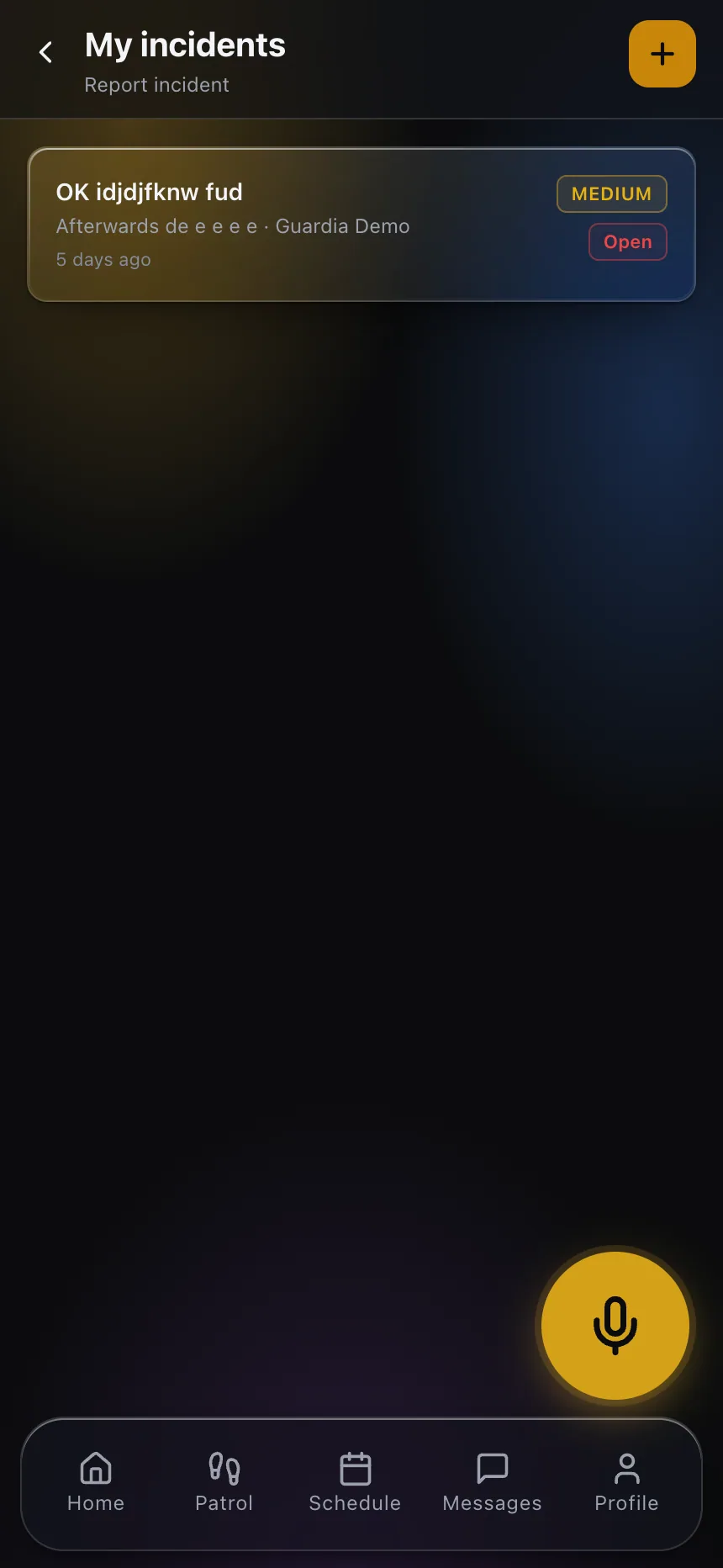
Pairing the patrol log with a same-shift incident report if conditions change mid-watch — smoke odor, a hot work spark event, anything — closes the gap between what happened and what got written down.
Training officers to spot the trigger, not just staff the watch
Recognizing these conditions is a training problem before it’s a staffing problem. An officer or field supervisor who’s never been walked through what an impaired alarm panel actually looks like, or what “hot work happening on this floor today” should trigger in their head, isn’t equipped to catch the situation early — even if the company’s policy manual technically covers it somewhere. The gap is usually between what’s written in a manual back at the office and what an officer on a routine patrol actually notices and knows to flag.
A short, repeated briefing on these three conditions — worked into existing safety training rather than treated as a separate fire-watch course — does more than a policy document nobody reads twice. The goal isn’t turning every officer into a fire-safety expert; it’s making sure that when a panel throws an error at 11 p.m. or a contractor shows up with a welding rig, the officer’s first instinct is to flag it up the chain immediately, rather than assume it’s someone else’s problem to notice.
What varies enough that you have to check
Which specific conditions legally require a fire watch, who has authority to order one, how quickly one must be staffed once a trigger occurs, and what documentation is required are all matters that sit with the local fire marshal or authority having jurisdiction, and they vary by state and by municipality. NFPA standards provide broad guidance that many jurisdictions reference, but adoption and specific requirements differ locally, and none of it should be treated as settled without checking directly with the AHJ for the building in question. This article is not legal advice — confirm current requirements with the local fire marshal and with counsel before relying on any of it for a specific site.
If your field supervisors need a faster way to flag these conditions and get a documented watch staffed the moment they’re spotted, see how CGuardPro handles scheduling and reporting for time-sensitive coverage, or get in touch to talk through your specific accounts.