The call comes in as a stuck elevator, which sounds minor right up until the officer arrives at the doors and hears a voice on the other side asking to be let out. That’s the moment where a routine entrapment call turns into an actual injury more often than any building manager would guess, and it’s rarely because the officer panicked. It’s because the officer did something — pried at the doors, reached for a manual release, tried to talk the occupant into climbing out through a gap between floors — that felt like helping and was actually the single most dangerous option available. An elevator entrapment response procedure for security officers has to say, in plain language, that the first job is not extraction. It’s communication and containment, and if the post orders leave that to individual judgment, some officer on some night shift is going to guess wrong.
Why the instinct to act is exactly the wrong instinct
Nobody trains an officer to want to pry open elevator doors. It happens because the occupant on the other side is anxious, sometimes distressed, and asking directly for help, and the officer standing there with nothing but a radio feels like they’re doing nothing useful by comparison. Prying at doors, forcing a manual release with the wrong tool or the wrong technique, or letting an occupant attempt to climb out through a partially open door onto an uneven landing — these aren’t hypothetical risks. Elevator cars can be between floors, doors can release with force behind them, and a car that appears stopped can still move. The officer who “just wants to help” is the one most likely to get hurt, or to hurt the person trapped inside, doing something a licensed elevator mechanic is actually equipped and trained to do safely.
This is the part that doesn’t come naturally under pressure: doing less, on purpose, while sounding calm and in control, is the correct response — not the passive one.
The elevator entrapment response procedure for security officers, minute by minute
The sequence that holds up starts with talking to the occupant through the door, not to reassure them with empty words but to gather two concrete things: whether anyone is hurt or in medical distress, and roughly which floor the car is stopped between. Both of those change what happens next — a medical concern changes the urgency and who gets called, and the floor position matters to whoever responds to service the car. From there, the officer’s job is to keep the occupant calm, keep talking to them at intervals so nobody feels abandoned, and get the actual elevator service contact and building management notified immediately, using whatever the fastest communication channel on that post is.
None of this requires touching the elevator doors, the call button panel beyond what’s built for passenger use, or any manual release mechanism. If the building has an elevator phone or intercom that connects directly to a monitoring service, the officer’s role is to confirm it’s working and stay present, not to substitute for it.
Why this belongs in the post order, not in the officer’s judgment
The reason to write this down explicitly, rather than trust common sense, is that common sense under pressure defaults to action. An officer facing a distressed voice through a door and no written guidance is far more likely to try something physical than an officer who has a post order that says, in so many words: do not attempt to open the doors, do not attempt to assist an occupant in exiting through a partial opening, contact the elevator service provider and building management, and stay in verbal contact with the occupant until help arrives. Spelling that out removes the moment of improvisation entirely — the officer isn’t deciding what’s safe in real time, they’re following a procedure that’s already been thought through by someone without an anxious voice on the other side of a door.
This matters more at sites with older equipment or infrequent maintenance visits, where the interval between “car is stuck” and “help arrives” tends to run longer, and the temptation to try something in the meantime grows with it. The post order should say what to do in that waiting period too — check in with the occupant on a set interval, log the time of each contact, and keep supervisors updated — rather than leaving a long wait as unstructured time.
Communication and documentation are the whole job
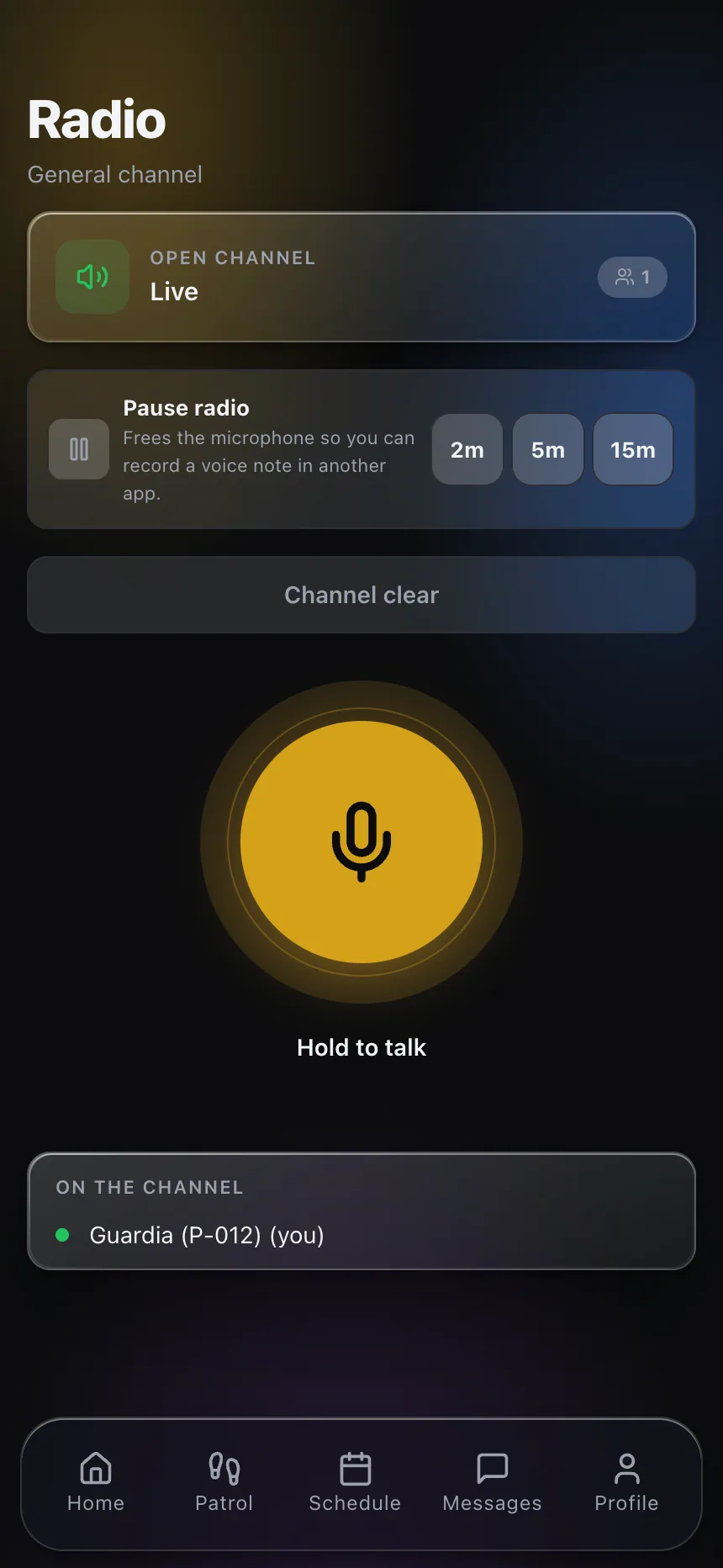
Everything an officer does correctly on an entrapment call routes through the radio and the report, not through the elevator itself. Getting the elevator company and property management on the line fast, relaying accurate floor and occupant information, and keeping a clear timeline of contact with the trapped occupant is what a good response actually looks like from the outside — quiet, procedural, and entirely verbal. A push-to-talk radio channel that reaches a supervisor or dispatch immediately, without fumbling for a phone number mid-call, is what makes that first notification fast instead of delayed.
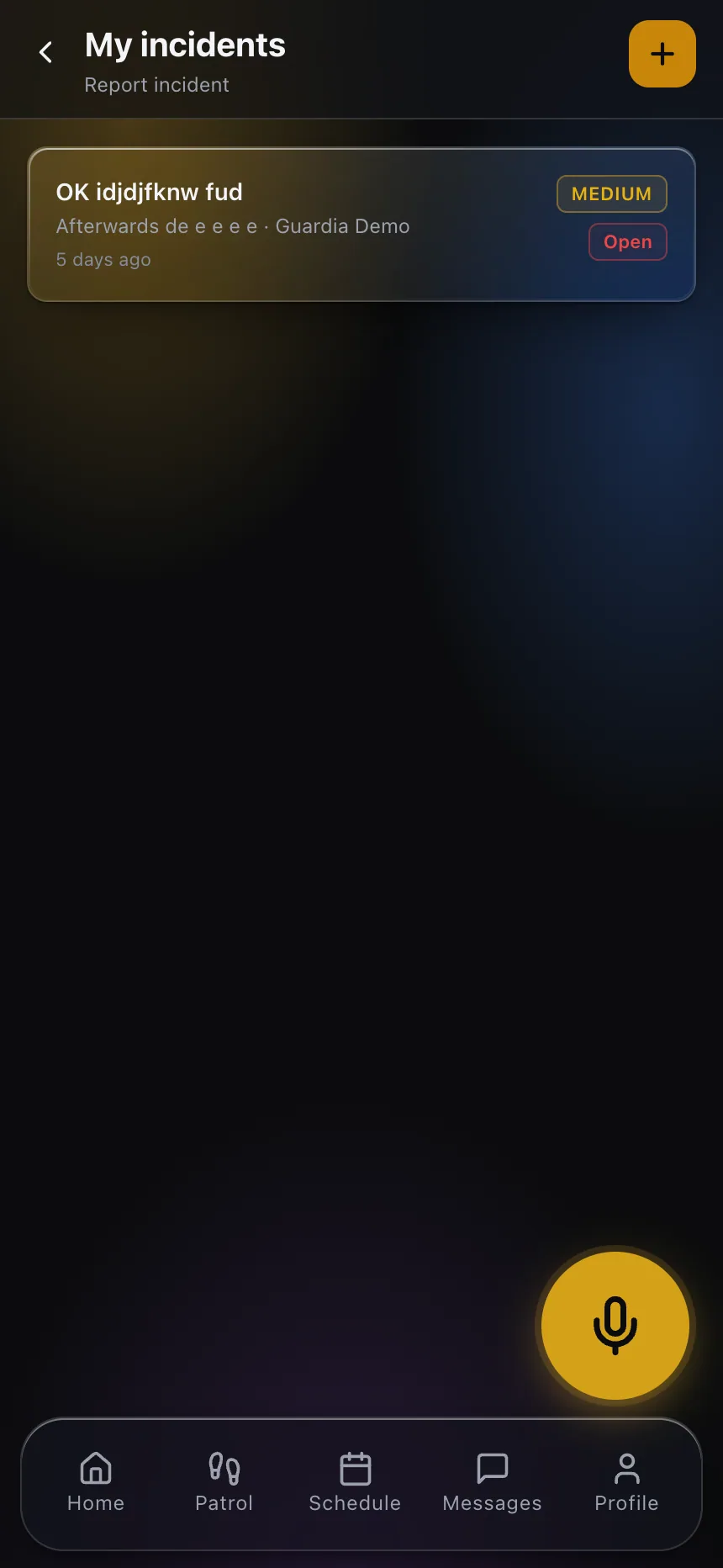
The report afterward matters just as much as the response itself, because entrapment calls tend to draw questions later — from the property manager, sometimes from the elevator company, occasionally from the occupant. A documented sequence of when the officer arrived, what the occupant reported, when the elevator company was contacted, and when the car was released protects the officer and the company if anyone ever asks what actually happened, which is exactly the kind of detail that’s easy to lose if it isn’t logged in the moment through structured incident reporting rather than reconstructed from memory afterward.
Pass-down matters as much as the call itself
An entrapment that resolves cleanly within the first few minutes still deserves a pass-down note to the next shift, not just an incident report filed and forgotten. If the elevator company only did a temporary reset rather than a full repair, the next officer on post needs to know that car might act up again before the end of the week. A pass-down habit that only covers obvious open items — a broken gate, a suspicious vehicle — and skips resolved-but-notable incidents like an entrapment is missing exactly the kind of detail that saves the next officer from being caught off guard by a repeat call on equipment nobody flagged as unreliable.
Write it down before the next call comes in
An elevator entrapment isn’t a common call, which is exactly why it’s dangerous to leave unaddressed in post orders — officers don’t get enough repetition with it to develop good instincts on their own, and the one instinct most people do have by default is the wrong one. Spell out the do-not list as clearly as the do list, make communication and documentation the entire visible job, and the next stuck elevator call ends with a mechanic doing mechanic work and an officer who never had to decide anything risky in the moment.
If you want to see how post orders, radio communication, and incident documentation work together in one system, explore CGuardPro or get in touch.