Before you sign with any guard company, someone from that company should walk your property with you, top to bottom, in daylight and after dark. That visit — the security site survey walkthrough — is where a serious provider proves they understand your risks, and where a lazy one exposes itself. If a company is ready to quote you a price and a headcount without ever setting foot on site, you’re not buying security. You’re buying a warm body and a hope.
The walkthrough is the single best predictor of the service you’ll actually get. Everything downstream — post orders, patrol routes, staffing levels, the reports you’ll receive — should trace back to what the surveyor saw and wrote down that day. Here’s what a proper one reveals and how a modern provider turns it into a plan you can hold them to.
What a real site survey should uncover
A good surveyor isn’t just counting doors. They’re building a mental map of how your property behaves across a full day and week, and where it’s vulnerable.
- Entry and exit points. Every door, gate, loading bay, stairwell and fence line — including the ones you’ve stopped noticing. The forgotten side gate is usually the one that gets used against you.
- Blind spots and dead zones. Where cameras don’t reach, where lighting fails after dark, where a person could linger unseen.
- Traffic patterns. When your site is busy, when it empties, and when the risk profile changes. A retail floor at noon and a loading dock at 3 a.m. need completely different plans.
- Existing systems. Cameras, alarms, access control, and whether they actually work or just exist.
- Emergency logistics. Nearest exits, muster points, how first responders would get in, and who they’d call.
A surveyor who asks good questions — about past incidents, problem hours, tenant complaints, previous break-ins — is doing the job. One who glances around the lobby and heads back to the car is not.
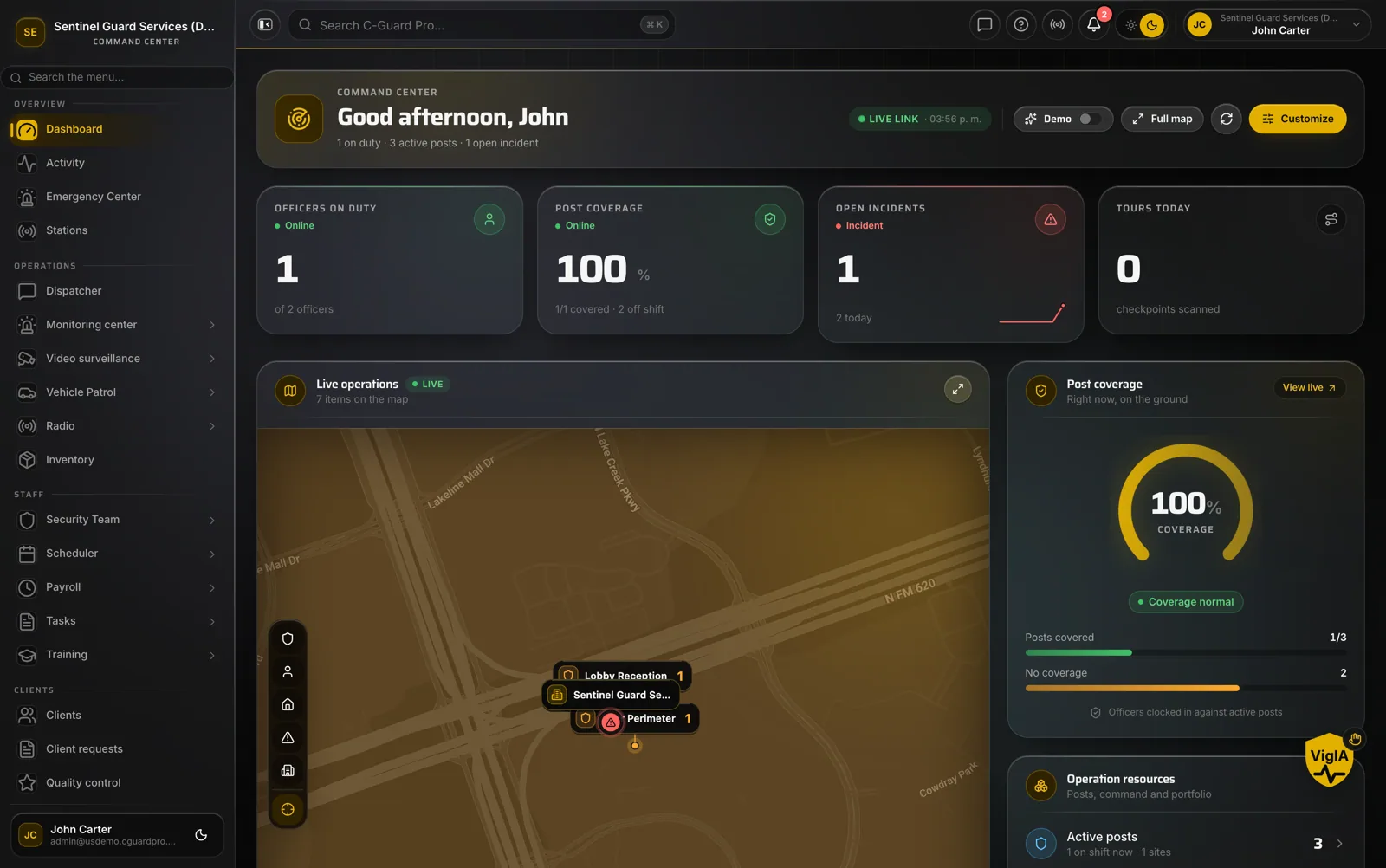 What the surveyor finds should feed straight into a system you can see, so the plan for your site isn’t buried in someone’s notebook.
From walkthrough to post orders you can hold them to
The survey is only worth something if it turns into written instructions for the guards who’ll actually work your site. Those instructions — the post orders — are the difference between a guard who knows exactly what to do at 2 a.m. and one who improvises.
Ask the provider how post orders get created and where they live. The right answer: the walkthrough findings become specific, site-tailored orders — which doors to check and when, how to handle deliveries, who to call for which situation, what to do during a fire alarm — stored where the on-duty guard can pull them up on a phone, not printed once and left to yellow in a binder.
When post orders live in software, they can be updated the moment something changes on your property, and every guard sees the current version instantly. When they live in a folder at the guard shack, half the team is working from last year’s instructions and nobody knows it.
Turning the survey into patrol routes
The other product of a good walkthrough is a patrol plan: which points get checked, in what order, and how often. This is where the surveyor’s map of blind spots and vulnerable entries becomes an actual route a guard walks each shift.
The question to ask is simple: how will you prove the patrol actually happened? A serious modern provider builds the route into a QR guard tour or GPS-verified checkpoints, so each point produces a time-stamped record when the guard reaches it. That means the vulnerable side gate the surveyor flagged isn’t just on a plan — it’s a checkpoint you can confirm was physically visited at 1:47 a.m.
Patrol routes should also match the traffic patterns the survey uncovered. Heavier coverage during the risky hours, lighter during the quiet ones, and flexibility to shift as your needs change. A single fixed loop repeated identically all night is a script for predictability, and predictability is exactly what an intruder wants.
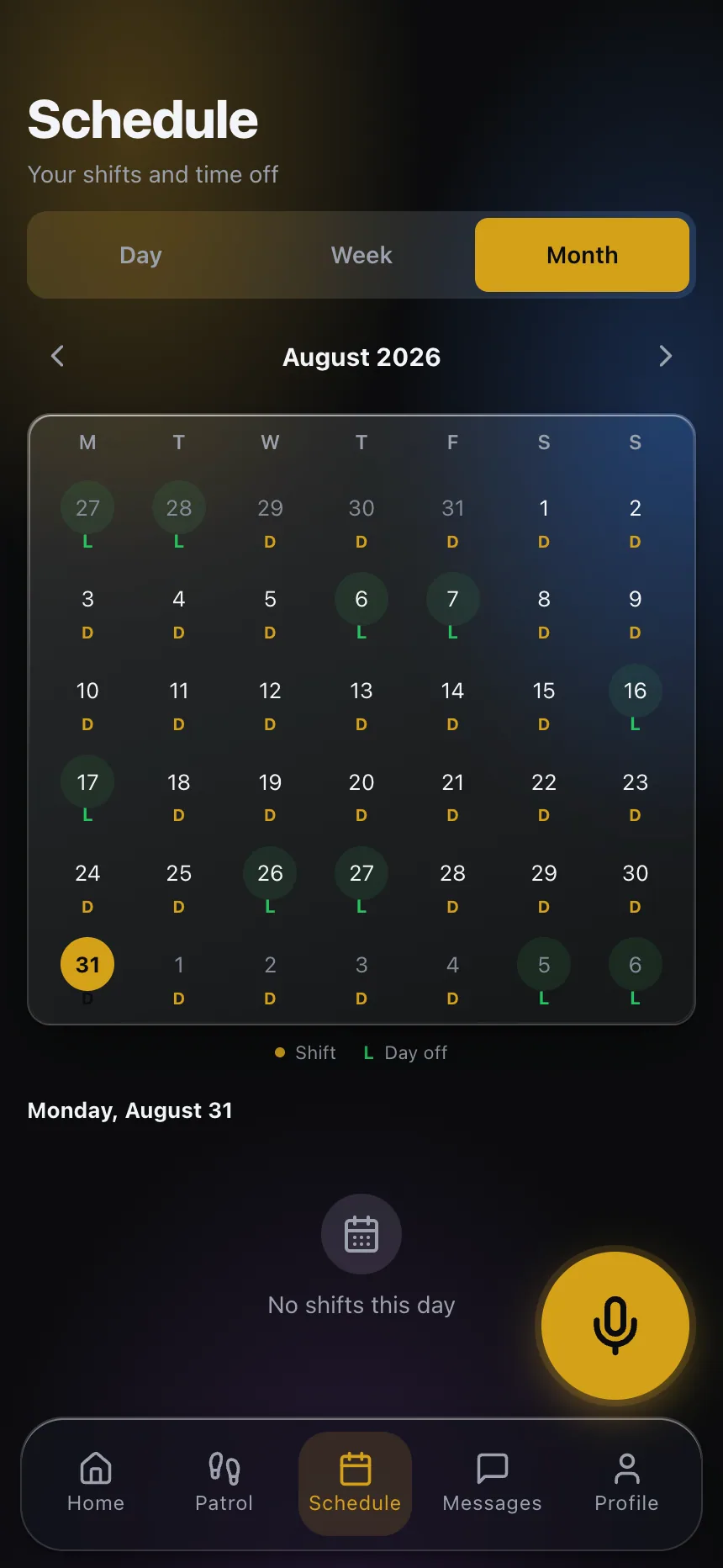 Patrol routes and shift plans built from the survey — visible, adjustable, and tied to the specific risks of your property.
Red flags during the walkthrough
The visit tells you about the company, not just the site. Watch for:
- A rushed, checklist-only survey that skips the after-dark look or never asks about your history.
- Generic recommendations that could apply to any building — a sign they’ll hand you off-the-shelf post orders too.
- No plan for proof. If they can’t explain how you’ll verify patrols and coverage, expect to be guessing later.
- Reluctance to put findings in writing. A confident provider documents. A vague one keeps it verbal so nothing can be held against them.
Make the walkthrough earn the contract
The security site survey walkthrough is your best, cheapest look at how a provider thinks before you’re locked into paying them. Insist on it. Walk your property with them, watch how they observe, and ask exactly how the survey becomes post orders and patrol routes you can verify.
A company that treats the walkthrough seriously — and can show you where the plan lives and how you’ll confirm it’s being followed — is telling you it takes your site seriously. To see how a documented, verifiable plan looks from the buyer’s side, take a look at the client portal a modern provider should give you.